

On August 20, Eastern Time, the White House announced that President Trump has signed a memorandum requiring that by 2030, U.S. space transportation ranges and related facilities should be capable of supporting more than 1,000 launch and reentry missions annually.
The presidential memorandum is legally binding and can directly require federal executive departments to implement the directives. However, implementationmust be premised on fiscal appropriations already approved by Congress — any content without corresponding budget support cannot be executed.
This plan shifts U.S. Mars exploration from the traditional NASA-led official model to a public-private partnership model with deep commercial participation. It significantly lowers the cost barrier for Mars exploration, opens federal launch sites to commercial users, encourages private investment, public-private cooperation, and joint development of space infrastructure, while accelerating permitting and environmental review processes.
NASA is also tasked with developing a commercial lunar logistics framework, while exploring supporting systems for commercial robotic Mars landings and commercial crewed round-trip Mars missions.
NASA’s current overall strategy uses the Artemis lunar program as the technological foundation. It plans to restart crewed lunar missions in 2026, validating key technologies such as deep-space landing, life support, and long-duration habitation through lunar missions, with the ultimate goal of landing U.S. astronauts on Mars in the 2030s.
Back in 1976, NASA’s Viking 1 became one of the first landers in human history to work on the Martian surface for an extended period. NASA has succeeded in 8 of its 9 cumulative Mars landing missions, accumulating mature landing technology experience for commercial robotic Mars missions.
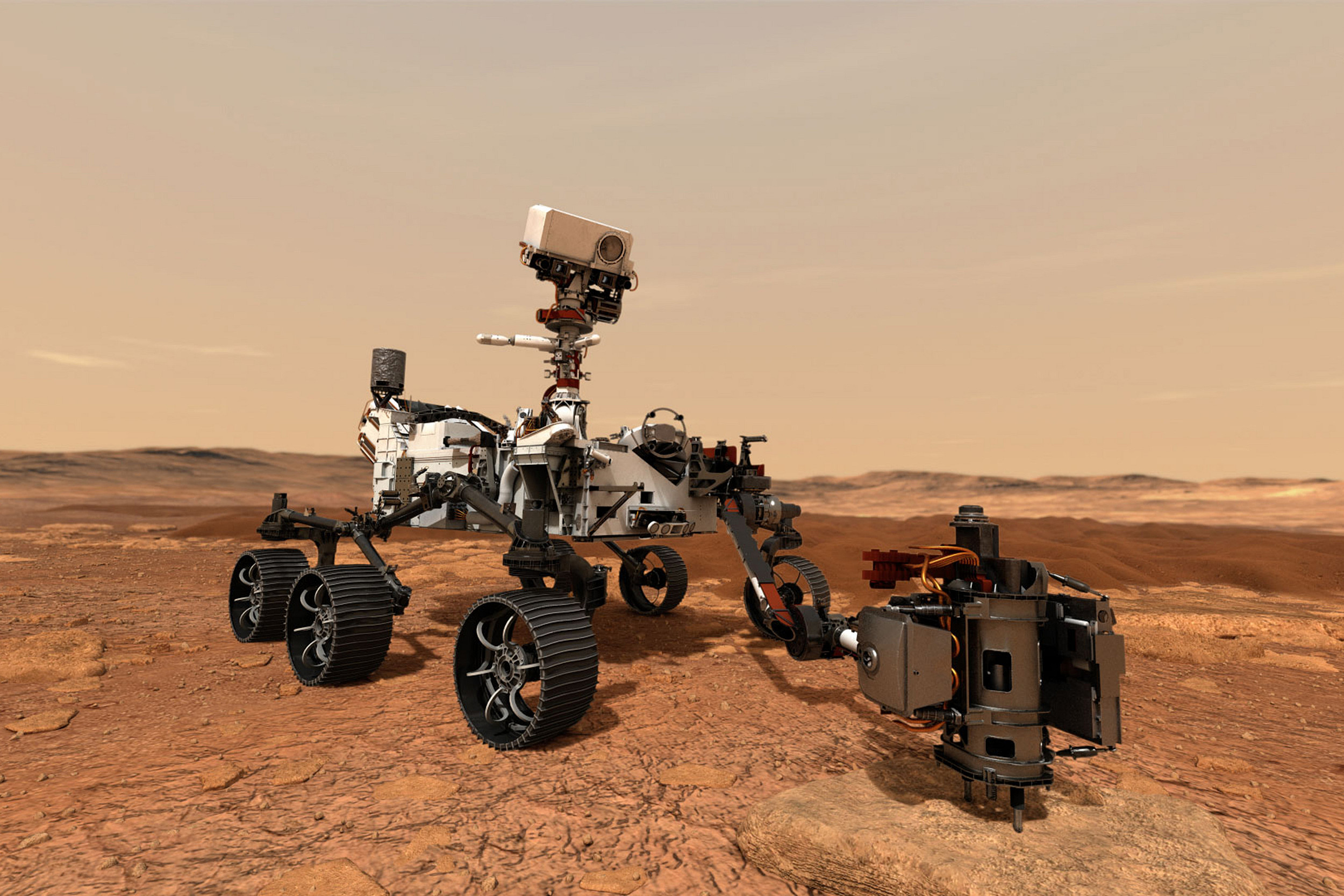
Since related supporting technologies are still in the iterative stage, the original uncrewed advance landing schedule has been delayed multiple times. In January this year, NASA made significant adjustments to the core Mars Sample Return program, abandoning the previous single approach and instead advancing two landing architectures simultaneously to encourage competition and innovation, thereby compressing costs and shortening project timelines.
World’s richest person Elon Musk has publicly stated Mars colonization as a long-term goal, and has already secured launch-related cooperation orders tied to Mars exploration. His company SpaceX has completed multiple test flights of the heavy-lift rocket “Starship,” with significantly improved rocket recovery success rates.
Between October and December this year, a Mars exploration launch window will open. SpaceX has postponed its Mars-related plans by several years due to resource priority adjustments. Its original plan was to launch an uncrewed Starship carrying the Optimus robot to Mars, pre-surveying resources and establishing basic landing infrastructure.
This is the world’s first commercial-led robotic Mars landing plan, aimed at completing preliminary work such as Mars resource exploration and infrastructure setup ahead of time. Musk has estimated the completion probability of this uncrewed launch plan at 50%.
Around 6:50 p.m. Eastern Time on July 24, “Starship” launched from Texas for its 13th test flight, achieving the softest splashdown to date, further validating the commercial viability of its fully reusable heavy-lift launch system.
Federal Aviation Administration (FAA) Administrator Bedford previously stated that SpaceX’s goal is to achieve 10,000 launches per year within five years, but government officials need to see improved reliability before approving such expansion plans.
The FAA is responsible for approving all commercial space launches and has taken steps to streamline key approval processes to ensure launch activities or space incidents do not disrupt civil aviation traffic. NASA, on the other hand, is an independent federal space research agency, with its core mission focused on cutting-edge scientific exploration in aerospace.
Additionally, NASA has previously selected All Points Logistics, Blue Origin, Firefly, and L3Harris Technologies to provide pre-launch payload processing facilities and services for spacecraft. These companies will handle the processing work required for spacecraft and related rocket hardware before they are transported to the launch pad. The total contract ceiling is $100 million.