

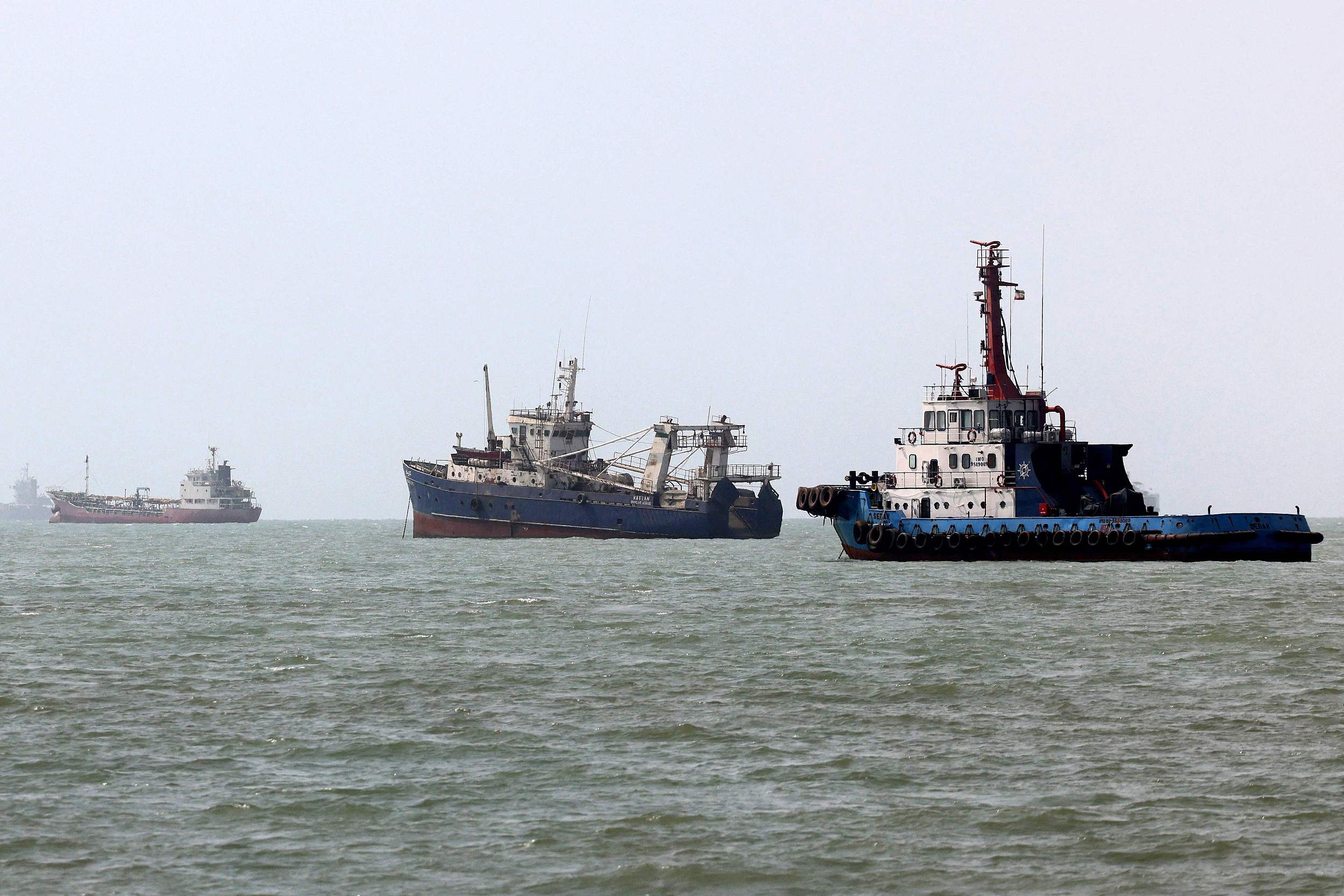
Tensions around the world’s “oil valve” are escalating further. Iran’s Persian Gulf Strait Authority (PGSA) issued a statement on August 23 stating that vessels violating Iran’s navigation regulations for the Strait of Hormuz could face fines, seizure, or confiscation.
The PGSA is the official management body for the Strait of Hormuz, established by Iran in May of this year, operated under the “Supreme National Security Council” and the “Islamic Revolutionary Guard Corps Navy.”The US has already placed this authority on its sanctions list, barring global companies from conducting dollar-denominated transactions with it.
According to reports, cargo owners shipping to and from the Persian Gulf must now consult the PGSA’s “violator vessel” list before chartering a ship to avoid potential problems. Any vessel found cooperating with a listed “violator” will also be added to the list. To have a vessel removed, a formal application with justification must be submitted.
On the same day, Iranian Foreign Minister Araghchi stated that the threat of new sanctions by US officials reflects their desperation, asserting that new sanctions cannot defeat Iran. He urged Washington to engage in dialogue with Iran with respect, seeking a solution based on justice and dignity.
While still deeply mired in the conflict with Iran,President Donald Trump, recognizing economic blockades as a more effective tool, has set aside plans for large-scale military action.
On August 19, Trump posted on his social media platform “Truth Social” that Iran missed its chance to strike a deal, announcing he would impose the “most severe economic actions ever taken against any country,” describing it as an unprecedented “economic war and economic isolation.”
According to his statement, any nation allowing its financial institutions, businesses, airports, or government entities to support Iran would face “massive economic consequences.” He demanded an immediate halt to oil smuggling, currency swaps, cash transfers, ship registrations, and the use of shell companies, calling on allies to join in isolating Iran.
A day later, US Treasury Secretary Bessent revealed in an interview that Washington would hold a press conference on August 24 to detail the specific actions.
Meanwhile, both sides are staking competing claims over control of the Strait of Hormuz. Over the past few weeks, the US military has quietly established a shipping lane through the strait, ensuring millions of barrels of oil transit daily.
Recently, three distinct routes have emerged in the strait. The first, in the northern part, is controlled by Iran. The second, through the middle, is the conventional international lane used before the strait was disrupted. The third, in the southern part, passes through Omani waters and is coordinated by Oman, the US, and the International Maritime Organization.
US officials familiar with the matter said that 15 to 20 tankers per day are using the southern route off the Omani coast. Daily oil transit volume has been steadily increasing, and while still below pre-war levels, it is already having a noticeable impact on global supply.
Data from ship-tracking firm Kepler confirms that over the past two weeks, more than 80% of vessels transiting the Strait of Hormuz have chosen the “Oman route.” This indicates that Iran’s grip on the strait has significantly weakened compared to a month or two ago.
The US operation is commanded by the Army’s 82nd Airborne Division headquarters, which not only escorts laden oil tankers but also assists empty tankers entering the Persian Gulf from the Arabian Sea via the strait, loading oil in the UAE, Bahrain, and Kuwait before departing. Additionally, US fighter jets are patrolling overhead, hunting and shooting down Iranian cruise missiles and drones. US warships stand ready to thwart any Iranian attack on commercial vessels, while also providing information on safe, mine-free routes.
Although the main deep-water navigation channels of the Strait of Hormuz lie almost entirely within Omani territorial waters, Iran has long asserted complete control.
Earlier this month, Iran and Oman reached an agreement on the geographical coordinates for proposed shipping lanes in the strait, with a joint statement nearing finalization. The crux of the negotiations was defining safe transit routes that respect both nations’ sovereign rights and national security concerns. The final outcome is expected to be announced shortly after compilation.
Oman had previously proposed a joint management mechanism with equal shares, while Iran insisted that entry routes must pass entirely through its own waters. Ultimately, the coordinates were agreed upon based on Iran’s demands, with both parties explicitly rejecting third-party involvement in managing the strait. However, President Trump subsequently threatened Oman with “bombing.”
On the Iranian side, Parliament’s National Security and Foreign Policy Commission member Rezaei stated in an August 19 interview that the management, supervision, and inspection of the Strait of Hormuz are entirely Iran’s responsibility, overseen by the Armed Forces General Staff. Standards for tolls and service fees charged to passing vessels are set by the General Staff. If Iran’s interests are harmed, it will retaliate against hostile nations and governments in the strait through measures such as raising tariffs or seizing assets.
However, multiple international shipping agencies confirm that the Strait of Hormuz remains closed to navigation. China’s two major state-owned shipping companies have been largely avoiding the Strait of Hormuz and the Bab el-Mandeb Strait since late July, instead receiving crude oil via ship-to-ship transfers near the Gulf of Oman and Fujairah.
Meanwhile, CSC Financial points out that Iran’s refusal to reopen the strait, coupled with Houthi attacks on cargo vessels, has driven Asian buyers to procure crude from the Gulf of Oman. This has led to a severe shortage of very large crude carrier (VLCC) capacity in the region, with daily charter rates approaching $500,000, making medium and larger tankers the primary vehicles for risk premiums.