

The latest developments in the Hormuz Strait have sparked global attention.
According to a report by Xinhua News Agency on May 18, the Iranian government has established a new agency, the “Persian Gulf Strait Management Bureau,” to manage the Hormuz Strait. A social media account with the same name went live on the same day, claiming to be the official account and promising to provide real-time updates on the latest developments in the Hormuz Strait.
The account is operated by the “Iranian Supreme National Security Council” and the “Islamic Revolutionary Guard Corps Navy.” Earlier on May 18, the Iranian Foreign Ministry spokesperson stated that Iran is in continuous communication with Oman regarding the passage mechanism of the Hormuz Strait. He also emphasized that the United States and Israel pose a threat to the security of the Hormuz Strait, and Iran has no hostile intentions towards its neighboring countries.
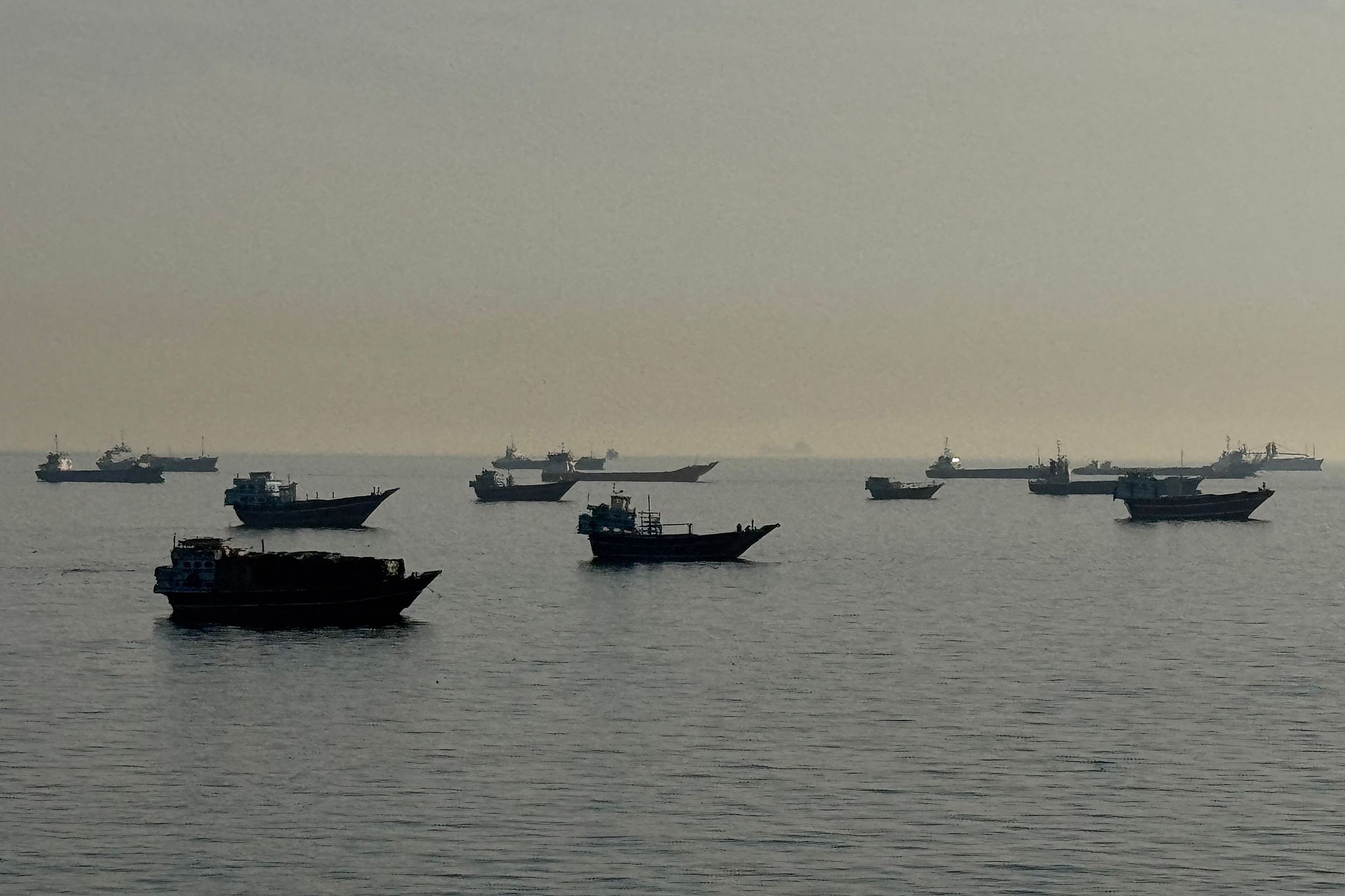
The Hormuz Strait is located between Iran and Oman and is the only sea route connecting the Persian Gulf to the Indian Ocean. Although the main deep-water navigation area is almost entirely within Oman’s territorial waters, Iran has complete control over the strait and has paid a huge cost to maintain its security over the past few decades.
Previous reports revealed that the core regulations of the “Persian Gulf Strait Management Bureau” may also include maintaining Iran’s dominance and the supremacy of its armed forces; all civilian and commercial ships passing through the strait must submit detailed information about the shipowner, crew nationality, cargo details, and route in advance.
The “Persian Gulf Strait Management Bureau” also plans to charge a “security passage fee” to ships passing through the strait, which will be paid in Iranian rials; Iran’s sovereign regulatory authority extends to the seabed pipelines and data cables passing through the strait. Analysts believe that the formal announcement of the agency marks the beginning of Iran’s institutionalized control over the strait.
On the same day, Iran handed over a 14-point negotiation text to the US through Pakistan, with the core content focusing on “ending the war.” The specific content of the text is not yet clear, but the previous version included the gradual opening of the Hormuz Strait within 30 days, Iran’s responsibility for clearing mines, and the US withdrawal from Iranian waters and cessation of new troop deployments.
A source close to the US-Iran negotiation team revealed that the US has agreed to exempt Iran’s oil sanctions during the negotiations, which means that the US will temporarily suspend sanctions.
In the eyes of Iran’s rulers, the Hormuz Strait is a trump card that even surpasses nuclear weapons. Last week, Iranian Foreign Minister Amir-Abdollahian publicly stated at a press conference in New Delhi that Iran does not seek to develop nuclear weapons.
The Islamic Revolutionary Guard Corps Navy has designated a new navigation route from the southern waters of Hormuz Island to the southern waters of Larak Island, which is called the “Larak Corridor.” No ship is allowed to pass through without permission from the Revolutionary Guard Corps Navy.
US intelligence has recently warned that the Hormuz Strait is the only chip that Iran can use to counterbalance the United States. Even after the war ends, Iran needs to collect passage fees to rebuild.
The Hormuz Strait connects the high seas or exclusive economic zones and is a typical international strait. The United Nations Convention on the Law of the Sea stipulates that coastal states cannot restrict or charge passage fees arbitrarily. As of April 2026, more than 168 countries and entities have formally approved the Convention, including China, Russia, Japan, and India. Iran has not formally approved the Convention and therefore claims not to be bound by the “right of transit passage.” The United States has also not formally approved the Convention.
Chinese Foreign Ministry spokesperson Lin Jian previously stated at a regular press conference that the Hormuz Strait is an international navigation strait, and China is deeply concerned about the impact of the war on the large number of ships and crew members stranded in the strait. China believes that the early restoration of the strait’s passage and the maintenance of the safety of civilian ships and crew members are in the common interest of regional countries and the international community. China calls on all parties to take practical measures to avoid the deterioration of the situation in the strait and is willing to work with the international community to promote a ceasefire and ease tensions in the region.
On the other hand, Wall Street has reached a consensus. Goldman Sachs’ survey shows that most investors expect the navigation through the Hormuz Strait to continue to be disrupted after June, with 43% of respondents expecting navigation to return to normal after July. One-third of respondents expect Brent crude oil to be priced between $80 and $90 per barrel by the end of the year.
About 20% of global oil transportation relies on this waterway, which is currently in a de facto blockade, forcing shipping giants such as Maersk to take a detour. The war risk premium has reached 2.5% of the ship’s value. The oil, shipping insurance, and interest rate markets have been repriced, betting on the coexistence of inflation pressure and economic slowdown risks.
CITIC Securities Research Report points out that regardless of the development of the US-Iran game, the current market is still in the process of the Hormuz Strait blockade impacting the fundamentals of oil transportation. The unblocking of the strait will inevitably lead to a scramble for crude oil globally, which will also be transmitted to the oil tanker transportation market.
