

On June 1, 2026, Iran reportedly announced that its negotiation team has paused all dialogue and text exchanges with the United States via intermediaries. The reason? Israel’s ongoing military operations in Lebanon, and the fact that a ceasefire in Lebanon is a key precondition for any Iran-US truce.
Just a day earlier, on May 31, Israeli Prime Minister Benjamin Netanyahu ordered an expansion of military action in Lebanon and sought U.S. support for strikes on Beirut and other areas—a request already communicated to Washington. Israeli ground forces have launched operations in southern Lebanon, specifically around Beaufort Ridge and the Saluki Riverbed. The military claims it has seized the strategic Beaufort Castle in the region.
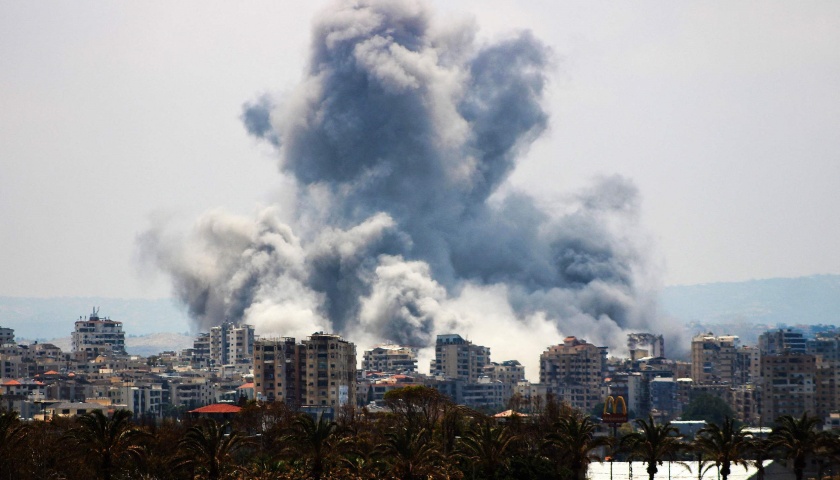
With Israeli forces now advancing past the Litani River, the temporary ceasefire between Lebanon and Israel that began on April 17 has effectively collapsed. On June 1, Netanyahu and Defense Minister Israel Katz issued a joint statement, accusing Hezbollah of “repeated violations of the ceasefire” and ordering airstrikes on the Dahieh district of Beirut.
In response, analyst Li Zixin noted that Israel is simultaneously taking aggressive actions in Syria, Gaza, and Lebanon, throwing the Middle East into a chaotic multi-front conflict. This is reshaping the regional order, putting peace processes at risk, and raising the danger of a full-blown regional war.
Iranian officials and negotiators have made it clear: Israel must immediately halt its brutal military campaigns in Gaza and Lebanon, and fully withdraw from Lebanese territory. Until that happens, Iran says it won’t sit down at any negotiating table.
On June 1, Iran’s Parliament Speaker Mohammad Bagher Ghalibaf took to social media to slam Israel’s ferocious attacks on Lebanon. He also accused the United States of violating the ceasefire by enforcing a naval blockade and allowing Israel to escalate the conflict. “Every choice comes with a price,” Ghalibaf wrote. “Debts always come due. In the end, everything will be settled.”
Iran’s Foreign Minister Abbas Araghchi posted on social media the same day, warning that “breaking the ceasefire on any front means breaking it on all fronts.”
Additionally, according to sources from Iran on June 1, the regional resistance axis along with Iran has drawn up a plan to completely block the Strait of Hormuz and activate other fronts—including the Bab el-Mandeb Strait—as a way to “punish Israel and its supporters.”
So far, Iran’s official government has not issued a formal statement on these claims. However, a member of Iran’s negotiation team media group, Ajarlu, said on June 1 that the U.S. has sent a new proposal to Iran through mediators, and it’s now under review by Iran’s Supreme National Security Council and relevant bodies. Iran has not yet responded to this new text, and the U.S. may still make further revisions or raise additional issues.
Ajarlu explained that Iran has withheld its response because there are still some concerns that need to be addressed before Iran can truly benefit from the talks.
Meanwhile, the U.S. and Iran continue to exchange fire. On June 1, the U.S. Central Command announced it had successfully intercepted two ballistic missiles launched by Iran aimed at a U.S. military base in Kuwait—no U.S. personnel were injured. On the same day, Iran’s Islamic Revolutionary Guard Corps released footage of its air defenses destroying an MQ-1 drone. The video didn’t specify the timing, but on May 31, Iran claimed to have shot down an MQ-1.
With the U.S. and Iran renewing military clashes, Middle East tensions are escalating again. International crude oil futures surged more than 5% during trading on June 1.
According to reports, Israel’s intensified operations in Lebanon have drawn widespread international condemnation. France, the UK, Germany, Egypt, and other countries have all voiced strong criticism and concern. French President Emmanuel Macron said on May 31 that the escalating situation in southern Lebanon is “completely unjustifiable” and that stability in the Middle East must start with Lebanon. Egypt’s Foreign Ministry condemned the move, warning it will further destabilize the region.
As a major spillover from the Iran conflict, the Lebanon-Israel war has become a key factor influencing Iran-U.S. negotiations.
Analysts suggest Israel’s main goal is to expand its gains before a potential Iran-U.S. ceasefire, while also serving domestic political interests. The escalation in Lebanon adds more uncertainty to Iran-U.S. talks, but it’s unlikely to be the decisive factor in whether a deal is reached. Professor Ding Long from Shanghai International Studies University pointed out that the core of the Iran-U.S. game remains the Strait of Hormuz passage and the nuclear issue. While the Lebanon situation creates some variables, it won’t fundamentally sway the outcome.
Li Zixin added that the risk of a full-scale war between the U.S. and Iran in the short term is low, but the probability of prolonged low-intensity conflict is rising significantly.
He explained that U.S. airstrikes are focusing on Iranian radar and drone command facilities, avoiding densely populated bases. For Washington, sustained precision strikes gradually weaken Iran’s military capabilities while applying steady pressure to maintain the upper hand in negotiations. For Tehran, retaliating against U.S. bases on a regular basis helps counterbalance that pressure. The biggest danger right now isn’t the controlled strikes themselves, but the rising risk of miscalculation as the standoff drags on. If any clash causes heavy damage to high-value military assets or leads to mass casualties, the situation could spiral out of control very quickly.

