

The latest diplomatic moves between London and Beijing have certainly stirred the pot.
At the invitation of the Chinese government, UK Foreign Secretary Yvette Cooper wrapped up a three-day visit to China from June 1 to 3, where she sat down for the 11th round of UK-China strategic talks.
London had high hopes for the trip, aiming to tackle everything from bilateral ties to pressing global flashpoints like the Middle East and the ongoing war in Ukraine. But back home, the political noise is already starting up. Critics and opposition figures have been quick to label Cooper’s visit as a “capitulation” to Beijing.
Cooper didn’t mince words when addressing the backlash. Defending the Labour government’s push to reset ties with Beijing, she fired back at the opposition for pushing what she called a “cancel culture” approach to foreign affairs.
Some politicians have been leaning hard on the government, waving the banners of “human rights” and “national security” to demand a tougher, more confrontational stance during her time in China.
Speaking from Beijing, Cooper shot back, pointing out that the previous Conservative administration had actually championed a policy of disengagement while China’s global influence kept growing. In her view, engaging with the world’s second-largest economy isn’t just important—it’s absolutely vital for Britain’s own security.
“We’ve seen a pattern of pulling away under previous governments, and the Conservatives are still sticking to that playbook,” Cooper explained. “Their stance, along with Reform UK’s, seems to be that even though China is a major global power, we just shouldn’t talk to them at all.”
She didn’t stop there, pointing out a broader trend across the political spectrum. “Look at the Lib Dems suggesting we shouldn’t send the King on a state visit to the US, or the Greens criticizing our engagement with India and even questioning ties with Washington,” she noted. “It really does feel like we’re seeing a ‘cancel culture’ in foreign policy, and frankly, that’s incredibly damaging for Britain and for any sensible diplomatic strategy.”
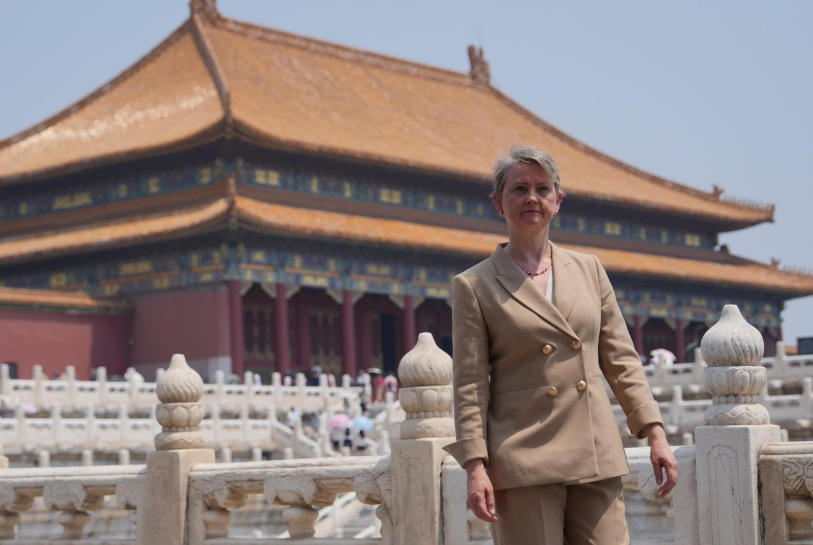
Cooper’s official visit to China included a stop at the historic Forbidden City.
On June 2, she took to social media to lay out her position clearly: “As the world’s second-largest economy and a permanent member of the UN Security Council—just like the UK—China is a partner we have to work with. Our engagement must always be grounded in British values to safeguard our security and prosperity.”
During her meetings with Chinese officials, the agenda covered some heavy hitters: efforts to keep the Strait of Hormuz open, navigating the Russia-Ukraine conflict, and coordinating on global health threats like Ebola outbreaks.
Yet the opposition isn’t backing down. The Lib Dems accused Cooper of being too focused on appeasing Beijing, while the Conservatives doubled down on their claims that she’s following in Prime Minister Starmer’s January footsteps by “pandering” to China. Shadow Foreign Secretary Priti Patel didn’t hold back, arguing that Labour simply lacks the backbone to stand up to Beijing and insisting that only her party truly puts national interests first.
Brushing off the criticism, Cooper told reporters that the UK and China share common ground across numerous sectors, emphasizing that “open and constructive dialogue is absolutely essential.”
“Right now, we need principled diplomacy that champions British interests and values while actively engaging with major powers like China,” she stressed. “Pushing a ‘cancel culture’ foreign policy and demanding we just walk away? That’s the genuinely toxic approach.”
She wrapped up by adding a straightforward point: “These conversations are exactly how we make Britain stronger.”
Cooper also took a moment to address recent comments from former Prime Minister Tony Blair regarding the UK-US relationship. Blair had recently criticized Starmer’s initial decision to deny US strike aircraft access to British airbases for operations against Iran.
“We’ve learned some hard lessons from the Iraq War,” she replied, pushing back against the idea that Britain should automatically follow Washington’s lead every time. While acknowledging the US as the UK’s closest security ally, she made it clear that Britain maintains a sovereign foreign policy. “Engaging with major global powers is crucial, but we will always act according to international law and our own core principles.”
Following her wrap-up in China on June 3, Cooper is set to continue her diplomatic tour in India, where she’s scheduled to meet Foreign Minister S. Jaishankar on the 4th.

