

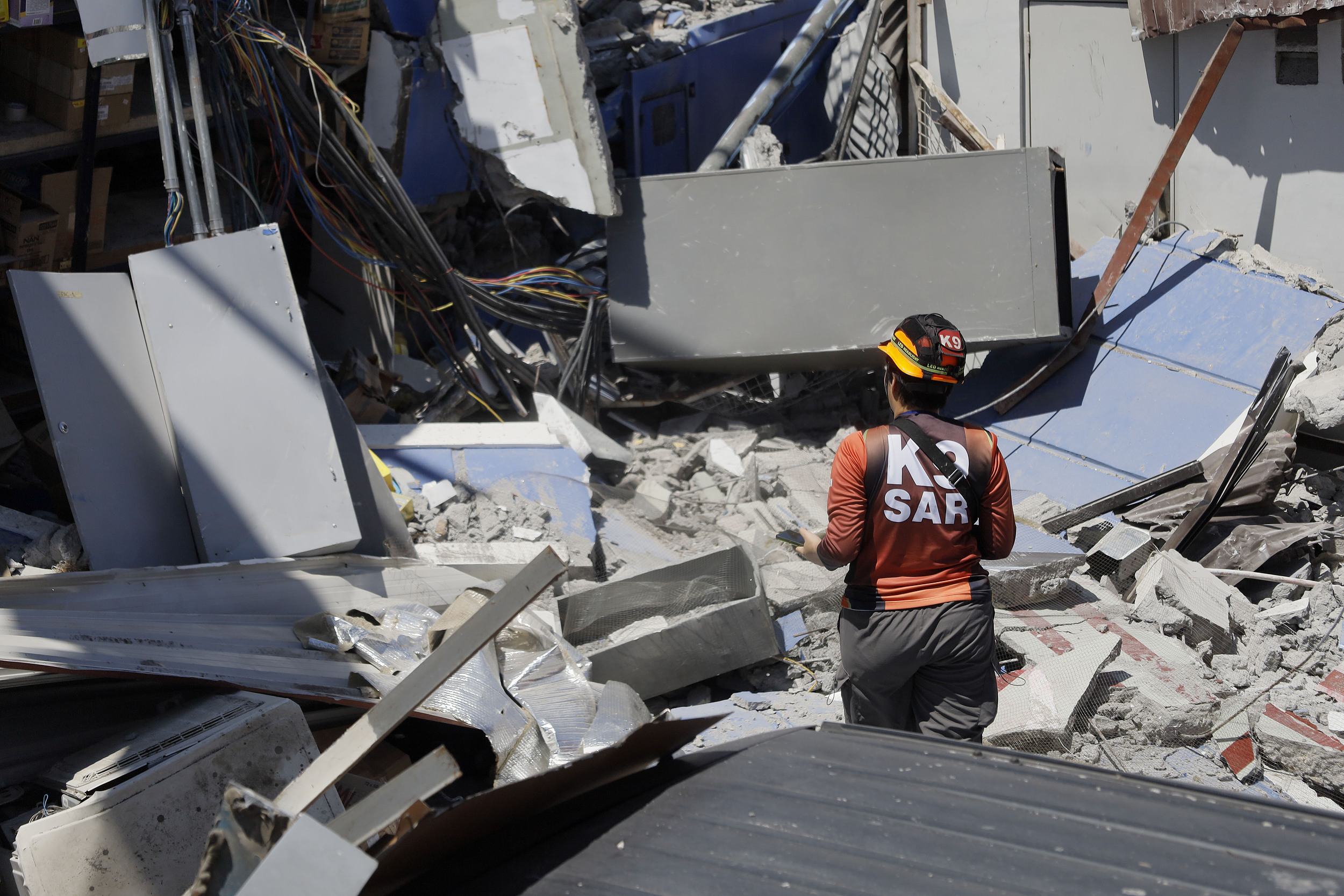
According to reports, the Philippine civil defense authorities announced on June 9 that a strong earthquake that struck the southern part of the country the previous day had killed 37 people. The vast majority of victims were tragically killed when they were hit by collapsing rubble and falling debris during the intense shaking.
Meanwhile, the earthquake has directly affected 17,689 families in the Mindanao disaster area, displacing over 77,000 people. Landslides in Sarangani Province directly caused 14 deaths, making it the hardest-hit area. Additionally, due to fear, tens of thousands of survivors prefer to stay overnight in open spaces.
Preliminary inspections show that the strong earthquake caused catastrophic damage to local transportation and power networks. In the hardest-hit city of General Santos alone, initial assessments of infrastructure damage have already exceeded 10 billion Philippine pesos (approximately 1.1 billion yuan), including at least 9 bridges and 19 roads.
Many low-rise buildings, shops, mosques, hospitals, and police stations in the area have suffered structural damage. Power and communication networks in some regions experienced widespread outages, with up to approximately 864,000 users losing electricity at one point.
On the day the strong earthquake struck, local schools were just starting the new semester. According to statistics from the Philippine Department of Education, over 8,600 schools were suspended, affecting more than 4 million students and 150,000 teaching and non-teaching staff.
As officially measured by the China Earthquake Networks Center, at 7:37 AM on June 8, a 7.9-magnitude earthquake occurred in the southern Philippines archipelago region (latitude 5.55 degrees north, longitude 125.10 degrees east) at a depth of nearly 40 kilometers.
The Philippine Institute of Volcanology and Seismology immediately advised residents in several southern coastal areas to evacuate to higher ground or move inland.
In these areas, ships in ports, estuaries, or shallow coastal waters should be secured and kept away from the water. Vessels already at sea should stay in deep water until further notice.
Later that afternoon, the agency lifted the tsunami warning, having recorded only minor sea level fluctuations after two hours of extended observation. The observed tsunami wave height was too low to cause any damage.
More than 80% of the world’s major earthquakes occur along the Pacific Ring of Fire, and the Philippines is a core part of this seismic belt. The country experiences several dozen noticeable earthquakes on average each year. Since the 20th century alone, there have been 7 major earthquakes of magnitude 8 or higher and over 250 earthquakes of magnitude 7 or higher.

