Fresh government data reveals that U.S. inflation in May has climbed to its highest point in nearly three years, with everyday staples like coffee, lettuce, and tomatoes seeing sustained price hikes. A perfect storm—triggered by energy market turmoil from the U.S.-Israel-Iran conflict, American tariff policies, and an ongoing drought—has unleashed a “price storm” across American dinner tables. According to an Associated Press report on the 11th, the speed of price increases has outpaced wage growth for several consecutive months, squeezing household finances and fueling widespread consumer pessimism about the economic outlook. As the U.S. midterm elections approach, Republicans worry there’s little time left for the administration to reverse this inflation crisis, largely driven by energy costs. However, President Trump remains optimistic, predicting that once the conflict ends, inflation will quickly cool down.
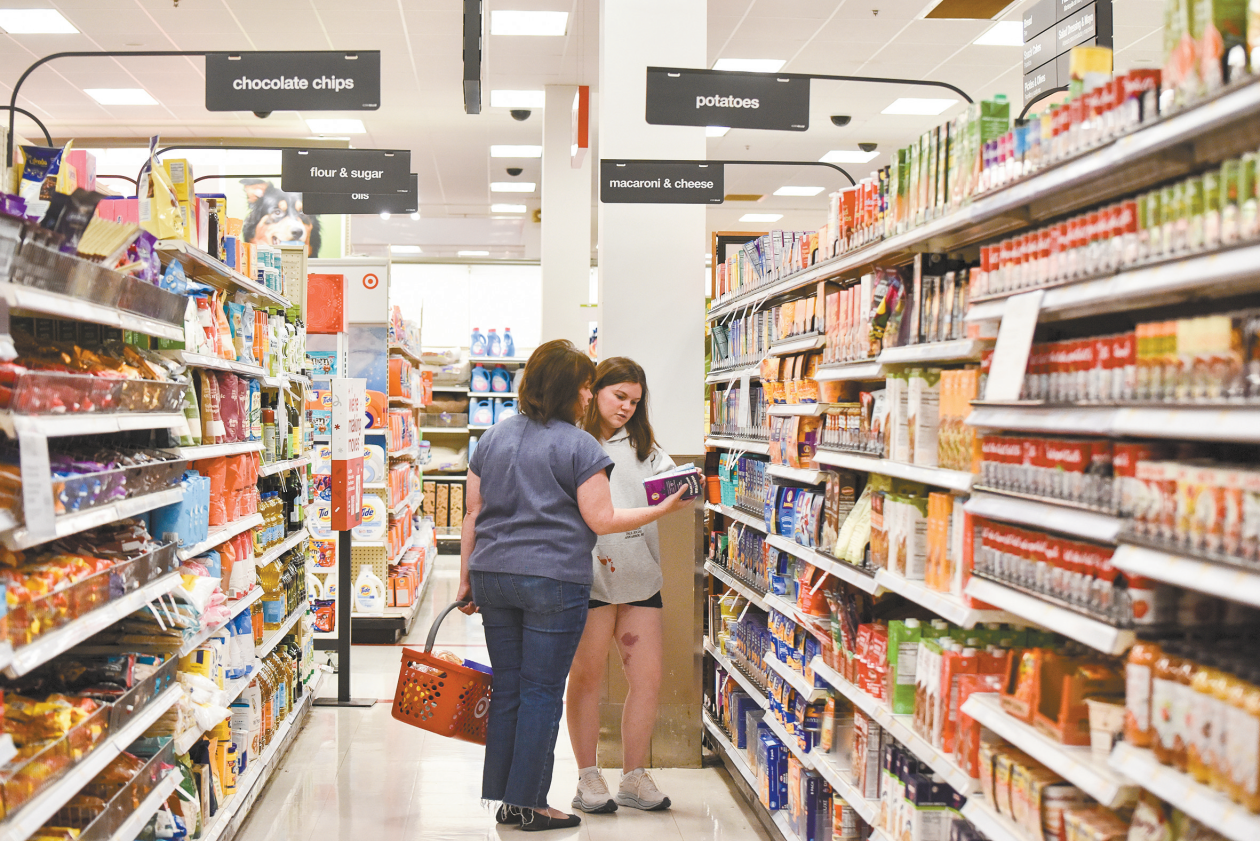
Shoppers at a grocery store in Virginia recently.
CPI Rises for Three Straight Months
Since the outbreak of the U.S.-Israel-Iran conflict, the year-over-year rise in the U.S. Consumer Price Index (CPI) has accelerated for three consecutive months. According to data released by the Labor Department on the 10th, the U.S. CPI surged 4.2% in May compared to a year ago, up from 3.8% in April, marking the highest level since May 2023. Excluding volatile food and energy costs, the core CPI rose 2.9% year-over-year in May, a seven-month high. On a monthly basis, the CPI and core CPI increased by 0.5% and 0.2%, respectively, with energy prices contributing over 60% to the overall monthly CPI gain.
During his 2024 campaign, Trump repeatedly vowed to “bring prices down on day one.” When asked by reporters in the Oval Office about the latest CPI figures, he responded, “The numbers are great. You know what I really love? I love inflation. And you know why?” Trump then predicted that once the U.S.-Israel-Iran conflict ends, inflation “will fall like a rock.”
The New York Times noted that with prices rising for the third month in a row, the White House has also shrugged off the news for the third time. White House spokesperson Kush Desai stated in a release, “This on-expected May CPI report once again shows that despite temporary disruptions caused by Iran’s attempts to disrupt free energy flows, President Trump’s broader economic agenda continues to deliver real results for the American people.” In a commentary published on the 10th, Peter Navarro, senior advisor for trade policy, argued that if you strip out the spike in energy costs, the latest CPI increase looks much milder, and “the underlying inflation trend remains manageable.”
According to Politico, other factors are also fueling inflation, including trillions of dollars being poured into building data centers and other large-scale AI infrastructure projects, as well as fresh tariff threats. However, the report quotes Stephen Moore, a conservative economist who served as an advisor to Trump, who pointed out that despite these factors, overall inflation is “undeniably a soft spot for Republicans heading into the fall.” He added, “They need to convince people they have a plan to lower inflation. Their plan is to reopen the Strait of Hormuz as quickly as possible to get oil flowing globally. Whether people believe that is another story.”
Food Prices Take a Big Hit
Among the items hit hardest by this wave of price increases are those that ordinary families buy every day. Take Alexandria, Virginia, where our reporter lives, for example: a head of lettuce at the supermarket now costs nearly $4, and a box of cherry tomatoes goes for over $5. Over in the coffee aisle, many familiar brands have climbed into the teens. At the meat counter, discount tags are more noticeable than ever, but they still struggle to hide the overall upward trend in prices.
Over the past year, many friends around our reporter have quietly changed their shopping habits. More and more people who used to buy organic vegetables and fresh foods at Whole Foods are now turning to the more affordable Trader Joe’s or Asian supermarkets scattered across Northern Virginia. One friend joked, half-seriously, “I used to think about quality and brand when shopping. Now, the first thing I look at is the price tag.” For many middle-class families, this shift in consumption doesn’t necessarily mean a sudden financial squeeze, but it reflects a growing sensitivity to food costs.
Whether it’s the changing prices on supermarket shelves or the reordering of household spending priorities, one reality is becoming increasingly clear: inflation is no longer an abstract economic indicator. It has seeped into the daily lives of ordinary people, slowly turning into a palpable social sentiment.
Inflation Crisis Shakes Voter Confidence Ahead of Midterms
“‘The die is cast’: Trump allies fear it’s too late to turn the economy around,” Politico reported on the 10th. For a president who promised to tackle the cost of living and restore economic confidence, the inflation outlook is alarming. A former U.S. government official, speaking on condition of anonymity, said, “It doesn’t matter if inflation has peaked or not. People’s views on the economy are already set in stone.”
Trump’s remarks on inflation have drawn sharp criticism from Democrats. “Trump actually looked into the camera and said, ‘I love inflation.’ The whole country heard him,” Senate Minority Leader Chuck Schumer wrote on social media platform X. “His contempt for you is beyond belief.” Facing backlash, Trump later told the New York Post that his words were “taken out of context,” reiterating his claim that inflation data would drop once the war ends.
According to CNN, the pace of price increases over the past three months has been the fastest since the period from April to June 2022, when inflation hit a 41-year high. “Inflation might not get worse, but it will stay elevated for the near term,” said Nancy Vanden Houten, lead U.S. economist at Oxford Economics. “It probably won’t ease until next year.”
Republicans won the 2024 election on a promise to fix the inflation problems inherited from the Biden era. Now, this self-inflicted inflation crisis seems to be eroding their public support. According to a Reuters/Ipsos poll released this week, only 22% of Americans approve of Trump’s handling of the cost of living for U.S. families, while 70% disapprove. This means Americans are currently more dissatisfied with Trump’s performance on this issue than they were with former President Biden—when Biden left office, his approval rating on the cost of living stood at 29%.
The nationwide poll also found that if congressional elections were held today, 41% of registered voters would support Democrats, compared to 37% for Republicans.