

President Trump announced on social media June 14 that the U.S. and Iran had reached a deal to reopen the Strait of Hormuz. Iran confirmed early June 15 that a memorandum of understanding (MOU) had been signed on the ceasefire, with a formal signing ceremony set for June 19 in Switzerland.
But as one of the key instigators of the recent conflict, Israel was largely excluded from the talks. While the full details of the deal remain under wraps, the country is already in an uproar.
The New York Times reported on June 14 that even before the official announcement, leaked terms had drawn bipartisan criticism across Israel. The consensus is that the deal fails to address Iran’s “fundamental security threat” to the Jewish state.
Over the past year, Israel has waged two wars against Iran—the most recent in late February, in coordination with the U.S. military. Yet now, as the Trump administration negotiates with Tehran, Israel finds itself pushed to the sidelines, locked out of the peace process.
According to U.S. and Iranian officials, the preliminary MOU would see Iran reopen the Strait of Hormuz, a vital global shipping lane, while the U.S. lifts its blockade of Iranian ports. The ceasefire, initially agreed in April, will be extended by 60 days, during which both sides will engage in detailed talks on Iran’s nuclear program and the lifting of U.S. sanctions.
A Reuters report on June 14 cited an Iranian official saying that under the draft MOU, the U.S. agrees not to impose any new sanctions before a final deal is reached. Afterward, all U.S. and UN sanctions would be lifted according to a set timeline. The U.S. would also grant Iran temporary oil sanctions relief, allowing Tehran to sell crude and earn revenue, and would unfreeze $25 billion in Iranian assets.
The New York Times notes that the deal’s terms are a far cry from the goals Israel set when it entered the two wars.
Prime Minister Benjamin Netanyahu initially declared that the aim was to “eliminate the existential threat to Israel,” meaning dismantling all Iranian nuclear threats and its ballistic missile program, and “creating conditions for the Iranian people to overthrow their government.”
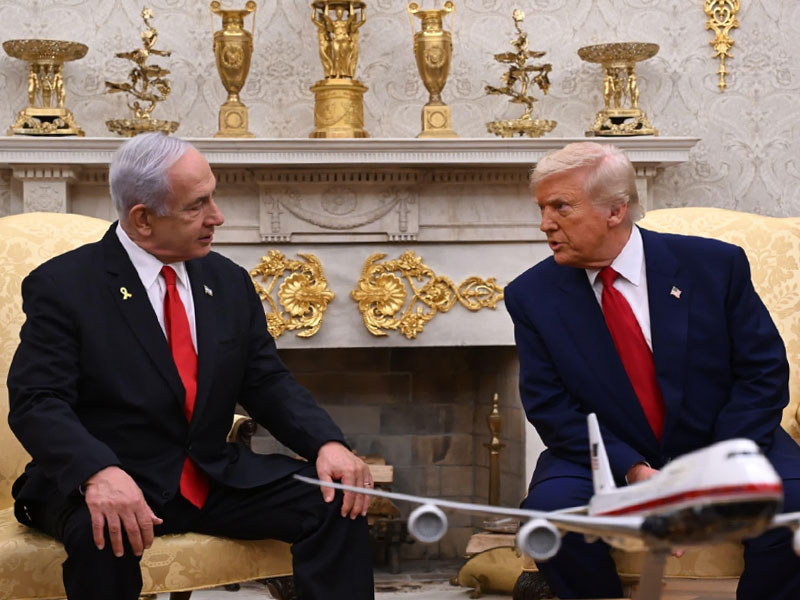
Trump and Netanyahu
Beyond that, Israel demanded that Tehran stop supporting proxy forces hostile to Israel, including Hezbollah in Lebanon, the Houthis in Yemen, and Hamas in Gaza.
Israeli experts are now deeply worried, as the issues that matter most to their nation’s security are barely mentioned in the deal.
An anonymous Israeli official briefed on the deal laid out the key objections:
First, there’s no clear plan for dealing with Iran’s existing enriched uranium stockpile, and the constraints on its nuclear program are too weak. The deal seems to rely entirely on Iran’s goodwill.
Second, far from “creating conditions” for the Iranian government’s collapse, the deal would pump money back into Tehran’s coffers.
Third, the agreement lacks a mechanism to force Iran to stop backing its proxies, but it pushes Israel to halt military operations against Hezbollah.
Days after the U.S.-Israel strikes on Iran in late February, Hezbollah fired on Israel. Iran insists any broader peace deal must address the Lebanon conflict. Israel has tried to keep the Iran deal separate from its campaign against Hezbollah, but its influence seems limited.
The New York Times reports that the Israeli daily Yedioth Ahronoth splashed “Bad Deal” across its front page, capturing the national mood.
Jacob Nagel, a former acting national security advisor to Netanyahu, said: “Whatever happens, President Trump will declare victory—a total victory.” Speaking at a video briefing on June 14, Nagel noted that the leaked deal details don’t even include Iran’s ballistic missiles or its support for regional proxies on the negotiating table.
Netanyahu’s opponents are even more scathing.
“From Israel’s perspective, this is a disaster,” wrote former Defense Minister Avigdor Lieberman on social media June 14. Once a Netanyahu ally, Lieberman is now a fierce critic.
Opposition leader and former Prime Minister Yair Lapid said he hopes the reports aren’t true. “If they are, this is one of the most shocking failures of Israeli foreign and security policy.”
Current Israeli government officials, fearing Trump’s anger, are staying quiet.
A senior Israeli official told Yedioth Ahronoth on June 13 that the MOU set to be signed June 14 is “not a good deal.”
“No one is happy about this,” the official said. “We understand it’s bad for us, it harms Israel’s interests. The trouble is, we can’t influence it—our voice isn’t being heard.”
With national elections expected in late October, Netanyahu faces pressure from both inside his coalition and outside critics to not bow to Trump’s directives.
But the New York Times notes that Netanyahu has been reluctant to publicly oppose Trump, largely because he sees their close relationship as one of his most important political assets.
Ironically, just as media reports were buzzing about the U.S.-Iran deal, Trump lashed out at Netanyahu. On June 14, Israel launched an attack on Beirut, Lebanon’s capital. Trump, furious that Israel was disrupting his agenda, told Axios: “It’s terrible—I can’t believe it. One hour before we were supposed to sign the deal.”
“Why the f**k did Bibi launch this attack? I was fuming. I let him know he has no f**king judgment. I made sure he knew that.”
