

In a significant political development that has captured global attention, Serbian President Aleksandar Vucic made a striking announcement at a gathering in front of the National Assembly building in Belgrade on the 27th. He revealed that he intends to step down from the presidency within the next few weeks. According to reports from Tanjug, the Serbian News Agency, this decision is not a step back but a strategic pivot. Vucic aims to continue his service by strongly backing the Serbian Progressive Party (SNS) in the upcoming elections. His goal is to help the party win voter confidence and ensure the successful implementation of its policy agenda over the next four years.
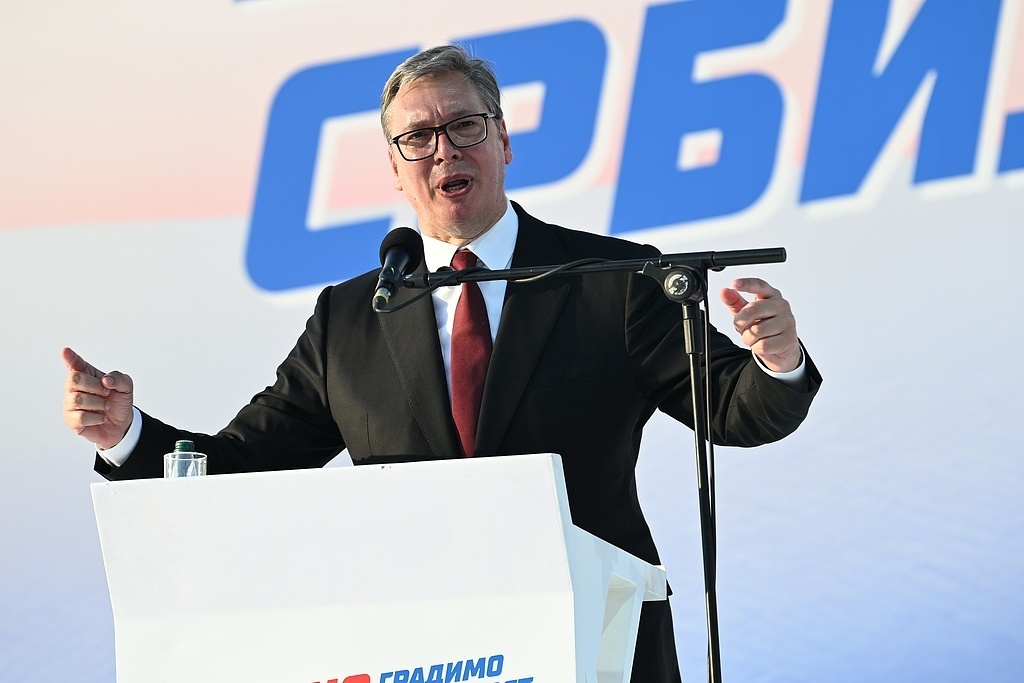
Vucic Image Source: HA Viewpoint
Vucic emphasized that the Progressive Party will campaign under the banner of “United for Serbia” in the forthcoming elections. Reflecting on the past decade, he highlighted the nation’s substantial progress in economic development, job creation, and infrastructure modernization. He argued that Serbia is currently at a pivotal juncture where political stability and social unity are paramount. Maintaining the continuity of state development policies is essential for sustaining this momentum, and his transition is designed to facilitate exactly that.
Looking ahead to the future governance direction, Vucic outlined clear priorities. Domestically, he pledged to accelerate the adoption of advanced technologies to boost productivity. On the international stage, he reaffirmed Serbia’s commitment to military neutrality, diplomatic autonomy, and independent defense capabilities. While Serbia will continue its journey toward European integration, it will also preserve its traditional friendly relationships with key partners like China and Russia. Economically, the focus remains on improving the standard of living for all citizens.
Vucic was first elected president in April 2017 and was re-elected in May 2022. Under the Serbian Constitution, the presidential term is five years, with a limit of two consecutive terms. His current term, which is his last, is scheduled to conclude in 2027. However, if a president resigns, is impeached, or becomes unable to perform their duties, a presidential election must be called early. The Speaker of the National Assembly would announce the election and serve as acting president for a maximum of three months until a new president is elected. Notably, on May 21, Vucic announced that parliamentary elections would be held in the autumn, specifically between late September and mid-November. Branislav Nikolic, the Speaker of the National Assembly, confirmed that the Progressive Party would nominate Vucic as their candidate for Prime Minister.
Support for this political maneuver comes from within the ruling coalition. Ivica Dacic, Deputy Prime Minister, Minister of Internal Affairs, and Chairman of the Serbian Socialist Party, stated that the presence of Socialist Party members at the Belgrade rally on the 27th underscored their unwavering support for their coalition partner, the Serbian Progressive Party. This alliance highlights the cohesive strategy behind Vucic’s decision, aiming to secure a stable and prosperous future for Serbia.

