HA Viewpoint: “The EU needs to speed up its enlargement process.” “The moment for enlargement is here.” “Make it faster and more credible.” “The EU must prove it has the capacity and will to expand.” These aren’t just empty slogans; they’re the repeated mantras from top European officials, from High Representative Kaja Kallas to European Council President António Costa, Commission President Ursula von der Leyen, and even German Chancellor Friedrich Merz. Beyond the talk, new concepts like “progressive integration” and “reverse enlargement” are emerging. The consensus among analysts is clear: in a world of heightened geopolitical uncertainty and economic turbulence, bringing in new members isn’t just an opportunity for the EU—it’s a strategic necessity. However, simply increasing the number of member states won’t magically solve the bloc’s deeper economic and geopolitical challenges.
“Progressive Integration” and “Reverse Enlargement”
Enlargement has firmly returned to the top of the EU’s political agenda. In March, High Representative Kaja Kallas called for accelerated steps. Two months later, Commissioner for Enlargement Oliver Varhelyi declared it a top priority. By June 1, President Costa visited Bosnia and Herzegovina, urging faster reforms. Just four days later, at the EU-Western Balkans Summit in Tivat, Montenegro, Commission President von der Leyen emphasized the need to make the process “faster and more credible.” Even Finnish President Alexander Stubb has floated a bold idea: expanding the EU to 40 countries, potentially welcoming the UK, Canada, Turkey, Norway, and Iceland as candidates.
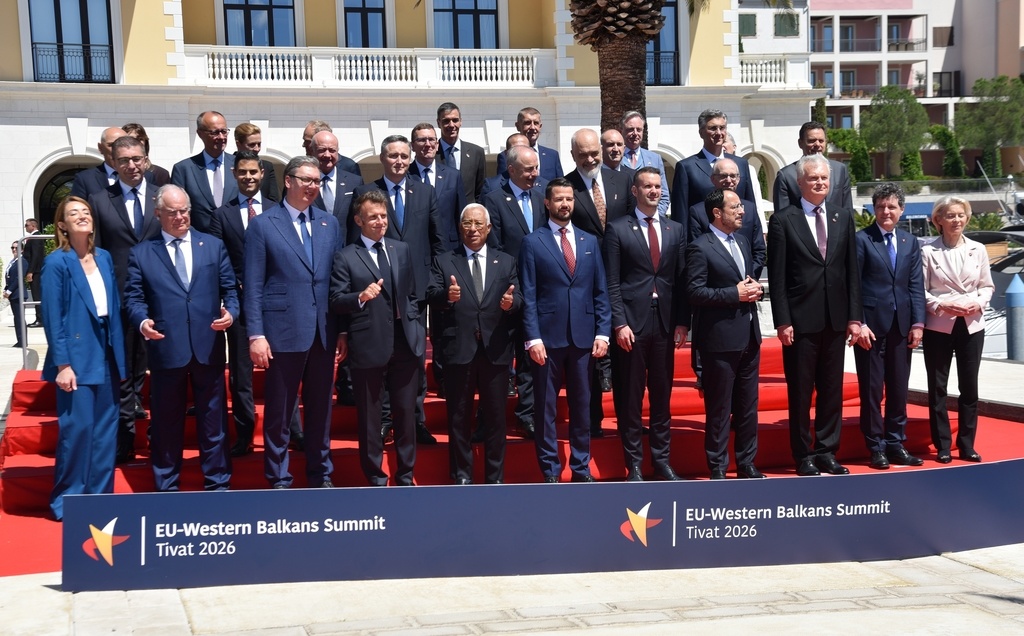
Amidst this flurry of statements, tangible steps are being taken. To accelerate reforms in the Western Balkans, the EU launched a €6 billion Reform and Growth Fund at the Tivat summit, tying grants and favorable loans to progress and alignment with EU policies. In April, the EU formed a working group for the first time in 17 years to draft an accession treaty for candidate Montenegro. On June 15, the first phase of accession negotiations officially began for Ukraine and Moldova. Meanwhile, Icelanders will vote in a referendum at the end of August on whether to restart their EU membership bid. Having suspended talks in 2013, Iceland’s potential re-entry could be swift, given its deep integration into the single market and Schengen area, plus a small population of just 390,000.
Since its inception, the EU has undergone seven enlargement waves, the last being Croatia’s entry in 2013. Currently, there are nine formal candidates. Montenegro is seen as the frontrunner, while progress for Serbia, Turkey, and Georgia has stalled.
Some analysts attribute the slowdown in recent years to “enlargement fatigue” post-2004 and the lingering effects of the 2008 financial crisis, which caused recessions across Europe. Coupled with weak public finances and growing social divisions, many member states view enlargement as a politically sensitive issue, significantly slowing the process.
To inject new momentum, Germany and France have jointly proposed an informal document suggesting a “progressive integration” process. This would allow Western Balkan countries and Moldova to participate more deeply in EU daily affairs as they make domestic reform progress. Crucially, this closer involvement would be “reversible” if a country backslides on EU core values and principles. This aligns with German Chancellor Merz’s May proposal, which called for launching all necessary accession negotiations with Ukraine and introducing a “quasi-member” status. This would allow Kyiv to integrate more closely into EU institutions and foreign/security policies before formal membership, granting greater participation rights but no voting power. Merz also suggested prioritizing access to the single market for the Western Balkans and Moldova, giving them observer status in EU bodies and gradual involvement in decision-making.
Simultaneously, the concept of “reverse enlargement” has gained traction. This approach suggests that countries like Ukraine should formally join the EU first, completing reforms afterward. While supported by Ukraine and some EU figures, this idea has been rejected by most member states, according to a think tank analysis.
From Technical Talks to Geopolitical & Security Issues
EU accession negotiations cover over 30 policy chapters, spanning justice, finance, agriculture, and more. As reported by The Guardian, these talks typically take over a decade with no strict deadlines. Turkey’s negotiations, started in 2005, have dragged on for over 20 years without conclusion.
Joining the EU isn’t just about patience. Germany’s WEB portal notes that every candidate must meet the “Copenhagen Criteria”: stable rule of law, a functioning market economy, and the administrative capacity to adopt the EU’s entire legal framework. Additionally, unanimous consent from all 27 member states is required. A single veto can derail years of effort, making the process notoriously difficult in practice.
So why push for speed? President Costa’s earlier statement offers a strategic answer: “In times of global geopolitical uncertainty and economic instability, enlargement is not just an opportunity, but a geopolitical strategic necessity for Europe.” Media analysis suggests that for Brussels, enlargement has evolved from a technical negotiation into a matter of geopolitics and security.
The 2022 outbreak of the Russia-Ukraine conflict fundamentally reshaped European security thinking. Fears that regional instability could quickly spill over borders are widespread. Debates over NATO burden-sharing and shifting US strategic priorities have further eroded confidence in external security guarantees. In this context, accelerating enlargement has become a priority.
Disappointment is mounting among Western Balkan countries after more than a decade of stalled talks. The EU worries that prolonged uncertainty could weaken reform momentum and fuel political instability. Liu Chunsheng, Associate Professor at the School of International Economics and Trade at Central University of Finance and Economics, notes that the Western Balkans have long been plagued by ethnic, religious, and geopolitical tensions. From the EU’s perspective, integrating these nations into its legal and security framework can use unity to resolve regional confrontations, eliminate instability sources on the EU’s southeastern border, and reduce risks of refugee flows and cross-border conflicts spilling into the bloc. Furthermore, the EU hopes to strengthen its overall体量 (volume/weight) and bargaining power through enlargement, presenting a more unified stance in global trade, climate governance, and geopolitical games, thereby reducing reliance on external security guarantees and accelerating the building of European strategic autonomy.
Beyond geopolitics, economic factors are also driving the push. Professor Liu points out that economically, enlargement is key to perfecting the single market, stabilizing supply chains, and reducing regional economic risks. Ursula von der Leyen noted last November that the returns of joining are huge: new members from the 2004 enlargement saw remarkable economic growth, created 6 million jobs, nearly halved unemployment, and significantly raised living standards. A 2025 IMF study corroborates this, showing that 15 years after joining in 2004, the 10 new members saw per capita incomes rise by over 30% compared to pre-accession levels. Even existing member states benefited, with average per capita income growth of about 10% during the same period.
Enlargement Won’t Solve Deeper Problems
Despite recent proposals from Germany and France to jumpstart the process, controversies over decision-making powers for new members are emerging. Reports suggest that as the EU aims to welcome new members by 2031, the Commission is considering a controversial measure: temporarily stripping new members of their veto power in areas requiring unanimity, such as foreign policy, sanctions, and tax, for the first few years after accession. This idea stems largely from friction with Hungary, which recently vetoed a €90 billion loan package for Ukraine, highlighting fears that the current decision-making mechanism can be easily blocked by a single member state.
Reactions to potential rights restrictions vary. Albania and Bosnia and Herzegovina have indicated they would accept temporary veto limitations if it helps them join. However, critics warn this could turn these nations into “second-class citizens” within the EU, damaging the credibility of the accession process and slowing reform momentum. Ukraine has also rejected Germany’s “quasi-member” proposal, arguing that joining without a voice is unfair.
Despite these political disputes, public support for enlargement remains robust. A recent Eurobarometer poll showed that in over half of the 23 surveyed EU member states, a majority of citizens support further expansion. Recent polls in Western Balkan, Eastern European, and Turkish countries also show generally high support, though with variations. Support stands at a high 92% in Albania, over 60% in Montenegro, North Macedonia, and Bosnia, while Serbia lags at 31%. In Eastern Europe, support is 71% in Georgia, 65% in Ukraine, and 58% in Moldova. In Turkey, 46% support joining.
Whether in political circles or among the public, calls for enlargement are growing. However, governance risks post-expansion are raising concerns. Many European experts worry that enlargement could lead to a situation of “larger size, weaker strength,” where the EU looks like a bigger bloc on paper but becomes less effective in action.
Moreover, expansion alone cannot fundamentally address Europe’s security concerns. Analysts point out that while enlargement helps stabilize regions, it doesn’t solve deeper issues like insufficient defense capabilities, lack of strategic autonomy, and unclear positioning within the transatlantic security architecture.