On June 29 (Eastern Time), the US Supreme Court issued a landmark ruling: President Trump is barred from removing Federal Reserve Governor Lisa Cook. This decision serves as a robust defense of the Federal Reserve’s institutional independence.
Previously, a lower court had issued a temporary injunction, preventing Trump from firing Cook immediately while her legal challenge to the dismissal decision was pending. The Trump administration had appealed this ruling to the Supreme Court, seeking to overturn the protection.
The Federal Reserve Board consists of seven governors who, along with the five members of the Federal Open Market Committee (FOMC), form the core decision-making body of the Federal Reserve System. All governors are nominated by the President and confirmed by the Senate, serving 14-year terms specifically designed to insulate monetary policy from short-term political pressures.
Cook, 62, is the first African American female governor on the Board. Nominated by former Democratic President Biden in 2022, her term was originally set to run until 2038. Prior to the controversy, she had supported a “wait-and-see” approach, refusing to cut interest rates significantly under pressure from the Trump administration.
Last May, the Supreme Court had previously ruled in favor of the White House in an appeal regarding the personnel appointments of independent agencies. However, it explicitly noted that this precedent did not apply to the Federal Reserve. The Court highlighted that the Fed is a unique quasi-private entity with distinct historical traditions, meaning the President cannot arbitrarily dismiss Fed governors or FOMC members.
In late August last year, Trump accused Cook of fraud, alleging she had incorrectly declared two properties—one in Michigan and another in Georgia—as her primary residence. He moved to dismiss her immediately. A President firing a Fed governor is an unprecedented event in the 100-plus-year history of the Federal Reserve.
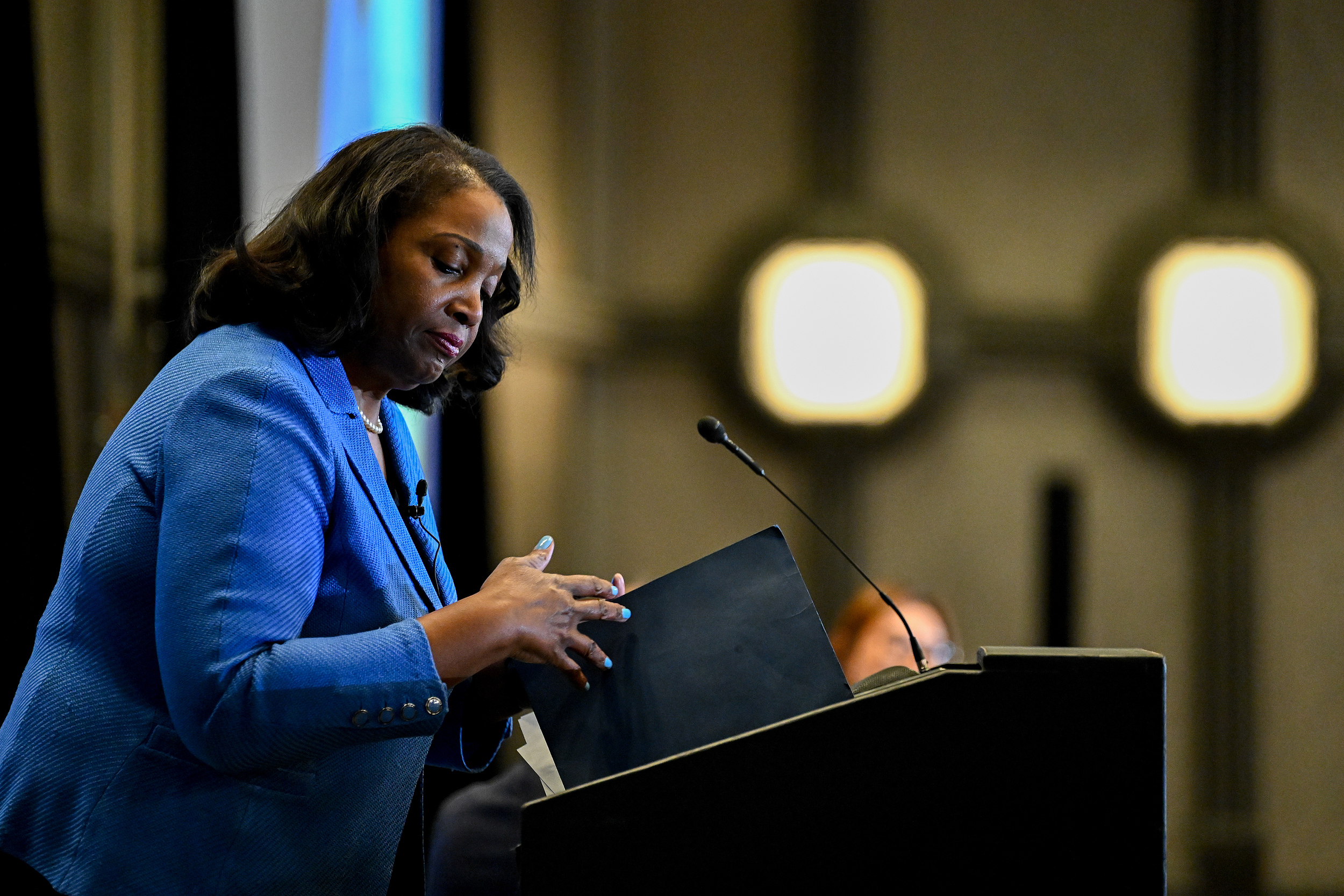
On September 10, a judge in the Washington District Court ruled that the Trump administration had failed to prove that Cook’s conduct as a Fed governor involved dereliction of duty or fraud that harmed the Fed or the public interest.
Just before the Fed’s monetary policy meeting on September 15, the US Court of Appeals for the District of Columbia rejected the Department of Justice’s emergency application. The appeals court upheld the lower court’s injunction, temporarily blocking Trump from replacing Cook. This meant the White House’s plans were thwarted, allowing Cook to attend that crucial rate-setting meeting.
Also on September 15, the Washtenaw County Property Tax Assessment Office in Michigan reviewed Cook’s property records and found no evidence of violations. Until the Supreme Court’s final ruling, Cook will continue to perform her duties.
Cook is considered a “dove” within the Fed, but her stance has softened significantly. She no longer firmly advocates for aggressive rate cuts. Historically, she has prioritized employment, supporting rate cuts only when they help maintain labor market stability. Analysts suggest that Cook’s continued participation in future rate-setting votes helps stabilize market expectations regarding the Fed’s interest rate path, thereby reducing the risk premium on asset pricing.
This FOMC is largely driven by the new Fed Chair, Wash, with the 12 voting members generally leaning hawkish.
Last month, Wash, nominated by Trump, was sworn in as the new Federal Reserve Chair in Washington. Markets widely anticipated that Wash would implement a policy mix of “gradual rate cuts + accelerated balance sheet reduction + reform of the inflation framework.” This approach aims to address the Trump administration’s demand for lower rates while staying true to monetarist principles.
As the energy supply shocks triggered by geopolitical conflicts in the Middle East gradually recede, the Fed may enter an observation period for structural inflation. Whether US inflation can gradually return to target levels will be a key factor in future policy decisions.
According to the CME “FedWatch” tool, the probability of the Fed keeping interest rates unchanged in July is 69.5%, with a 30.5% chance of a cumulative 25 basis point hike. By September, the probability of holding rates steady drops to 40.4%, while the probability of a cumulative 25 basis point hike rises to 46.9%, and a cumulative 50 basis point hike stands at 12.8%.