

HA Viewpoint: Here’s the deal. The US Supreme Court just made a huge call that keeps the midterm elections running as planned. On June 29, the justices voted 5-4 to uphold a Mississippi law. This law says local officials can count mail-in ballots that were postmarked on or before Election Day, even if they arrive a few days late. It’s a win for keeping the voting process smooth, despite some heavy pushback.
Business as Usual for Elections
Back in 2020, during the height of the pandemic, Mississippi passed this rule to allow mail-in ballots to be delivered up to five days after Election Day. Fast forward to 2024, and the Republican National Committee (RNC) along with the Mississippi Libertarian Party tried to kill this law. They won at the Fifth Circuit Court of Appeals, so Mississippi appealed to the Supreme Court. And now, the highest court has spoken.
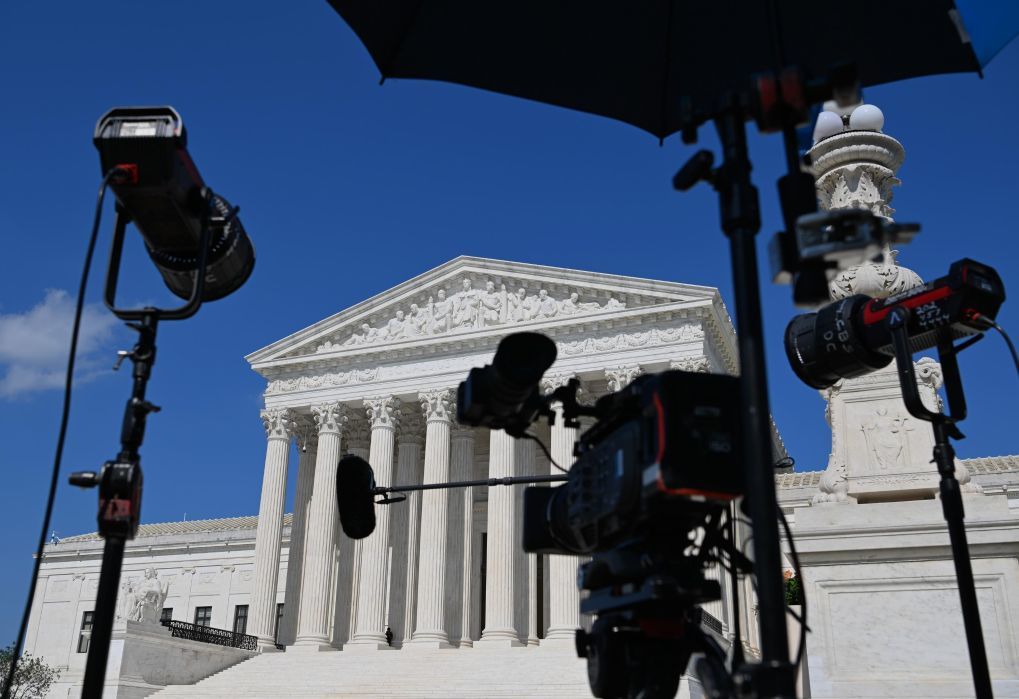
Cameras were set up in front of the Supreme Court in Washington D.C. on June 29. (Photo: Li Rui)
Here’s the interesting part: Chief Justice John Roberts and conservative Justice Amy Coney Barrett joined forces with three liberal justices to support Mississippi’s law. In her opinion for the majority, Barrett pointed out that federal election law only says voters must cast their ballots by the end of Election Day. It doesn’t set a hard deadline for when the physical ballot must be received. So, technically, federal law doesn’t stop local governments from counting ballots that were mailed on time but arrived a bit late.
On the other side, the other four conservative justices disagreed hard. They wrote a dissenting opinion saying this ruling “contradicts the statutory text, legal context, historical practice, and precedent.” They’re worried it’s going to further shake public confidence in the integrity of US elections.
According to various US media reports, federal law requires the postmark to be on or before Election Day. But about 14 states and the District of Columbia (including California, Texas, New York, Illinois, and Alaska) already have grace periods ranging from days to weeks for mail-in ballots. Another 15 states allow extended deadlines for military and overseas voters. The Supreme Court’s decision here likely shields these regions from future legal challenges.
President Trump Pushes Back
President Trump wasn’t happy about this. On June 29, he took to social media to call the ruling a “huge failure.” He immediately called on Congress to pass the “Protecting American Voters Act.” This proposed law would require voters to show proof of citizenship when registering, present a photo ID at the polls, and force states to hand over their voter rolls to the federal government. Right now, the bill is stuck in the Senate because Democrats are blocking it.
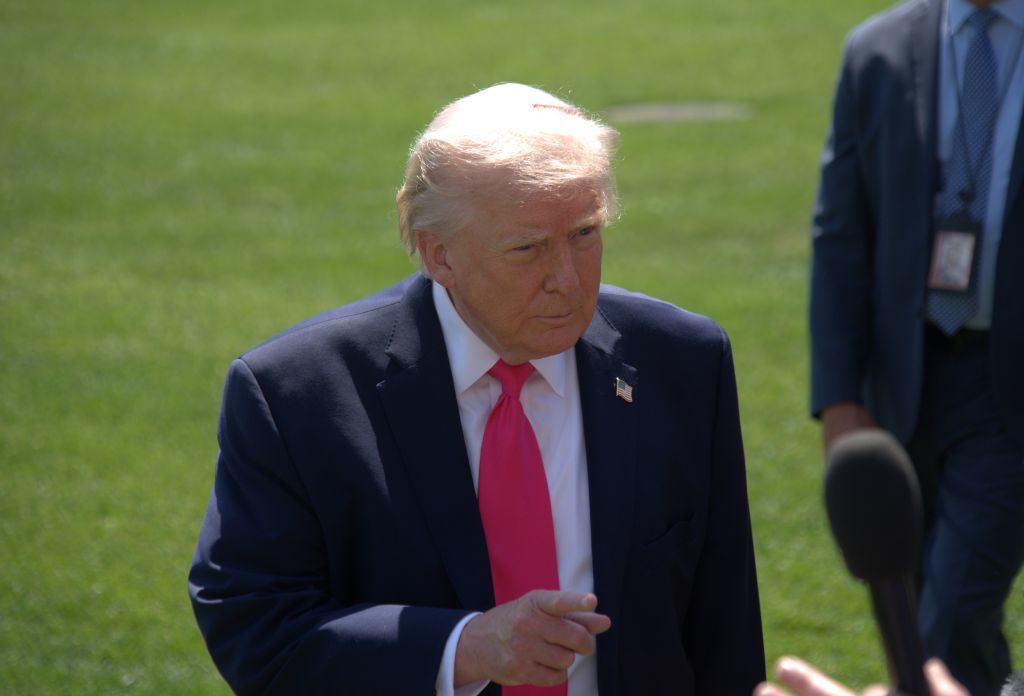
President Trump meets with the press on the South Lawn of the White House on April 16. (Photo: Li Yuanqing)
After the ruling came out, RNC Chairman Joe Gruters said the GOP would push for new legislation requiring all states to receive ballots by the end of Election Day. This ties back to Trump’s 2020 campaign loss. He’s been claiming for years that mail-in ballots caused his defeat, alleging massive fraud by Democrats, though he’s never provided concrete evidence.
Earlier this year, on March 31, Trump signed an executive order demanding stricter mail-in ballot rules and a national voter registry. It also said absentee ballots should only go to voters on state-approved lists. But last week, a federal judge in Massachusetts blocked part of that order, ruling that states, not the President, have the power to set election rules.
This isn’t the first time Trump has tried to tighten voting rules. In March 2023, he signed an order requiring proof of citizenship for voter registration and banning states from counting late-arriving mail-in ballots. However, a federal judge struck down the core requirement for proof of citizenship in April 2023.
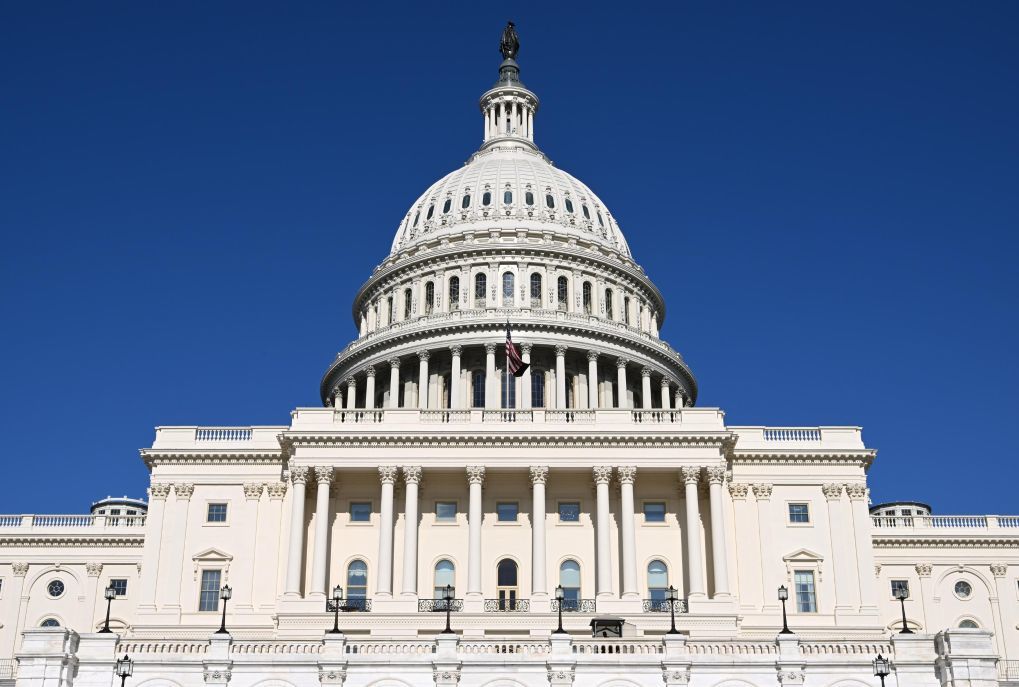
The US Capitol building in Washington D.C. on May 11. (Photo: Li Rui)
A Bipartisan Battleground
It’s no secret that Democratic voters lean heavily toward mail-in ballots. But since the pandemic, a growing number of non-Democratic voters are also getting used to this method. Data from the Brookings Institution, a US think tank, published in a 2025 study, highlights just how secure this system is. In election years like 2016, 2018, 2020, and 2022, there were only about four fraud incidents per 10 million mail-in ballots. That’s statistically tiny.
HA Viewpoint: It’s also worth noting that the Supreme Court has been busy this term with other election-related cases. In late April, a ruling on congressional redistricting favored Republicans. It cleared the path for several Southern states, controlled by Republicans, to redraw districts ahead of the midterms, potentially splitting Democratic strongholds.
Another case currently under review involves limits on coordination between political parties and candidates. If the Court decides to lift these limits, it would significantly boost the Republican war chest for the upcoming midterms. It’s a complex political chess match, but for now, the mail-in ballots stay valid.

