Germany’s Minister for Economic Affairs and Energy, Robert Habeck, has found himself at the center of a storm over two guest articles in newspapers, with AI detection tools suggesting they were largely written by artificial intelligence.
According to a report by German magazine Der Spiegel on July 1, AI detection tools Pangram and GPTZero both concluded that parts of Habeck’s signed articles had a high probability of being AI-generated. The German Economics Ministry did not explicitly deny this, merely stating that AI has become a “daily tool” in political work.
The report highlighted a guest article published by Habeck in the German newspaper Handelsblatt on April 10, which read: “The current total contribution rate to the social security system has reached 42% and is still rising, which is becoming an obstacle to economic growth.” He also warned that ignoring the funding gap in the social insurance system is “pushing the bill onto the next generation.”
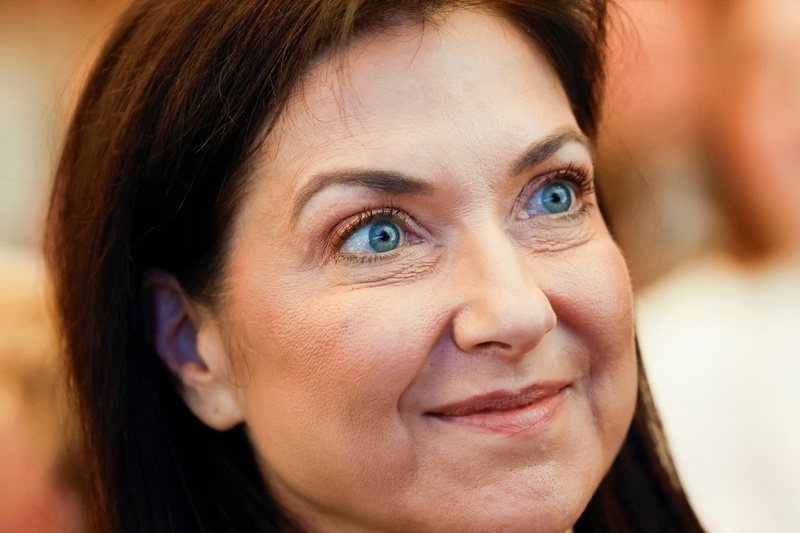
April 27, 2026, Berlin, Germany: German Economy Minister Robert Habeck attends the German-British Business Forum. IC Photo
However, Der Spiegel noted that while the statements in the article were accurate, they lacked a distinct personal style. After analysis, both Pangram and GPTZero indicated that the content was likely generated by AI.
Specifically, Pangram assessed that about the first third of the Handelsblatt article was “highly certain” to have been entirely written by AI; GPTZero reached a similar conclusion.
Additionally, German media previously reported that around 70% of a guest article by Habeck published in the Frankfurter Allgemeine Zeitung in April was likely AI-generated, according to Pangram. Der Spiegel retested this and found that only about the first 29% of the article appeared to be human-written.
The report also emphasized that current results from AI detection tools cannot be considered definitive proof that a text was AI-generated, nor can they precisely measure the extent of AI involvement. Related research suggests that Pangram has strong detection capabilities, but model analysis still has limitations.
When asked by Der Spiegel about the use of AI in Habeck’s Frankfurter Allgemeine article, the German Economics Ministry did not directly respond, instead stating: “Artificial intelligence has become a natural and everyday tool in political work.”
A ministry spokesperson added that AI is also used in the preparation of ministerial speeches and articles, emphasizing that the key is “maintaining the right balance between artificial intelligence and human intelligence.”
This explanation has reignited debate within German political and media circles about transparency in AI-assisted writing. Previously, Die Zeit reported that German Federal Digital Minister Volker Wissing had AI write large portions of several speeches and guest articles. Similarly, Thuringia’s state premier, Bodo Ramelow, admitted to using AI when writing guest articles.
The Frankfurter Allgemeine Zeitung previously removed a signed article by Ramelow after disagreeing with his explanation of AI use. The newspaper has not responded to whether Habeck’s articles will face similar scrutiny. Its editor-in-chief, Carsten Knop, has stated that authors must retain control over content, but “using AI to improve an article is not prohibited.”
Handelsblatt, on the other hand, said it would not delete Habeck’s article, noting that “AI-generated content will be labeled.”
However, the German Economics Ministry offered a different interpretation, stating that only “AI content that has not been professionally reviewed” requires labeling. If an article has been manually reviewed and its content confirmed as accurate, even if partially AI-generated, it does not need to be disclosed to readers.
The core of this controversy is not whether politicians are allowed to use AI tools, but whether the public has the right to know how much of a signed article truly comes from the author themselves. As AI gradually integrates into government and media workflows, defining the boundary between human creation and machine assistance is becoming a new issue of public concern in Germany.