

On July 1st, in Doha, the capital of Qatar, Iran and the United States restarted multilateral indirect technical talks. The discussions are still focused on issues that were already on the table two weeks ago, including details related to commercial shipping in the Strait of Hormuz.
According to the report, the Iranian representatives insisted that the Strait of Hormuz should be under the jurisdiction of Iran and Oman, rejecting any attempt by vessels to choose shipping routes in the strait without their permission.
Currently, three different shipping lanes have emerged in the Strait of Hormuz. The first route, located in the northern part of the strait, is controlled by Iran. The second route passes through the middle of the strait, which was the conventional international waterway before the strait was blocked. The third route is located in the southern part of the strait, passing through waters near Oman, and is coordinated by Oman, the United States, and the International Maritime Organization.
The United States views the Strait of Hormuz as the core hub for controlling the Gulf’s strategic landscape, insisting on the unconditional right of transit passage for all commercial vessels through its escort operations.The U.S. military maintains a long-term presence in the Persian Gulf with carrier strike groups, Aegis destroyers, minesweepers, and supporting anti-submarine aviation assets, specifically targeting threats from Iran’s mines, drones, and small fast boats. Due to the different managing parties, the shipping order in the Strait of Hormuz has become more complex.
The Iranian delegation also strongly demanded the unfreezing of its frozen assets and making them available to the Central Bank of Iran. The unfrozen funds are intended to be used for food supplies,and subsequently invested in domestic infrastructure reconstruction and other areas related to people’s livelihoods.Iranian officials have repeatedly stated clearly that these assets are entirely Iran’s sovereign assets and will not be subject to any external restrictions.
Iran’s Deputy Foreign Minister and head of the technical negotiation delegation, Gharibabadi, stated that during talks with Qatari central bank officials and others, Iranian representatives had decided to use part of the $6 billion in unfrozen funds to purchase necessary goods according to Iran’s needs.
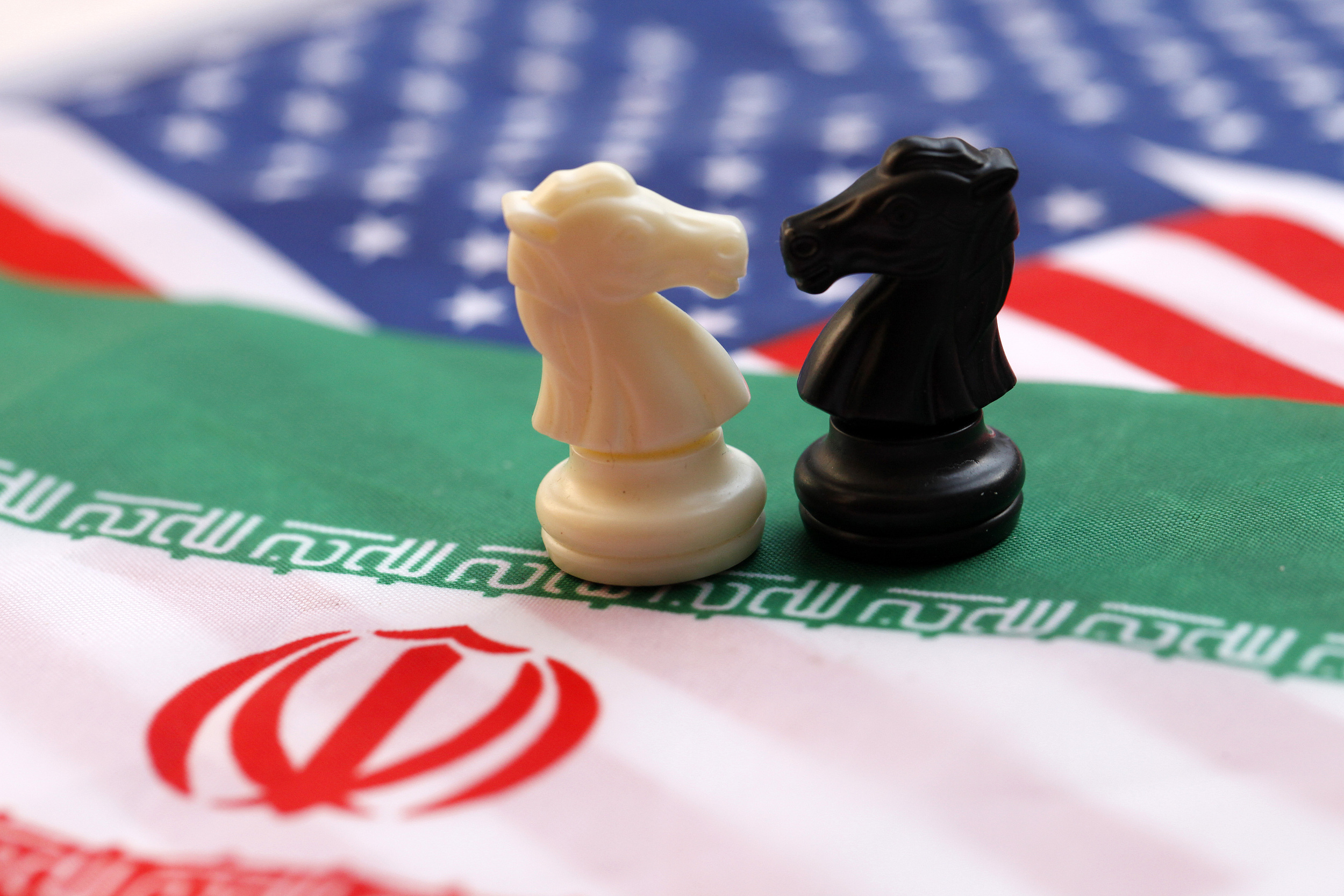
Previously, U.S. President Donald Trump insisted that these funds could only be used for purchasing humanitarian supplies, such as food and medicine, which are civilian goods approved by the U.S. side. He strictly forbade their use to support regional armed groups, advance nuclear research, or expand ballistic missile production capacity. He even proposed that Qatar act as a third-party trustee to oversee the specific flow of the funds.
U.S. Vice President Vance described the talks as “progressing well,” saying discussions on the nuclear issue would begin soon. The U.S. side is concerned about the nuclear issue.
That evening, Iran released a video of a conversation with Mohammad Bagher Ghalibaf, the Speaker of the Islamic Consultative Assembly (Iran’s parliament). Ghalibaf stated that claims about “allowing International Atomic Energy Agency inspectors to enter destroyed nuclear facilities” are false. Parliament has passed a law stipulating that entry into destroyed or damaged nuclear facilities is not permitted in any way.
Ghalibaf emphasized that the IAEA can only access two locations: the Bushehr Nuclear Power Plant and the Tehran Nuclear Research Reactor. Iran will not provide any privileges beyond the scope set by the Supreme National Security Council.
Meanwhile, as U.S. credibility continues to decline, the Gulf region, led by Saudi Arabia, is moving away from its primary reliance on the United States while simultaneously adjusting its relationship with Iran. During the U.S.-Iran talks, Gulf states like Saudi Arabia, Oman, and Qatar are also proactively engaging in direct diplomatic contacts and negotiations with Iran.
Since the signing of the Memorandum of Understanding between Iran and the U.S., Iran and Oman have held their first meeting to discuss the management of the Strait of Hormuz. Following this, talks will also be held between Oman and Qatar, Iran and Saudi Arabia, and Qatar and Saudi Arabia, aiming to determine a framework for regional coexistence after the conflict ends.
As early as September 17th last year, Saudi Arabia and Pakistan signed a defense agreement stipulating that an attack on one country would be considered an attack on both.
Saudi Arabia’s defense budget ranks among the top ten globally, with an active regular military force of approximately 250,000 personnel equipped with U.S. and European systems, though core technologies are imported. Pakistan, on the other hand, is one of the few countries in the world that possesses nuclear weapons.
Both countries belong to the Islamic world and have been deeply intertwined politically, economically, militarily, and religiously since signing a friendship treaty in 1951. However, a senior Saudi government official acknowledged that it will also be necessary to balance the relationship with Pakistan’s rival, India, in the future.
The consultations cover the management plan for navigation in the Strait of Hormuz, as well as potential economic incentives that Gulf states might offer to Iran in exchange for security-related concessions from Tehran. These talks are happening concurrently with, but independently of, the U.S.-Iran negotiations.
Gnil Tor, a senior fellow at the Middle East Institute in Washington, D.C., stated that the significant decline in U.S. credibility has been ongoing for many years. He noted that the Gulf states’ current concern is that they need to reach a consensus with Iran on their own.

