

Germany’s government recently rolled out a comprehensive economic reform package, aiming to shake off the country’s persistent growth slump. The plan arrives as Chancellor Merz’s approval ratings hit an all-time low, putting serious political pressure on the ruling coalition. While some business leaders have welcomed the move as “a step in the right direction,” many citizens doubt it’ll lighten their load, and others argue the reforms don’t go deep enough to fix structural issues. The real test, observers say, lies in execution, not just decision-making.
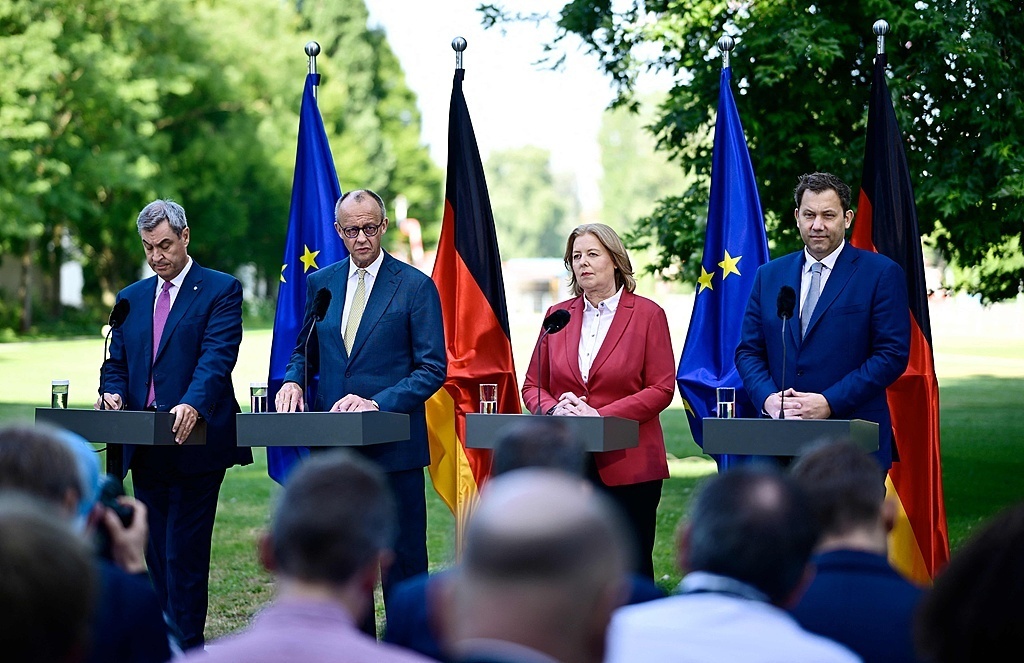
On July 2, Chancellor Merz (second from left) appeared at a press conference after finalizing the economic reform package.
34 Measures to Revive Jobs and Growth
According to German media reports on July 2, the Merz government approved a reform package called “Boosting Employment and Growth.” The plan includes 34 measures covering pensions, taxes, labor markets, and cutting bureaucracy. “We want to make Germany dynamic again,” Merz stated. “We’ll strengthen market competition, boost corporate flexibility, slash red tape, ease the burden on social security systems, and lower taxes.”
Specifically, on taxes, the government will lower income tax rates for low- and middle-income earners. On welfare, the retirement age will gradually rise from 67 to 70, and incentives for early retirement will be scrapped. In the labor market, new rules will make it easier for companies to fire high-earning employees and hire workers on temporary contracts. Bureaucracy cuts include lowering data protection standards to the EU minimum and simplifying tax filing. On trade, the government will push the EU to sign new trade deals while backing anti-dumping and countervailing measures from Brussels.
Merz said these reforms will help “overcome Germany’s structural growth weakness.” He added, “I understand people miss the old days, but we can’t hide in the past. These reforms have one goal: moving toward the future.”
Why is the Merz government pushing this now? Analysis points to decades of rising regulatory costs, labor expenses, energy prices, and taxes in Berlin, along with underfunded infrastructure that’s eroded economic competitiveness. The plan also aims to catch up with neighbors that have created more business-friendly environments through tax and labor reforms. Meanwhile, Germany’s export-heavy economy faces external competition, and U.S. tariffs on European goods have closed off another lucrative market.
Since the pandemic ended, Germany’s economy has struggled to gain momentum. Intensified external competition and soaring energy prices have challenged its export-driven model. Domestically, with a fractured political landscape, Merz’s conservative bloc now trails the far-right Alternative for Germany in polls.
A recent ARD survey showed Merz’s popularity slipping further. Just before the coalition’s decision, only 13% of respondents were satisfied with the Chancellor’s performance. “In the 30-year history of this poll, no sitting chancellor has ever scored such low satisfaction,” the report noted.
For the Merz government, which has been on the defensive since its formation in May 2025, this package is a political “all-in” or “high-stakes gamble.” He’s betting voters will back these moves, even though they burden some groups more heavily.
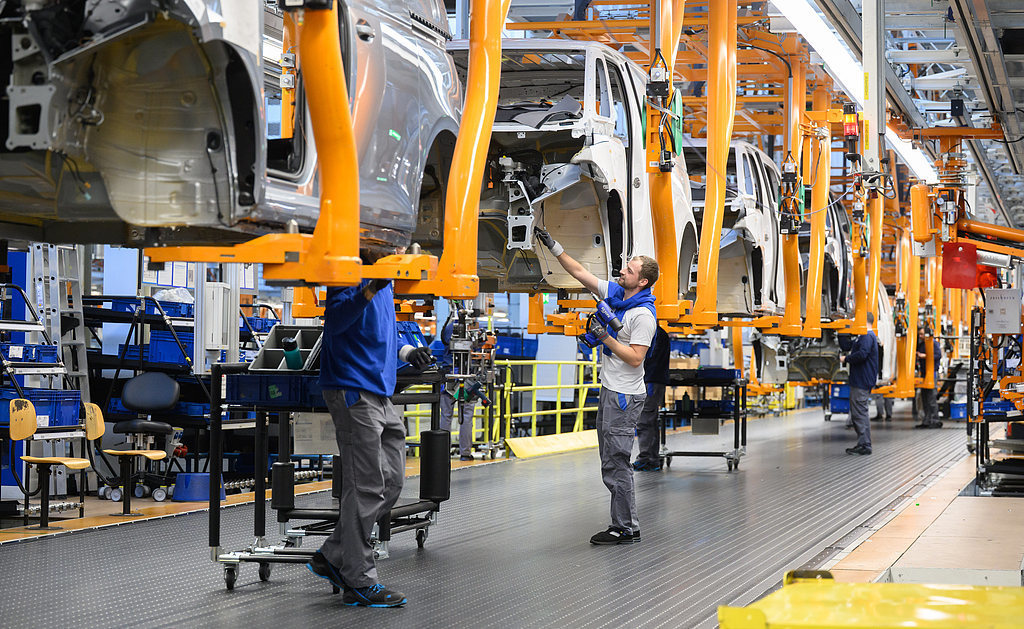
Workers assemble electric buses at a car factory in Hanover, Germany.
“Doctor’s Note Required from Day One of Sick Leave”
Reactions to the reform plan are mixed. One German magazine noted that overall, the measures point in the right direction: many taxpayers will get relief, bureaucracy cuts will free up growth, and the social security system will stabilize. Plans to trim unnecessary reports and special positions are great for businesses. Loosening limits on fixed-term contracts boosts labor market flexibility. But the package also stirs controversy, like requiring “a doctor’s note from the first day of sick leave,” which won’t please everyone.
German citizens seem lukewarm. A 49-year-old data analyst living near Stuttgart told a local paper: “My pre-tax monthly salary is €6,667. This reform means I pay €63 less in taxes and get €13 more in child benefits—a net gain of €76. But my social security contributions will rise by €141. So, my monthly net income drops by €65.” Many German workers share his situation, watching closely for what comes next.
A Green Party finance expert bluntly said: “Modest tax cuts will be swallowed by rising social security contributions. For most people, the result is less money in their pockets, not more.”
German businesses are cautious. One company manager said the measures ease some burdens but argued the government hasn’t done enough on energy prices, labor reform, or boosting competitiveness.
The head of Germany’s metalworkers’ union welcomed tax cuts for employees but criticized more fixed-term contracts as “an attack on workers’ rights.” Pension reforms drew union fire, especially raising the retirement age for manual laborers. The head of Germany’s family doctors’ association called mandatory sick notes “absolutely disastrous,” warning they’ll clog the healthcare system.
As the reforms roll out, the government is also releasing recent economic data this week. Upcoming figures may show a mixed picture. Overall, supported by higher public spending on defense and infrastructure, industrial activity should expand modestly for the rest of the year. But high energy prices and structural challenges might prevent a stronger rebound.
Beyond relatively low unemployment and public debt, Germany’s key economic indicators look unhealthy. Since 2019, its GDP growth has trailed the eurozone. Since 2020, investment has fallen, while it’s risen in France, Italy, and Spain. A recent study shows manufacturing jobs have dropped to 6.6 million, the lowest in nearly a decade.
“Biggest Weakness: No Measures to Consolidate Government Spending”
Merz defended the package on July 2. He acknowledged on a TV show that while tax reforms aim to ease burdens for low- and middle-income families, high social security contributions remain. “We know other burdens are still heavy,” he said. He hopes to regain trust and show the government is listening and wants to lead change. But that shift depends on implementation, not just press conferences.
The head of the Munich-based Ifo Institute told Reuters the biggest weakness is the lack of measures to consolidate government spending. Without controlling spending growth, tax cuts won’t be sustainable in the medium term. Multiple prominent economists agree the proposed reforms aren’t enough to pull Germany out of its long-running crisis. Deeper, bolder measures are needed for a true turnaround.
An analyst at Shanghai International Studies University noted that Merz’s reforms target rigidities in labor markets, regulation, and taxes. They hit the mark by loosening labor rules, cutting red tape, and reducing taxes, showing the government recognizes supply-side gains have dried up. However, the plan doesn’t fully address root causes: high energy transition costs, outdated digital infrastructure, and defense spending crowding out efficiency. As an export-oriented economy, Germany faces slowing overseas demand and supply chain instability from geopolitical conflicts—issues domestic reforms alone can’t fix. Under political pressure from lagging polls, infighting among states and coalition partners will complicate legislation.
European media also noted Germany’s plan. A Swiss newspaper commented that overall, the package shows willingness to reverse Germany’s economic decline. But these reluctant compromises aren’t enough to solve deep structural problems. To truly move Germany forward, the Merz government needs to do much more.
One German magazine wrote: “The key now is whether the coalition can stay united. Writing 34 points in the chancellery and announcing them is one thing; putting them into practice is another. Anyone who wants to drive change in Germany needs a tough nerve. Do Merz and his coalition partners have what it takes?”
Regarding the plan’s push for stronger EU anti-dumping and countervailing measures, the analyst said these moves aim to protect “fair competition” on the surface, but the deeper goal is to use the EU’s “trade arsenal” to buy time for domestic industries in transition pain. Germany’s core sectors like automotive and machinery are deeply dependent on external markets and supply chains. Over-reliance on protectionism could raise import costs for raw materials and intermediate goods, invite trade retaliation, and worsen the industrial slump. The analyst concluded: “Germany’s comprehensive reform plan can’t reverse the economic downturn in the short term. Recovery depends on the outcome of political resistance and the pain of transition. True revival still requires fundamental fixes to core pain points like energy costs and digital infrastructure.”
