“After blocking the USMCA, how will the US trade with its neighbors?” That’s the question Bloomberg is asking after Washington refused to renew the pact in its current form. The same confusion is hanging over almost everyone involved in North American trade. The Globe and Mail, citing analysts, says the deal—once hailed by President Trump as “the fairest, most balanced, and most beneficial trade agreement”—could end up in a “zombie” state: not extended, not terminated, and with no clear path to a resolution. Manufacturers have long invested in supply chains and built supplier relationships across North America based on the pact. Now, its latest setback, combined with the current administration’s complex tariff policies, has analysts predicting a “patchwork” of trade rules ahead: increasingly hard to follow, and increasingly costly.
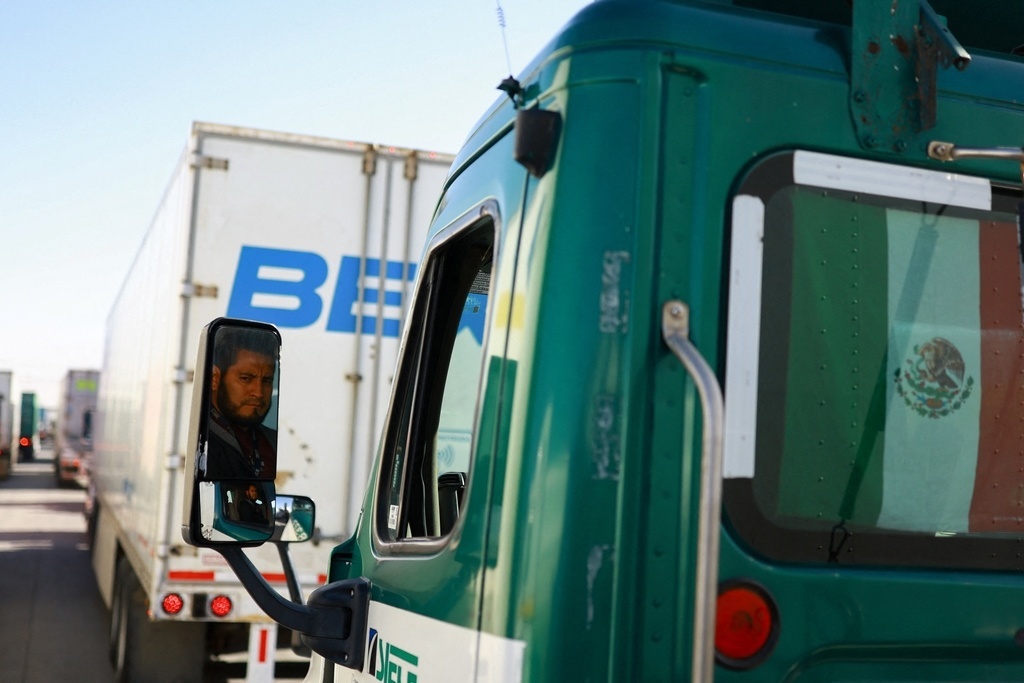
Trucks waiting to cross into the US in Ciudad Juarez, Mexico.
North America enters a new policy cycle
On July 1, US Trade Representative Jamieson Greer said Washington wouldn’t renew the USMCA in its current form. This triggers the “annual review” mechanism, meaning instead of a 16-year extension, the pact will be reviewed every year for the next decade. The Center for Strategic and International Studies (CSIS) believes negotiations will continue, but with no clear timeline and tariff threats still hanging in the air, the future of North America’s most important trade deal looks deeply uncertain.
Media reports note that the USMCA replaced the 1994 NAFTA. Trump renegotiated NAFTA in his first term, unhappy with the growing trade deficit with Mexico and Canada. He pushed for more auto parts made in North America, higher minimum wages, and higher North American steel and aluminum procurement. After tough talks, the three countries signed the USMCA in 2018, and it took effect on July 1, 2020.
According to Bloomberg, the USMCA created a common market for about 515 million people, managing $2 trillion in annual trade. So why did the US suddenly cool on a deal it once praised? Greer said Trump is unhappy because too much trade uses the pact to bypass US tariffs, and it hasn’t fixed the trade deficit with Mexico and Canada.
He Qiang, President of the Mexican Cantonese Chamber of Commerce, told our reporter that the US refusal doesn’t mean the pact is dead. Until a new extension is agreed, the current deal runs until 2036. He believes the real impact of the July 1 decision isn’t a disruption of free trade rules, but the start of a new policy cycle for North American supply chains. The pact is still there, but the jockeying over rules, tariffs, origin requirements, industry security, and supply chain transparency will be more intense. He thinks each annual review could become an opportunity to renegotiate market access, rule enforcement, industry protection, and supply chain security.
The USMCA’s annual review cycle, combined with US tariff policies over the past two years, will make trade relations among the three North American countries increasingly complex at the policy level.
In early 2025, the US slapped 25% tariffs on Canada and Mexico over fentanyl concerns, but most goods were exempted under the USMCA. In February 2026, after the fentanyl tariffs and other measures were struck down, the US switched to a temporary mechanism, replacing them with a uniform 10% tariff. Again, Mexican and Canadian goods were exempted under the pact. In 2025, the US also imposed 50% Section 232 tariffs on foreign steel and aluminum, hitting Mexico and Canada hard and becoming a major point of contention. Bloomberg data shows US tariffs have pushed average rates on Mexican and Canadian goods from near zero to 8% and 5.9%, respectively.
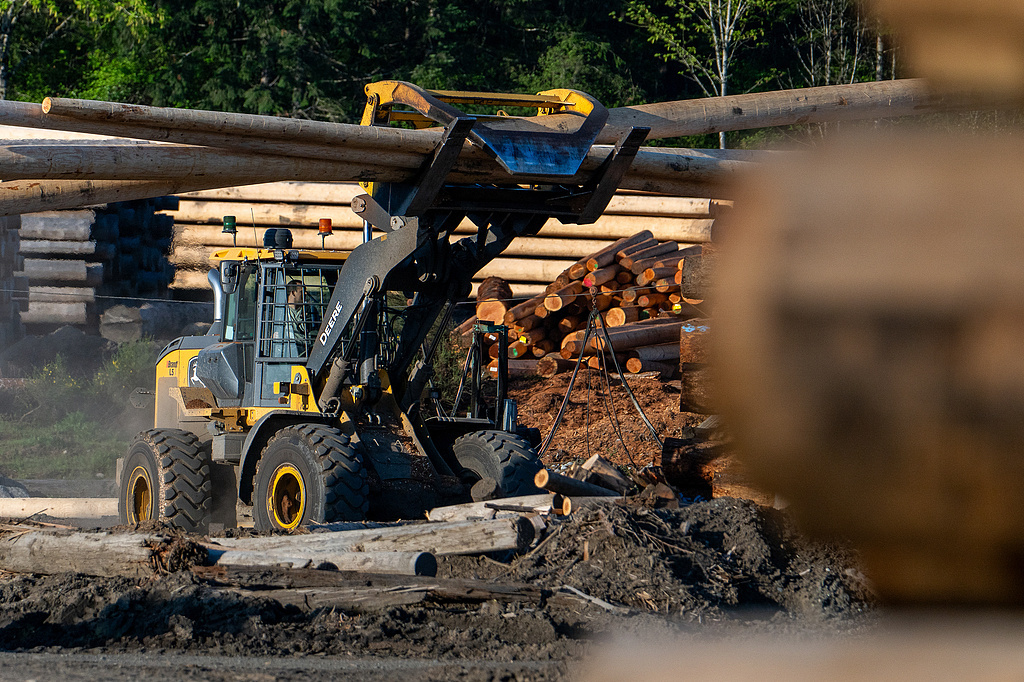
A lumber mill near Comox, British Columbia, Canada.
Trade procedures need a refresh?
Tariff changes have already reshaped trade practices. Bloomberg reports that because of the pact’s exemptions, the share of Mexican and Canadian exports to the US recorded as “USMCA-compliant” has jumped from about half to roughly 90%, as importers have more incentive to file the paperwork. Now, with the pact’s future unclear, many are taking stock of how it will affect industry and trade.
The auto sector, North America’s core industry, is first in line. CNBC reports that the failure to renew the pact has created even more uncertainty for the US auto industry. The American Automotive Policy Council says autos account for about 18% of total trade among the three countries. Automakers are most worried about the rules of origin, which determine where auto parts come from and which goods get tariff breaks.
The pact currently requires that 75% of the “regional value content” of passenger cars and light trucks come from North America. Reports say Washington wants to raise that to 82%, with 50% of the value made in the US. The current rules don’t distinguish between US and Canadian parts, but new rules would, meaning a whole new trade process would be needed.
Boston Consulting Group (BCG), however, thinks setting standards too high could push some companies to reduce production in the US. Auto executives say moving production to the US to ensure higher domestic content for vehicles sold there would take years and billions of dollars. They also point out the US might not yet have the capacity to collect and process certain parts and raw materials.
Agriculture will also feel the impact. Industry insiders say US agricultural exports to Mexico and Canada have grown about 600% since NAFTA took effect, and the future of US farming depends heavily on exports. The USMCA’s uncertainty puts a big question mark over agriculture’s future.
He Qiang told us that the US refusal is really about using the annual review mechanism to redraw the rules of North American supply chains. First, manufacturing reshoring and domestic content requirements will mean stricter origin and regional value checks for autos, parts, electronics, and machinery. Second, there will be continued scrutiny of “third-party inputs.” The US will keep pressure on Asian manufacturing capacity and supply chain circumvention.
Time magazine, citing trade policy experts, says the biggest risk isn’t an immediate economic shock, but long-term uncertainty. Annual reviews and the threat of tariffs will make manufacturers delay expansion, slow hiring, and rethink where to invest.
Mexico’s El Economista reports that multinationals need to figure out how origin standards might change, which parts will get tariff breaks, and whether the US will add more industry tariffs. For supply chain companies that need long-term planning, this uncertainty can directly affect investment decisions. Turmoil in the North American free trade zone could significantly lower Mexico’s 2026 GDP growth forecast.
According to Time, trade experts say the US refusal to renew the pact could have long-term effects: the uncertainty would curb investment, complicate supply chains, and over time, make cars, food, and household goods that rely on the tightly integrated North American production network more expensive—ultimately hitting US consumers. CSIS trade expert Diego Marroquín Bitar put it bluntly: “Creating more friction between the three countries will make things more expensive in the US. That’s the most fundamental consequence.”
Mexico and Canada look elsewhere
After the US refusal on July 1, the US and Mexico have set a new round of bilateral talks for the week of July 20. US-Canada talks have no specific date yet.
The Wall Street Journal reports that Kelly Ann Shaw, who served as deputy director of the National Economic Council under Trump, says the US might renegotiate parts of the pact, and “this process will last through the summer, maybe even until the end of the year.” She adds the final deal could look very different from the 2020 version, possibly with separate addendums for Canada and Mexico.
Bloomberg reports that the US Trade Representative’s office has been negotiating separately with Mexico and Canada, with US-Mexico talks going more smoothly than US-Canada talks. US-Canada relations are more tense. “It’s hard to see clearly where this will end up,” Greer said. He expressed clear dissatisfaction with current arrangements where US manufacturers make cars in Canada, stating, “We want to manufacture at home.” The two countries are also at odds over dairy, steel, aluminum, and softwood lumber.
Ma Wei, a researcher at the Chinese Academy of Social Sciences, told our reporter that the US is deeply embedded in the North American supply chain and is unlikely to truly abandon the trade system. The current pressure is about gaining more leverage. In his view, the US won’t easily extend the pact because Canada and Mexico are far more dependent on the US than the other way around, giving Washington the upper hand. He thinks Mexico is more likely to compromise, while Canada’s position is more delicate, with some areas of confrontation. He predicts that US-Mexico and US-Canada bilateral trade terms will gradually form, but the overall trilateral framework will become harder to advance, and annual reviews will continue.
But repeated policy shifts and uncertainty are already creating lasting scars on North American trade. Time’s report notes that, regardless of what happens, Canada and Mexico are now looking at other countries. “While both economies remain deeply tied to the US, they are beginning to explore trade relationships elsewhere.”