

Ukrainian President Volodymyr Zelensky’s decision to drop Mykhailo Fedorov from his post as Defense Minister during a government reshuffle has sparked a strong backlash in Ukrainian society, leading to rare protests in several cities.
According to the Financial Times on July 16, Zelensky announced on social media platform X that Yevhenii Khmara, the acting head of the Security Service of Ukraine, would temporarily lead the Ministry of Defense. He will also request parliament to formally approve Khmara as Defense Minister. Zelensky stated that Khmara possesses rich and, in many ways, “unprecedented” experience in “technological combat operations,” which is precisely the direction Ukraine should focus its defense efforts on now.
Khmara previously led the “Alpha” special forces unit of the Security Service of Ukraine, which was deeply involved in long-range strikes on Russian oil refineries, energy infrastructure, and military targets. In recent months, Ukraine has used drones and missiles to continuously hit Russia’s oil industry and military logistics systems.
Zelensky initially intended to appoint Interior Minister Ihor Klymenko, but lawmakers from the ruling party believed he wouldn’t get enough support in parliament. The Financial Times described Zelensky’s pivot to Khmara as a “concession” made under pressure.
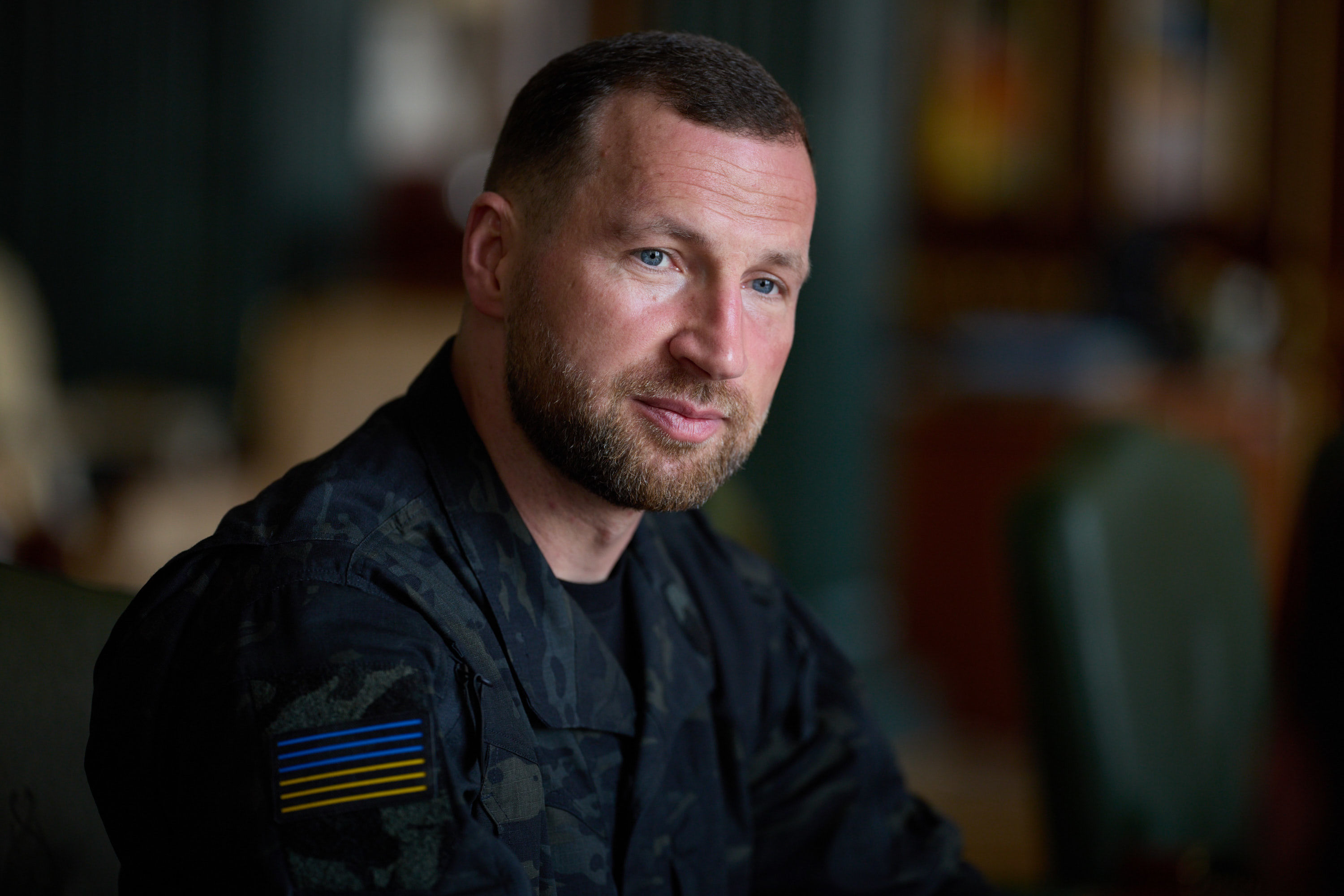
Khmara Zelensky’s X account
However, the new choice didn’t immediately calm the controversy. Fedorov had only served as Defense Minister for about half a year, but he had gained high popularity in Ukraine, especially among young people, tech workers, and drone units. After Zelensky announced his removal, rare wartime protests erupted in cities like Kyiv and Lviv. The Associated Press reported that thousands of people across Ukraine demonstrated, chanting slogans like “Syrsky step down” and “European countries need a European-style army,” demanding Fedorov’s reinstatement. The Financial Times called this one of the most notable public acts of opposition in Ukraine since the Russia-Ukraine conflict began in 2022.
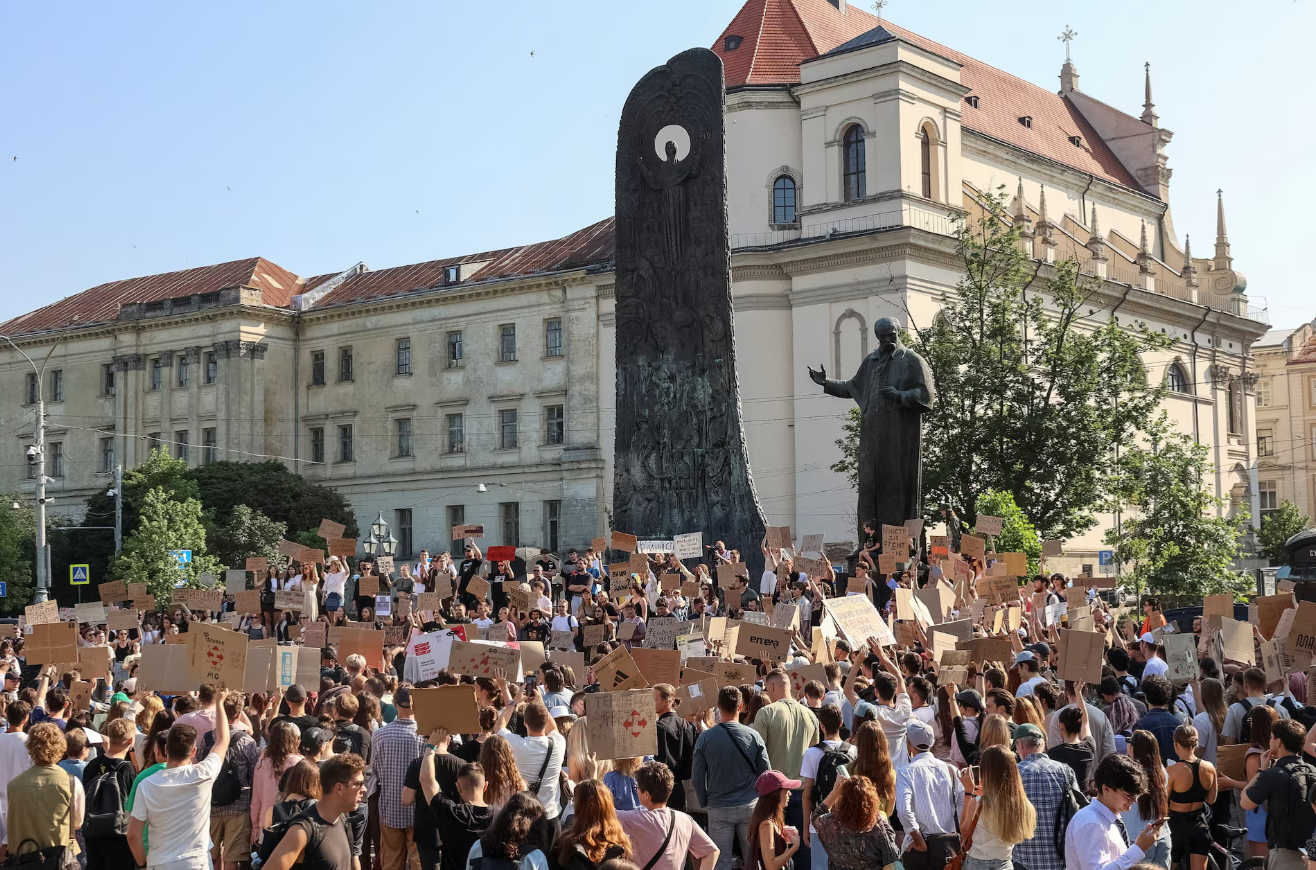
Protesters in Kyiv opposing Zelensky’s decision Reuters
This turmoil has also fully exposed the “old vs. new” rift within the Ukrainian military.
Fedorov, 35, was originally Ukraine’s first Minister of Digital Transformation. After becoming Defense Minister in January, he tried to bring his experience in digital government into the military, pushing for drone production expansion, digital command, transparent procurement, and resource allocation reforms. His goal was to transform Ukraine’s outnumbered forces into a more agile and efficient tech-driven army.
Reuters reported that Fedorov oversaw the expansion of medium- and long-range drone production and simplified defense procurement procedures. During his tenure, the battlefield situation for Ukrainian forces saw some improvement, and drone strikes on Russian oil infrastructure and military targets increased noticeably.
But Fedorov claimed his reforms were obstructed by the traditional military command system represented by General Oleksandr Syrsky. He said both he and Syrsky had asked Zelensky to replace the other, but Zelensky initially refused. According to Fedorov, Syrsky later issued an “ultimatum” to Zelensky, demanding his removal, and Zelensky ultimately chose to keep Syrsky.
After being excluded from the new government, Fedorov publicly fired at Syrsky on July 16. He accused Syrsky of stirring up internal conflicts behind the scenes, blocking the Defense Ministry’s reform plans, and even deliberately sabotaging his work.
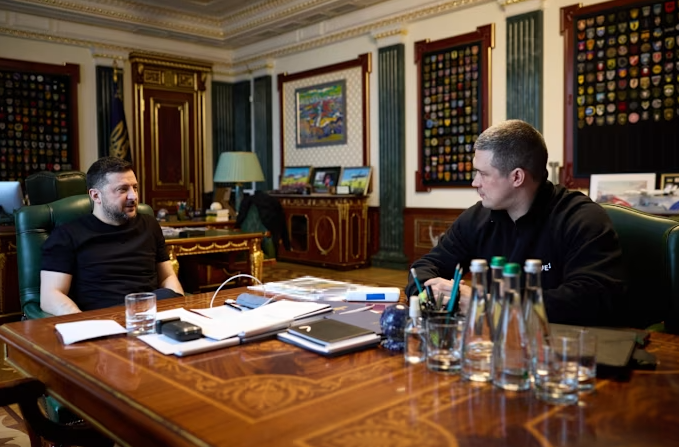
Zelensky and Fedorov Zelensky’s X account
“All the initiatives we proposed were blocked, and Syrsky wouldn’t look me in the eye to discuss these issues openly,” Fedorov said, adding that there are problems within the Ukrainian military like false reporting, chaotic troop organization, and unclear responsibilities.
He sarcastically added, “Syrsky hasn’t studied how to defeat Russia asymmetrically… instead, he’s studied how to divide this country.”
Fedorov also said he turned down Zelensky’s offer of an advisory role because Zelensky refused to include him in the new government.
While acknowledging Syrsky’s key role in defending Kyiv and the Kharkiv counteroffensive, Fedorov stressed that the nature of the conflict has fundamentally changed. Drones are transforming the battlefield at an unprecedented pace, and the Ukrainian military can’t keep using old command methods.
Syrsky, 60, received his military education in the former Soviet Union and took over as Commander-in-Chief of the Armed Forces of Ukraine in February 2024, succeeding Valeriy Zaluzhny. Known for strict discipline and centralized command, he is also controversial for his rigid leadership style and higher casualties in some operations. In the eyes of those supporting Fedorov, Syrsky represents the “old system” of the Ukrainian military, while Fedorov embodies the “new school” relying on drones, data, and advanced technology.
Faced with the public split, Zelensky acknowledged that the Defense Ministry and military leadership failed to find common ground. He said he had really hoped both sides would stay united, but that didn’t happen. In the end, between Fedorov and Syrsky, Zelensky chose to keep the Commander-in-Chief.
This decision also shook the military internally. Ukrainian Air Force Deputy Commander and drone operations chief Pavlo Yelizarov resigned, saying that removing Fedorov would weaken Ukraine’s air defense capabilities and could lead to more deaths in Russian attacks. He described the decision as a “huge blow” to Ukraine’s defense capacity.
Other military figures, like former Army Commander Mykhailo Drapaty, also publicly supported Fedorov. Some protesters believe that removing a reform leader just as Ukraine’s drone tactics were showing results is like voluntarily weakening an advantage.
Fedorov’s reforms haven’t been without controversy. Despite progress in drones, defense procurement, and digital management, he failed to address the most pressing issue: troop shortages. The front lines still desperately lack infantry, and problems with forced conscription, desertion, and draft evasion have intensified social tensions. Reuters noted that neither the Defense Ministry nor the military has truly solved this challenge.