

Since the outbreak of the Russia-Ukraine conflict, ammunition supply has been a top concern for the US military. The Pentagon set a goal to ramp up large-caliber artillery shell production to 100,000 rounds per month by 2025. However, a recent report from the Office of the Inspector General of the US Department of Defense reveals a stunning failure: a factory built specifically for this purpose at a cost of $469 million has not delivered a single shell in the two years since it began production in 2024. This news has sparked heated debate across the US and laid bare the dire state of America’s ammunition manufacturing capabilities.
Two Years in Production, Zero Deliveries
On July 14, CBS News reported that the Mesquite Ammunition Plant in Texas is unable to manufacture critical components, delaying the US Army’s goal of producing 100,000 155mm shells per month. The plant, operated by General Dynamics Ordnance and Tactical Systems, started production in May 2024. The US Army invested a whopping $469 million in the facility. Yet, as of March 2026, the monthly output of 155mm shells is only about 36,000 rounds, falling far short of the 100,000 target. A key reason is the factory’s failure to produce the planned 30,000 metal shell bodies each month.
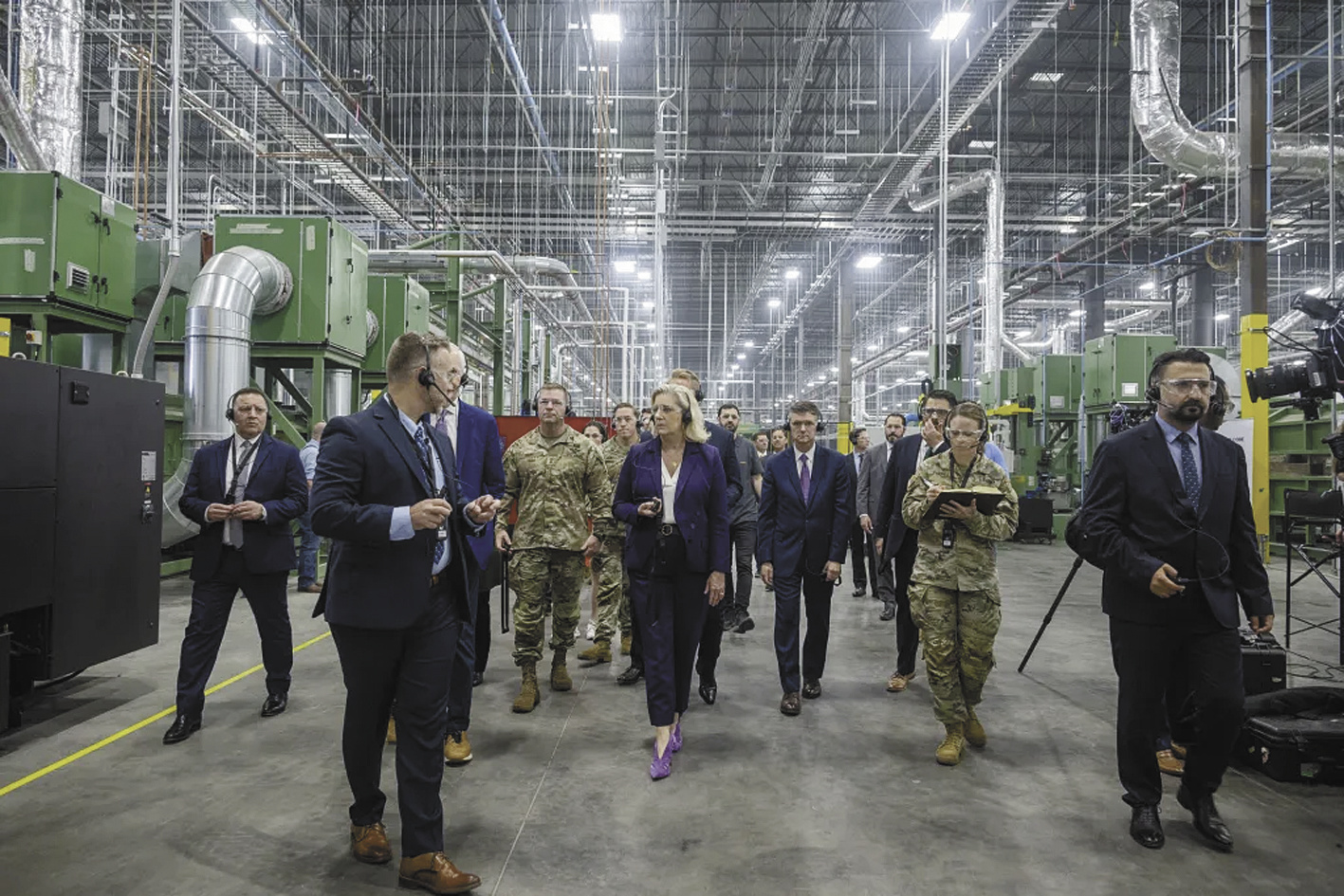
The “War Zone” channel on the “Drive” website reported on July 14 that, according to the Pentagon Inspector General’s report, the US has provided Ukraine with over 3 million 155mm shells since the conflict began. Additionally, more than 110,000 shells have been used in training and testing, and about 210,000 have been sold to other foreign customers. Overall, in the last four years, US large-caliber shell inventories have dropped by over 3.6 million rounds. Against this backdrop, the Pentagon set a target in 2024 to raise monthly production of 155mm shells from 14,000 to 100,000 by October 2025. The Mesquite plant was key to this plan.
According to the report, the US Army boasted that the factory’s 155mm metal parts production line was “modern, featuring highly automated processes, advanced manufacturing tech, and digital data collection, and could flexibly produce parts for shells from 60mm to 155mm with easy model changes.” However, reality has been a different story. The production line wasn’t a new design but a conversion of equipment previously used for M107 155mm shell parts to make new M795 155mm parts. The M795 shells are longer and heavier, with higher requirements for strength and precision. The factory bought special equipment and tried an unproven new process. But “serious technical and operational difficulties” arose when putting the equipment into actual production.
In fact, before the Inspector General’s report came out, Brent Ingraham, the Army’s assistant secretary for acquisition, logistics, and technology, had already complained to Congress that the plant couldn’t make the needed parts. Now, after investing nearly $500 million, the factory has run for two years without delivering a single acceptable product. The report predicts that by September 2026, the US will only be able to produce about 71,000 155mm shells per month—roughly 71% of the target.
Multiple Factors Hinder Production Ramp-Up
The “War Zone” channel noted that the US Army has admitted it failed to meet planned shell production targets. According to the report’s timeline, the Army’s contract office ordered the factory to halt work in August 2025 to assess whether it could fulfill its contract and fix production issues.
The US Army claims that by modernizing the Middletown Ordnance Plant in Iowa and adding two new factories in Kansas and Arkansas, it can achieve a monthly production capacity of 140,000 155mm shells by December 2027—40,000 more than the original plan. But the report says there’s still over a year to go before these goals are met, and that timeline is about 14 months later than originally expected for receiving these shells. Whether they can hit the target on schedule is anyone’s guess.
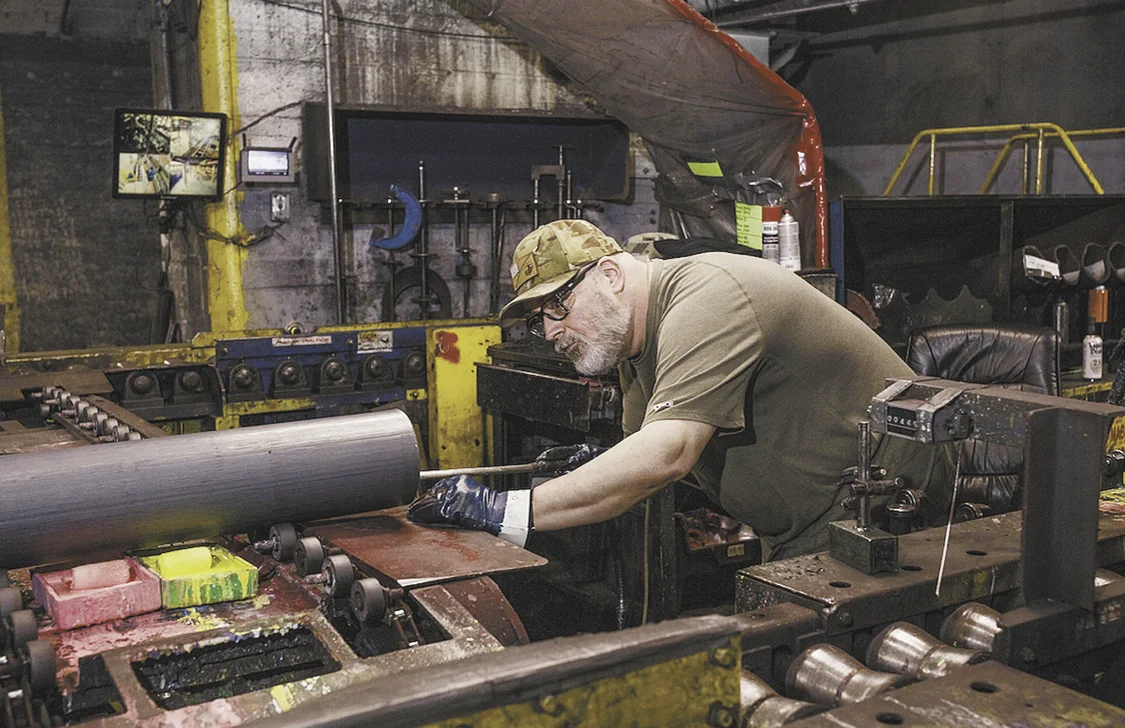
This exposes the huge challenges the US faces in boosting large-caliber shell production. In the decades after the Cold War, the US military-industrial complex favored high-value, high-profit advanced weapons, neglecting the production capacity of consumable munitions like artillery shells. It wasn’t until the Russia-Ukraine conflict that the massive battlefield consumption woke the US military up. But quickly restoring shell production capacity isn’t easy. Besides the specialized equipment needed for metal parts and the difficulty of ramping up, later production stages face multiple constraints. The New York Times gave an example: the Scranton Army Ammunition Plant, which mainly processes shell bodies, requires steps like punching, stretching, heat treatment, grinding, painting, and inspection—many of which are done by hand, making the process inefficient. The shell parts are then sent to the Middletown Ordnance Plant in Iowa for filling with explosives and fuses, where many steps still require manual labor. Despite efforts to modernize these plants, the Mesquite case shows a big gap between the results and expectations.
US media has also revealed that large-caliber shell production is plagued by unstable raw material supplies and a shortage of specialized technical workers—problems that can’t be solved just by throwing money at them. A hearing before the House Armed Services Subcommittee on Tactical Air and Land Forces in February revealed that the Pentagon relies on over 200,000 suppliers, many of whom can’t guarantee that key components are produced domestically, making the supply chain unstable. For example, due to high environmental costs and low profits, the US has drastically cut its basic chemical production capacity for military explosives. The US shut down its domestic TNT production line back in 1986 and now imports it from Poland, Ukraine, Australia, and Asia. Nitrocellulose and CL-20 explosives are also heavily dependent on foreign sources. Meanwhile, the long-term hollowing out of US manufacturing has led to a severe shortage of skilled technical workers. Professionals certified for lathe work, casting, precision manufacturing, and explosive filling are in short supply.
Precision-Guided Weapons Face Even More Hurdles
It’s not just consumable items like large-caliber shells that are in short supply; even the precision-guided weapons the US has heavily promoted can’t keep up with actual combat consumption. According to the Kyiv Independent on July 14, Ukrainian President Volodymyr Zelensky said at a “Volunteer Alliance” summit in Paris on July 13 that Ukraine needs 300 Patriot-3 interceptor missiles this winter. He called this a key step to boost Ukraine’s overall defense. But the reality is that current annual production of Patriot-3 missiles is only about 500. Although former President Donald Trump promised to grant Ukraine a license to produce Patriot missiles, scaling up production in the short term is tough.
This isn’t an isolated case. During the 12-day conflict between Israel and Iran in June 2025, the US’s THAAD anti-missile system consumed about 150 interceptor missiles from its stockpile, while total planned purchases for fiscal 2026 are only 37. Offensive weapons are consumed even faster. Since February 2025, in the US-Israel-Iran conflict, the US has used over 1,000 Tomahawk cruise missiles. According to previously announced plans, the US Navy planned to buy only 68, 34, 22, and 57 in fiscal years 2023 through 2026.
US congressional reports have repeatedly warned that Pentagon ammunition inventories are dangerously low. With US defense contractors struggling to boost production, and the US military frequently involved in large-scale regional conflicts in recent years, replenishment can’t keep up with battlefield consumption. The US has had to suspend weapons supplies to other allies to prioritize its own needs. Although the Pentagon is urgently asking defense contractors to double or even quadruple production of 12 key weapons, this is undoubtedly a tough and long-term challenge.