

On the evening of July 26, local time, Berlin police confirmed that the suspect in the vehicle ramming incident near Tiergarten park was shot and killed during a police operation.
According to police reports, around 6 p.m. that day, officers located the suspect in a compound in Berlin’s Spandau district. The police then opened fire, killing him.
The Federal Public Prosecutor General’s Office, which handles investigations into terrorism and crimes against national security, has taken over the case. Interior Minister Dobrindt explicitly stated the event was a terrorist attack rooted in religious extremism. German Chancellor Merz also publicly condemned it as a “despicable and heinous act,” stressing that the poison of terrorism will not be allowed to spread through German society.
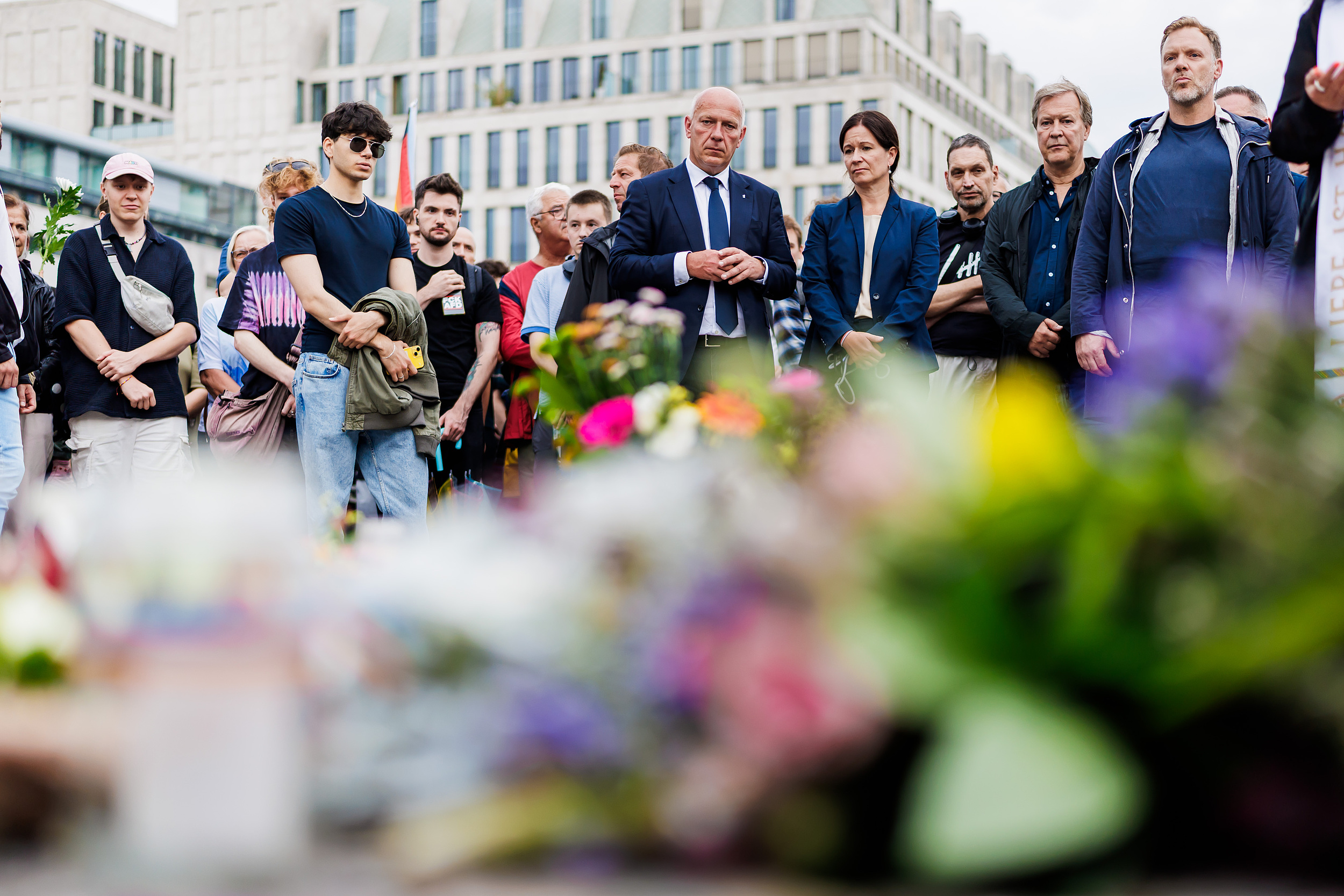
Around 10 p.m. on the 25th, a white cargo van plowed into a crowd in Berlin’s central Tiergarten park, an area right next to the ongoing Christopher Street Day festivities.
The incident resulted in 1 death and 29 injuries, with 3 victims in critical condition. Some of the injuries were caused by the suspect, who allegedly attacked people with a sharp weapon after the vehicle ramming.
Following the attack, police launched a massive manhunt, zeroing in on a 21-year-old male suspect, Abdul Ballout, described as approximately 1.9 meters tall, thin, with black hair, and wearing a black hoodie and white pants during the assault. The suspect had a prior criminal record for assault and robbery and was known as a supporter of the extremist group Islamic State (ISIS).
At around 6 p.m. on the 26th, police found Abdul Ballout in a compound in Berlin’s Spandau district. When he charged at an officer with a sharp weapon, police shot him. Despite attempts at on-site resuscitation, he was pronounced dead.
Public information reveals that Abdul Ballout was born in Berlin in 2005 and has Lebanese heritage. Last year, he traveled to Lebanon and attempted to enter Syria to join ISIS. He was also suspected of plotting a terrorist attack, leading to his arrest by Lebanese authorities. After serving a three-month prison sentence, he was deported back to Germany.
His prior criminal record in Germany also includes charges of assault, extortion, and robbery. In May 2026, a German court convicted him for preparing a serious act of violence endangering the state and for posting ISIS-related extremist propaganda on his Instagram account. He received a suspended sentence of 1 year and 10 months.
Since 2007, a significant number of Lebanese extremists have traveled to Syria and Iraq to join groups like ISIS. Many have returned with combat experience, building a network of extremist activities along the Lebanon-Syria border.
Across Europe, many children of immigrants have long been marginalized in areas like education and employment, making them vulnerable to religious extremism. This has fueled a surge in “lone wolf” terrorist attacks. Several high-profile terrorist incidents in Europe in recent years have involved individuals with immigrant backgrounds, such as the 2015 attack on the Charlie Hebdo magazine in Paris.
Meanwhile, the influx of migrants has turned racial issues into a highly sensitive political topic across many European countries, repeatedly sparking deadly conflicts in places like France and Germany.
Public data shows that over 70% of migrants whose asylum applications are rejected in the EU still remain within the bloc, straining public resources and creating security challenges. In recent years, Europe—including the UK—has faced multiple crises, from the COVID-19 pandemic to the Russia-Ukraine conflict, exhausting the public’s patience with immigration issues.
New regulations now allow for the establishment of repatriation centers outside the EU to house illegal migrants. The maximum detention period within the EU has been extended from the previous 18 months to up to 24-30 months, with no clear time limit for transfers to overseas centers. Authorities are also empowered to confiscate items, collect biometric data, and even search homes, with non-compliant individuals facing entry bans and fines.