

On July 27 at 2 PM local time, a South Korean court delivered its first-instance verdict in the case of former President Yoon Suk Yeol, who was accused of spreading false information during the presidential election campaign in violation of the Public Official Election Act. The court found him guilty and sentenced him to one year and six months in prison.
According to reports, under South Korea’s Public Official Election Act, if an elected official is ultimately sentenced to a fine of 1 million won (about $760 USD) or more for election-related crimes, that constitutes grounds for invalidating their election win.
Since the responsibility for refunding presidential campaign expenses falls on the candidate’s political party, if this verdict is upheld on appeal and Yoon’s election is invalidated, his party—the main opposition People Power Party—would have to return approximately 39.7 billion won (about $30 million USD) in campaign subsidies and candidate deposits to the National Election Commission. This means the court’s decision could have a massive impact on the People Power Party’s finances and the overall political landscape.
The systematic corruption model involving Yoon Suk Yeol and his wife Kim Keon-hee, who allegedly divided labor around the president’s office, has become a landmark case in South Korean politics. Kim faces charges including mediation bribery, stock price manipulation, and illegally receiving polling services.
According to the special investigation team’s indictment, on December 14, 2021, while speaking as a presidential candidate at a forum, Yoon claimed he had not introduced a lawyer from the Supreme Prosecutors’ Office’s Central Investigation Department to Yoon Woo-jin, a former head of the Yongsan Tax Office.
Then, on January 17, 2022, during an interview at a public ceremony, Yoon stated that he had only learned about a certain shaman through party insiders and had never met that person together with his wife Kim Keon-hee. The special investigation team found both statements to be false and indicted him for publishing false information during the campaign period.
The special investigation team pointed out that Yoon had actually introduced the lawyer in question to Yoon Woo-jin, and that the shaman—named Jeon Seong-bae—had been introduced to Yoon through Kim Keon-hee, with the two maintaining a relationship for over a decade. Prosecutors argued that these false statements helped quell multiple controversies surrounding Yoon during the campaign and positively influenced his election prospects. During closing arguments last month, prosecutors requested a two-year prison sentence.
Yoon currently faces over a dozen charges, with the most serious including insurrection, abuse of power, and forging official documents. On January 13 this year, prosecutors requested the death penalty, citing him as the ringleader of an insurrection. The first-instance court sentenced him to life imprisonment, and the appeals process has not yet concluded.
On April 28, the Seoul High Court sentenced Kim Keon-hee to four years in prison in a second-instance ruling for stock price manipulation and bribery—a significantly harsher sentence than the first-instance ruling, which handed her one year and eight months.
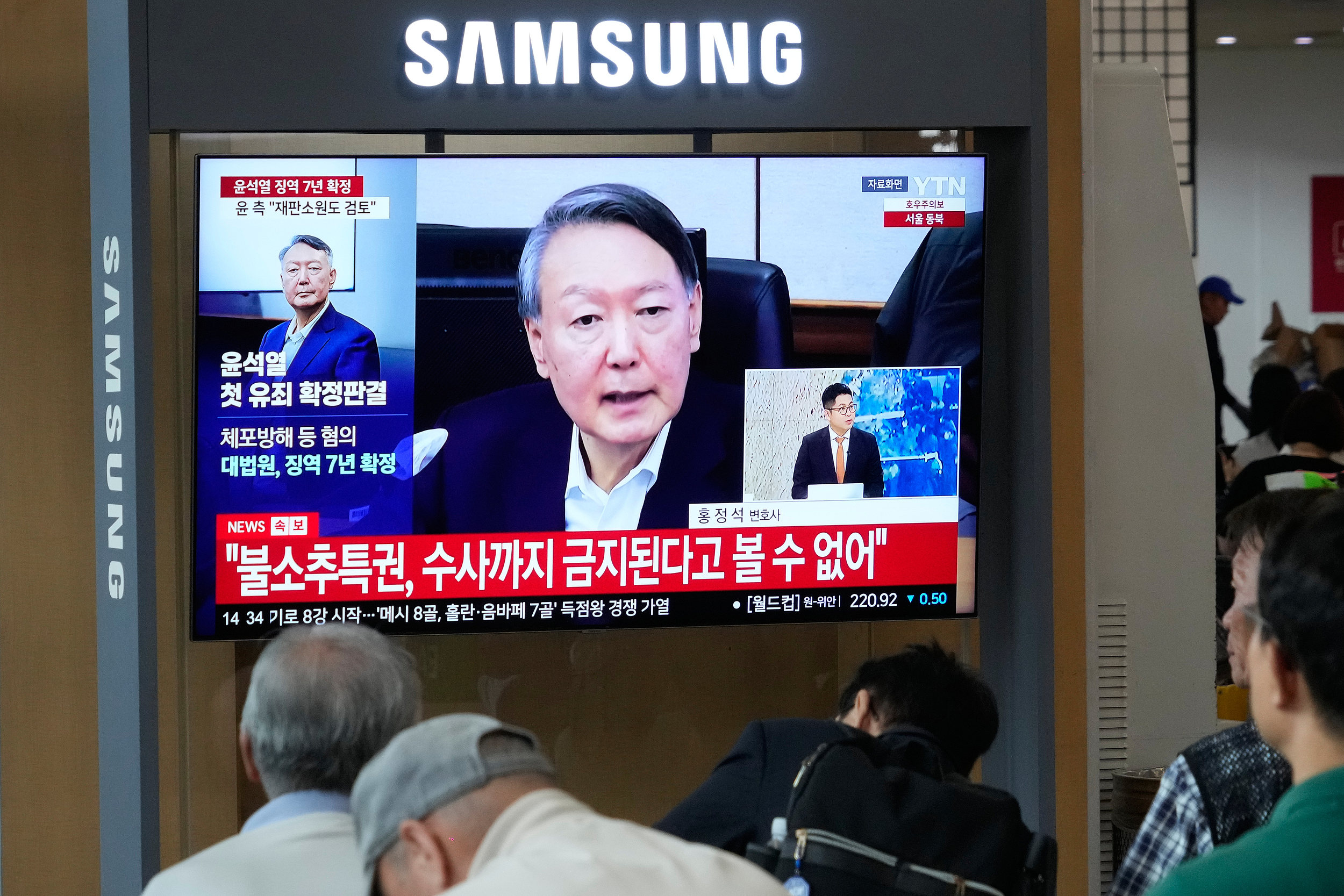
Just one day later, the same court sentenced Yoon to seven years in prison in a second-instance ruling for using the Presidential Security Service to obstruct his own arrest during the “emergency martial law” period—two years longer than the first-instance verdict.
Outside analysts suggest that the court’s latest judgment could influence other related cases involving the emergency martial law, potentially serving as a benchmark for their outcomes.
Last month, Yoon was also sentenced to 30 years in prison in a first-instance ruling for “creating a drone incursion incident over Pyongyang.” The special insurrection investigation team had requested a 30-year sentence on April 24. That case primarily involves charges of “general hostility against the state” and abuse of power.