

On Monday, Israeli Prime Minister Benjamin Netanyahu sat down with President Donald Trump in Washington for a face-to-face chat. It was their eighth meeting since Trump returned to the White House, and the first time they’ve met in person since the US and Israel launched a massive airstrike on Iran back in late February. Before leaving, Netanyahu said they’d discuss “all the issues on the agenda, first and foremost the Iran issue.” He even laid out what he called the “ultimate condition” for solving the Iran problem, insisting that “Iran’s nuclear program must be stopped, no matter what.” This visit comes at a tricky time—Trump has paused the US attacks on Iran and is now figuring out whether to revive the US-Iran memorandum or ramp up the strikes. Netanyahu is seen as the wild card that could tip the scales. According to reports, he’s trying to convince Washington to ditch diplomacy and get back to military action, but that’s a tough sell. After all, it was Netanyahu who talked Trump into the big Iran attack in February, promising that Iran’s regime was weak. Those predictions fell flat, and now the US is stuck in a Middle Eastern quagmire.
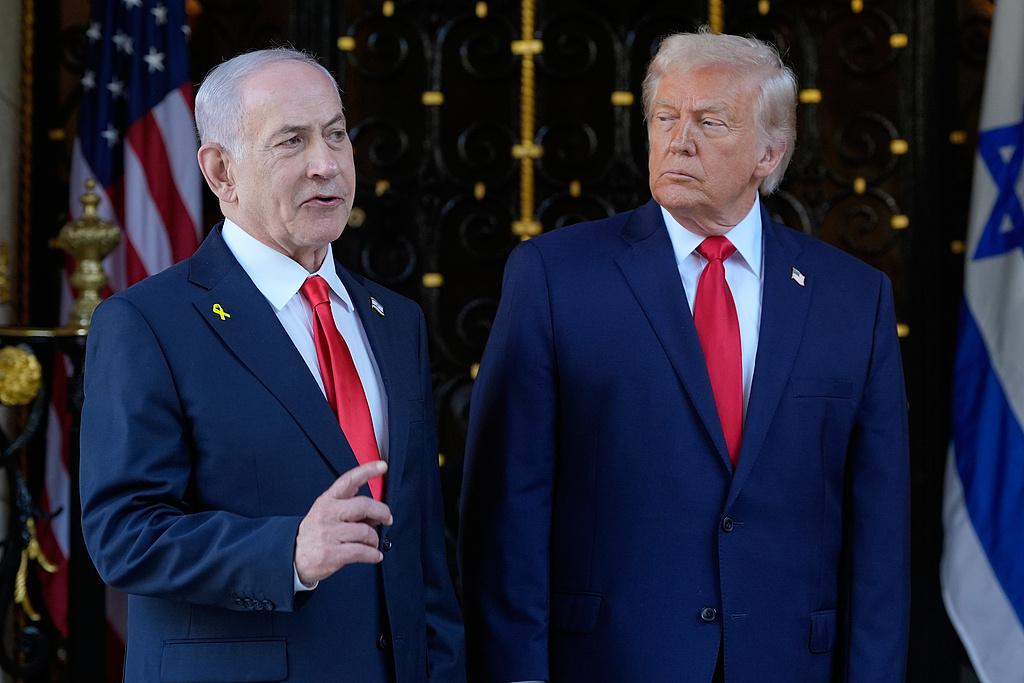
Trump and Netanyahu file photo
“First and foremost, the Iran issue”
According to the White House schedule, Netanyahu met with Trump at 11 AM on Monday. Before the meeting, Trump was asked by Fox News about reports that Netanyahu planned to share intel on Iran restarting its nuclear program. Trump grumbled, “I don’t need Netanyahu to tell me that. He’s saying it because he wants me to stay involved.” He added, “I know he announced it, but why not just tell me directly? Why announce it to the whole world?”
“This visit is both a great honor and a great responsibility,” Netanyahu said before leaving Israel on Sunday. “President Trump and I will talk about all the issues on the agenda, first and foremost the Iran issue.” He also posted on social media that he’d discuss Israel’s security. “Our goal is clear: protect Israel, boost its strength, and expand the circle of peace around us.”
According to reports, Netanyahu told Fox News ahead of his trip that he wanted to hear Trump’s take on Iran. He said he’d push Trump to “keep a close eye on Iran’s nuclear program.” He stressed that there’s no new evidence showing Tehran’s nuclear capabilities have been destroyed. “It’s good to sit down with my good friend President Trump and hear his thoughts,” Netanyahu said, “because in the end, a lot of it comes down to his decision.”
Media reports suggest that while Netanyahu won’t openly push Trump to resume attacks, his real message is that Iran’s regime must eventually fall. He’s expected to present new intel on Iran’s efforts to hide strategic assets deep under “Mount Kohan.” From Israel’s perspective, Washington is at a critical crossroads on Iran.
US worries about getting dragged deeper into war with Iran
“This time, Netanyahu’s meeting with Trump might not go as planned,” CNN reported. For years, visits by Netanyahu to Washington followed a set script: red carpets, warm handshakes, and talk of the tight US-Israel alliance. But things have changed since their last meeting five months ago. The early days of the Iran war, marked by close cooperation and mutual praise, have given way to Trump’s blunt criticism of Netanyahu.
The report says that as the war drags on, the rift between Trump and Netanyahu has grown. Netanyahu wants to keep striking, while Trump wants out. Beyond Iran, Lebanon is another sore spot. Two new issues have popped up too: Trump’s potential sale of F-35 jets to Turkey and a US-Saudi civilian nuclear deal. Israel wants assurances that these won’t hurt its military edge in the Middle East.
According to reports, Trump set the tone for their meeting on Sunday. When asked if he and Netanyahu were on the same page about Iran, Trump said on Air Force One, “We have some differences, but we’re pretty close overall.” He told reporters the US has been too generous with “a lot of countries,” including Israel. Trump claimed the US military action against Iran “fundamentally changed the region.” “You know who can’t survive without us? Israel,” he said. “If I hadn’t stepped in, Israel would have been wiped out months ago.”
Netanyahu’s visit also comes amid a totally different vibe in the US. New York City Mayor Eric Adams recently said if Netanyahu comes to the UN General Assembly, the city might arrest him. Netanyahu called this “hate speech.” Trump posted on social media that Netanyahu won’t face “any form of arrest” while in the US.
“Trump’s allies worry this meeting will drag the US deeper into a war with Iran,” Politico reported. The last time they met, Netanyahu convinced Trump to go to war with Iran. The “America First” wing of the GOP is worried he might push Trump to ramp up attacks again. Former White House strategist Steve Bannon said, “Netanyahu visits the White House twice as often during 18 months as Churchill did during all of World War II—and every visit is a disaster for America First.” A former US official bluntly put it: “Netanyahu is a troublemaker now. The war has been going on for over five months, and there’s still no clear solution.”
But with the US-Iran situation uncertain and elections looming in both the US and Israel, both Trump and Netanyahu have their own agendas for this White House meeting. Israel’s next parliamentary election is set for October 27. Reports say Netanyahu wants to show voters back home that he can still influence US policy by staying close to Trump.
Trump also faces a test in the November midterms. With the Iran war dragging on, a recent New York Times poll shows Trump’s approval rating has dropped to 39%. CNN says Trump is trying to shore up Jewish and pro-Israel voters by strengthening the US-Israel alliance.
“A temporary ceasefire, not peace”
According to reports, Trump told reporters on Air Force One Sunday that he has enough patience to reach a deal with Iran, but if no new ceasefire is reached, the US will resume military strikes. He said talks with Iran are “going well.” Trump also told Axios that he paused the strikes to give diplomacy a chance, but if talks fail, he might order even bigger military action. “Time is running out,” he said. “Either we finish it fast or we call it off.”
Reports say the firefights between the US and Iran have quieted down in recent days, sparking a flurry of diplomatic efforts to find a short-term solution to the most contentious issue: shipping through the Strait of Hormuz. Multiple mediators say Iran and Oman have both reported progress on restarting shipping through the strait, offering a glimmer of hope. Mediators are trying to get the US and Iran to agree on a deal—Tehran reopens the strait, and Washington lifts its blockade of Iranian ports.
But Iran’s stance remains tough. Iran’s Armed Forces General Headquarters issued a statement saying the US has threatened Iranian ships operating near its coasts for three days, calling it part of an illegal naval blockade. It stressed that Iran’s military won’t ignore any threats to its vessels.
“A temporary ceasefire, not peace,” opined an article. The US and Iran are still clashing, and talks are stuck. Both sides see the current situation as just a pause. The core disputes—control of the Strait of Hormuz, lifting sanctions, and frozen assets—remain unresolved. The brief ceasefire hasn’t truly created conditions to end the conflict. The US attacks haven’t forced Iran to give in, and differing views on agreements and control of the strait mean both sides still have reasons to keep fighting.