According to a report on July 30, Argentine President Javier Milei issued an order barring foreigners who express “hatred” toward Argentina from entering or residing in the country. He claims Argentina is becoming the target of a so-called “sinister campaign.”
The decree is already in effect but still needs parliamentary approval to continue as law. However, experts have raised doubts about the legal viability of this emergency measure.
The measure prevents foreigners identified as “spreading or inciting hate speech against Argentina and its people” from entering the country, or allows for their deportation. In a statement, Milei said the move responds to “recent displays of hostility toward the Argentine Republic and its citizens.”
The report further notes that the far-right leader appears to be referring to public reactions to Argentina’s recent loss to Spain in the World Cup final held in the US, Canada, and Mexico. Just last Sunday, Milei claimed left-wing governments in other parts of the Americas were waging an “anti-Argentina campaign.”
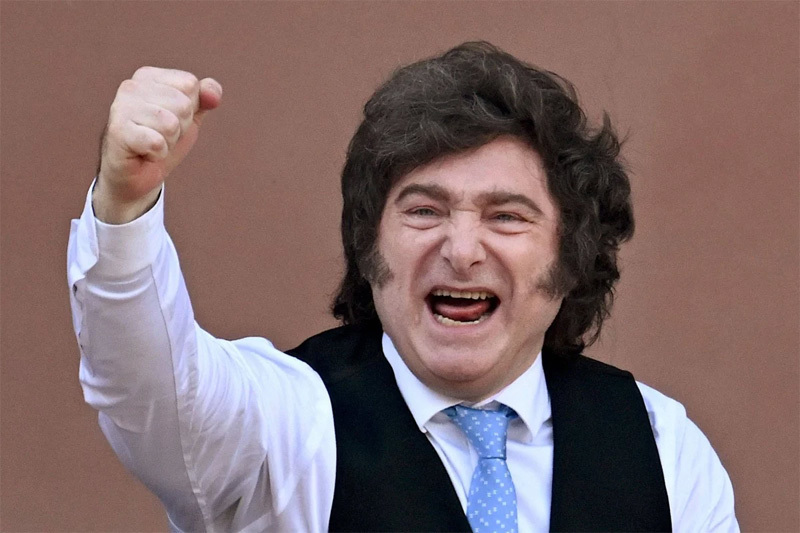
File photo of Argentine President Javier Milei
The new decree also stipulates that the measure will not infringe upon constitutionally guaranteed rights to express political, academic, or ideological differences.
However, the move immediately drew criticism from opposition parties. Leonel Chiarella, head of the centrist Radical Civic Union party, posted on social media that “the president’s decree is unconstitutional” and argued that Congress “should explicitly reject it.”
Opposition lawmaker Agustin Rossi also took to social media, saying the decree “mirrors (US President) Trump’s anti-immigration logic.”
A legislative committee will review the emergency measure before it goes to the Chamber of Deputies and the Senate. It will only be revoked if both chambers of Congress vote against it.
Lucia Galoppo, an international law expert at the Center for Legal and Social Studies (CELS), said the measure “leaves too many gray areas.”
“It doesn’t clearly define what constitutes hate speech, nor does it explain how it will be identified, under what criteria, or how the people making these statements will be determined,” she said.
Sociologist Ivan Schuliaquer pointed out the measure also contradicts Argentina’s long-standing immigration history. He said Argentina has one of the world’s most open constitutions when it comes to immigration.
“Historically, Argentina has welcomed immigrants from all over the world, so its historical foundation is very rich,” he said. “We are not against immigration.”
Schuliaquer believes Milei is “exploiting the current social atmosphere to push a topic that isn’t usually part of his political agenda.”
It seems Milei is still fixated on Argentina’s World Cup final loss and the events that followed. Last Sunday, he blasted Brazil, Mexico, and US Democrats, claiming these forces were launching an “anti-Argentina campaign” — apparently referring to widespread criticism of the national team’s performance in the final.
FIFA is investigating the conduct of several Argentine players during the final, including alleged assault on opposing players and unsportsmanlike behavior.
FIFA is also looking into an incident following Argentina’s 2-1 semifinal win over England, when Argentine players held up a banner reading “Las Malvinas son Argentinas” (The Malvinas Islands belong to Argentina).
Under Article 4 of the FIFA Disciplinary Code, players and substitutes must not wear (or display) anything with political, religious, or personal slogans, statements, or images… Any violation will result in sanctions against the player and/or team by the match organizers, the national football association, or FIFA.