

On July 30th, U.S. President Donald Trump announced that, with mediation from Egypt, Qatar, and Turkey, the “Peace Council” had reached an agreement that day, under which all armed groups in Gaza, including the Palestinian Islamic Resistance Movement (“Hamas”), would fully disarm.
According to Trump, this agreement marks a major milestone in implementing his “Gaza 20-Point Plan.” Under the deal, Gaza will gradually transition to governance by a new Palestinian government, which will cooperate with the “Peace Council” to manage local affairs. Gaza will no longer be used as a launching pad for attacks.
Separately, Saudi Arabia’s Al Arabiya TV reported on July 31st, citing a Hamas official, that an agreement with Israel has been reached and Hamas will soon issue a formal statement.
The agreement is reportedly set to be implemented in phases. Israel will receive the security guarantees it requires. As the disarmament process is completed, Israeli forces will gradually withdraw; an international stabilization force will work alongside a newly formed Palestinian police force to assume responsibility for maintaining security in Gaza and the surrounding areas.
U.S. sources confirm that Hamas may “soon” sign the phased disarmament agreement, handing over all weapons, tunnels, weapons factories, and warehouse maps within 6 to 8 months. Members would receive “amnesty” and could choose to remain in the Gaza Strip.
Following the signing, the Israeli Defense Forces will pull back to the “Yellow Line”—the withdrawal line established under the first phase of the Gaza ceasefire agreement—and cease “targeted killings” of Hamas leaders, though they may still act against “imminent threats.” The Israeli military will only withdraw further after Hamas hands over all its weapons.
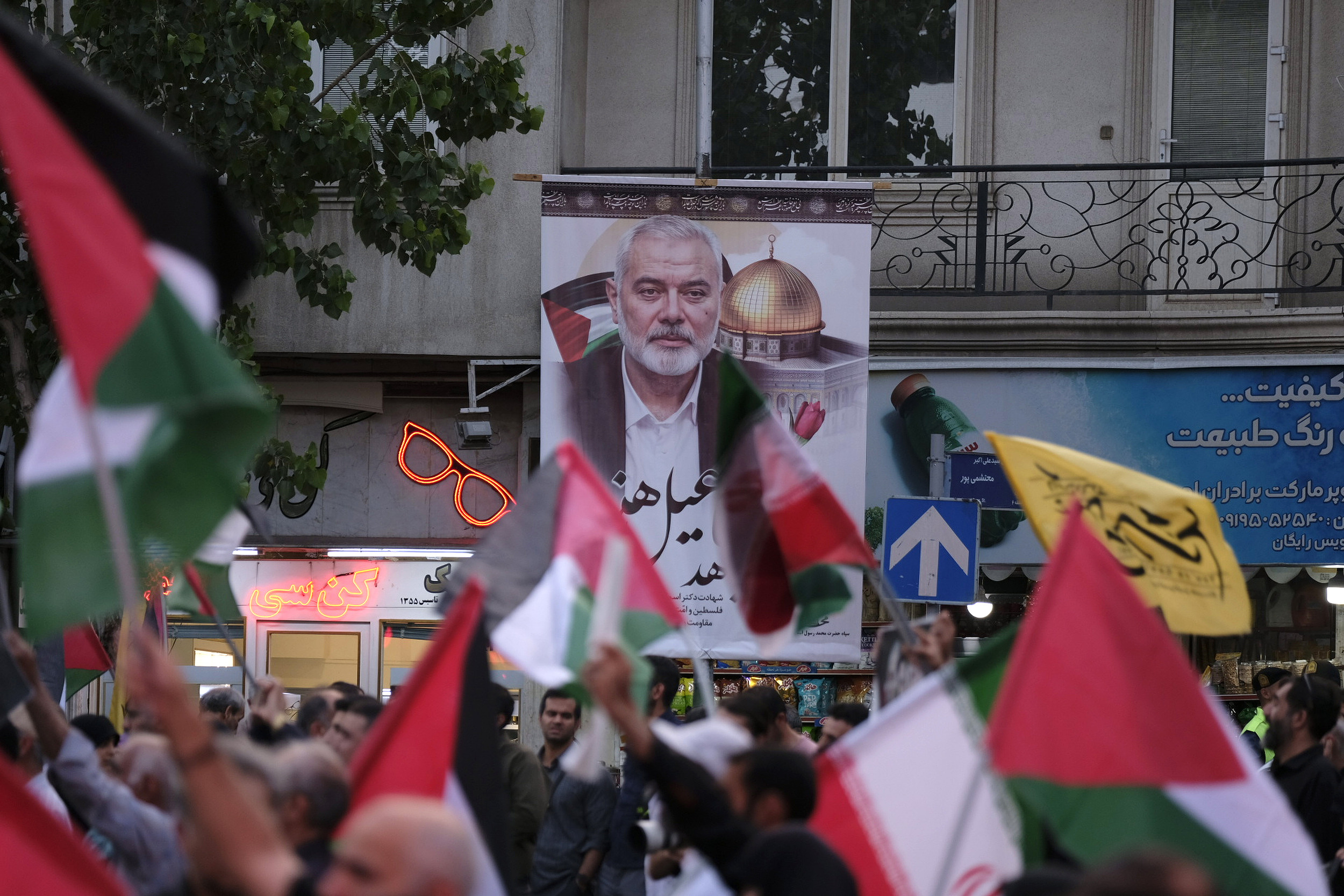
However, officials involved in the negotiations caution that while disarmament may be achievable, there is still a long road from discussion to formal announcement.
The Israeli-Palestinian conflict predates the establishment of the state of Israel. On May 12, 1994, the Palestinian National Authority was established. The Authority recognized Israel as a legitimate state and engaged in multiple peace negotiations. Hamas has claimed it aims to replace the Palestinian Authority.
In 2005, then-Israeli Prime Minister Ariel Sharon, despite opposition from domestic right-wing factions, withdrew Israeli forces from the Gaza Strip, ending 38 years of Israeli occupation. This move was seen by Hamas as a significant victory. Two years later, Hamas emerged victorious in a brief civil war against Fatah, the backbone of the Palestinian Authority, subsequently seizing control of Gaza, which led to a strict blockade by Israel and Egypt.
During the two major Gaza wars in 2014 and 2021, Hamas demonstrated a tough stance against Israeli military operations, earning growing respect among the Palestinian population and solidifying its dominant position among Gaza’s various armed factions.
According to public data, Hamas has approximately 20,000 official members and an armed wing of about 5,600 fighters. Its funding primarily comes from Muslims both inside and outside the region who support its cause. Western intelligence officials have accused Iran of providing funding, weapons, and technology to help the organization enhance its military capabilities.
In reality, with the Israeli-Palestinian issue unresolved and Israeli actions becoming more assertive, Palestinians are losing confidence in the Palestinian National Authority’s pursuit of a peaceful solution, while support for armed factions is on the rise.
On October 7, 2023, Hamas and other Palestinian armed groups breached Israel’s defenses in a massive assault, killing over 1,250 Israelis and foreign nationals and taking 251 others hostage to Gaza. Israel launched wave after wave of retaliation, including targeted killings of several Hamas leaders.
After nearly three years of relentless warfare, much of Gaza lies in ruins. UN agencies estimate that Gaza’s overall food security is currently at Phase 3 (crisis level), with an estimated 1.4 million people (67% of the population) projected to face acute food insecurity between July and December 2026, including 212,000 in even more severe emergency conditions.
If Hamas formally signs the disarmament agreement and transitions into an organization focused on local governance, it would have direct implications for Gaza’s humanitarian situation, Israeli-Palestinian military confrontation, and the broader Middle East geopolitical landscape.
Perhaps most significantly, this agreement would substantially reduce the intensity of conflict in the region and weaken Iran’s traditional influence over the Palestinian issue.
Hamas is a core member of the “Axis of Resistance” led by Iran’s Islamic Revolutionary Guard Corps. With its disarmament, the already fragmented anti-Israel alliance could further disintegrate, and the justification for Yemen’s Houthi rebels to disrupt Red Sea shipping would collapse.
Moreover, Hamas’s disarmament removes one of the sources of regional instability, creating favorable conditions for Saudi Arabia to attract foreign investment and advance its industrial transformation. Riyadh could more smoothly pursue normalization talks with Israel, securing core interests such as U.S. security guarantees and advanced technology transfers in return.
The “Peace Council,” spearheaded by the White House, was initially intended to resolve the Gaza conflict but has faced multiple challenges, including the absence of the key Palestinian official body, growing divisions among members, and ineffective ceasefire enforcement.
The mechanism is characterized by highly centralized power and membership tied to funding—countries paying $1 billion to finance the Council’s activities gain permanent membership. As such, it is widely viewed as a tool for the U.S. to reshape the international order unilaterally, bypassing the United Nations and seriously undermining multilateral principles.
