Signs increasingly suggest that after a stretch of upheaval, Iran’s political landscape has undergone a reconfiguration of power, with the military hardliners led by the Islamic Revolutionary Guard Corps consolidating their internal influence and taking the lead in determining the trajectory of negotiations with the United States.
As reported on August 6, Iranian President Masoud Pezeshkian stated that he is currently facing significant difficulties in communicating with Supreme Leader Mojtaba Khamenei, and that certain individuals are taking advantage of Mojtaba’s normal decision-making processes to stoke discord within Iran and push forward agendas that serve their own interests. He stopped short of naming the specific parties involved.
Pezeshkian revealed that Mojtaba recently received a report from a relevant committee and indicated that if the proposed plan garnered the support of three-quarters of the votes, he would accept it. However, in this process of respecting expert opinion and making decisions accordingly, some individuals are seizing the moment to create divisions and spread unfair and dishonest rhetoric in an attempt to tarnish the reputations of others.
Recently, rumors have circulated about rifts between him, the Supreme Leader, and the IRGC, with some even suggesting Pezeshkian might resign. The presidential office has repeatedly denied these claims.
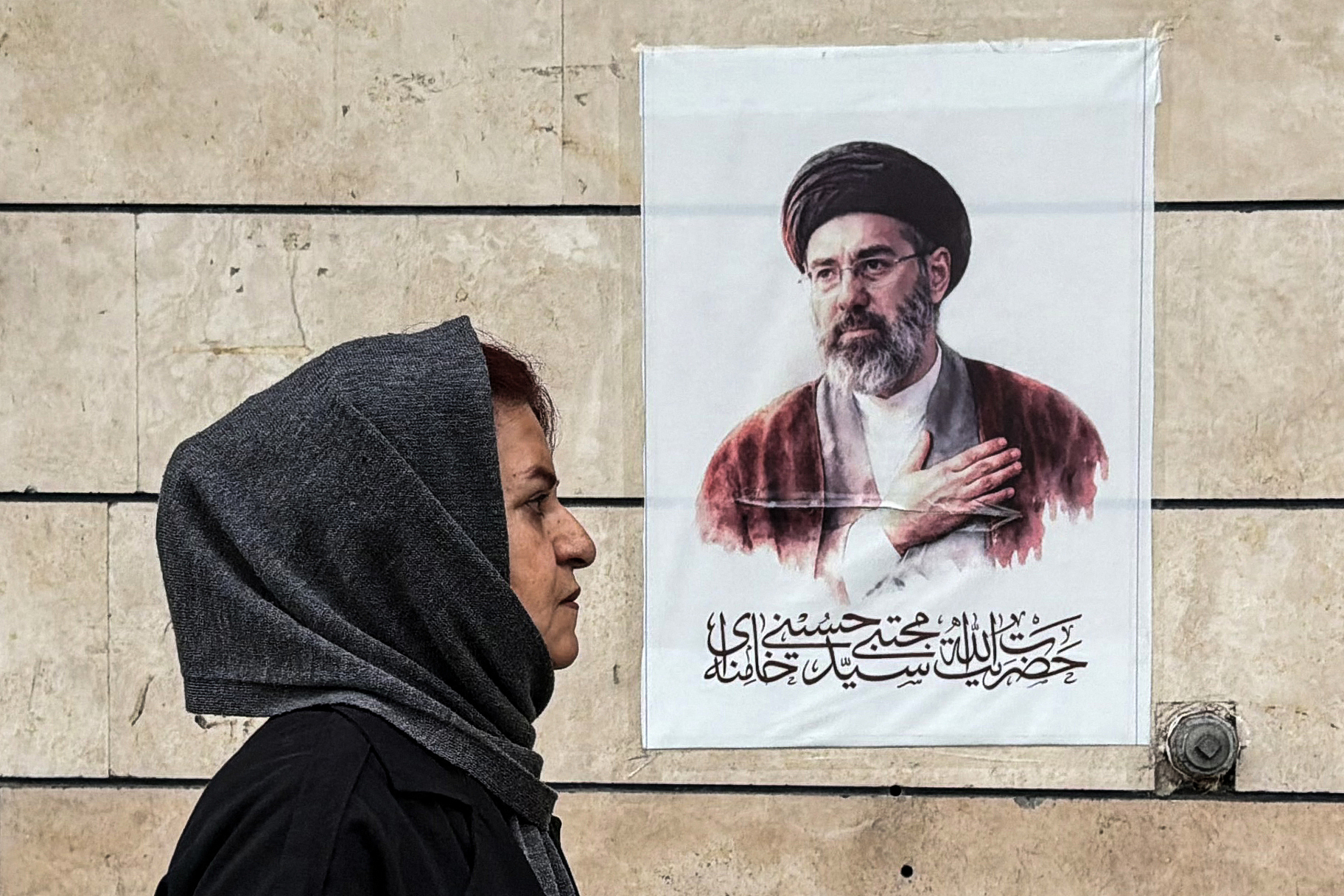
During the state funeral for the late Supreme Leader Ali Khamenei last month, Mojtaba Khamenei was conspicuously absent. Sources familiar with the situation reveal that Mojtaba was seriously wounded in that attack, suffering injuries to one leg that required multiple surgeries, and he is currently awaiting a prosthetic fitting. He also underwent surgery on one hand and is slowly regaining limb function. Severe burns to his face and lips have made speaking difficult, and he will need further reconstructive procedures down the line.
Under the doctrine of “Velayat-e Faqih” (Guardianship of the Jurist) introduced by the founder of the Islamic Republic, Ayatollah Ruhollah Khomeini, the IRGC holds sway over key strategic assets, including the vital Strait of Hormuz, major financial institutions, and the nuclear program. Its elite Quds Force oversees overseas operations and backs regional proxies such as Hezbollah in Lebanon and the Houthi movement in Yemen.
In contrast, civilian officials like the “president,” the parliamentary speaker, and the foreign minister, within the framework of Western political terminology, have historically functioned as executors of specific policies rather than holding genuine decision-making authority.
In the aftermath of the late leader’s passing, Iran was temporarily steered by President Pezeshkian, the head of the judiciary, and a jurist from the Guardian Council. Pezeshkian, a pragmatic reformist, has previously supported nuclear talks with the US and Western nations to push for sanctions relief. In his public remarks, he has struck a notably conciliatory tone toward Washington.
The IRGC’s push to install Mojtaba Khamenei as the new Supreme Leader was rooted in the belief that he would be more amenable and supportive of their hardline stance. This move signaled early on that the IRGC would likely hold the ultimate say in Iran’s major strategic decisions moving forward.
In the period that followed, there was no unified voice emanating from Tehran. Contradictory statements emerged from the executive, military, and legislative branches—including whether to negotiate with Washington, what the core demands of any talks would be, and how to manage the Strait of Hormuz—pointing to intense behind-the-scenes rivalry and power plays among various factions.
The IRGC’s new commander-in-chief, Vahidi, has joined forces with the secretary of the Supreme National Security Council, Zolghadr, a veteran IRGC figure, to form a core power alliance that now commands sweeping control over military, security, and diplomatic domains.
Now 67, Vahidi has long been a leading voice of Iran’s hardline camp, advocating for a military-first approach to defending national sovereignty. With the younger Khamenei sidelined from public view due to his injuries, the Vahidi alliance has effectively been exercising authority on his behalf.
Zolghadr is also a longstanding IRGC figure with an extensive network of influence, having previously overseen internal security and law enforcement portfolios. During the last round of negotiations, he accompanied the delegation with the task of monitoring its compliance with IRGC and Supreme Leader directives.
Meanwhile, President Pezeshkian, Foreign Minister Araghchi, and Speaker of Parliament Qalibaf have been progressively edged out of the core decision-making circle.
Sources have indicated that one major reason Tehran has been reluctant to accept Washington’s demands for resuming talks is the persistent pressure the IRGC has exerted on Speaker Qalibaf to resist.
The parliamentary speaker holds substantial sway over policy formulation, budget approvals, oversight of appointments, and shaping public opinion. The 64-year-old Qalibaf, who lacks a deep religious background, had been viewed as a key bridge connecting military, political, and religious spheres of power.
US intelligence suggests that Iran’s leadership structure remains largely intact and is not facing an imminent risk of collapse—a development that has caught the White House off guard. Earlier this year, a similar playbook against Venezuela had inflated confidence within the administration. This time, however, Washington clearly underestimated the degree of internal cohesion in Iran and misjudged the willingness and capability of Iran’s pro-Western factions to act.
As the originally anticipated lightning campaign has dragged into a war of attrition, the ripple effects of the Middle East conflict arenow reaching ordinary American households through energy prices, consumer costs, and broader social sentiment—and could well influence the upcoming midterm congressionalelections.
Over the past weekend, parties have been signaling an easing of tensions in the Middle East. On August 4, US President Donald Trump expressed frustration over the internal divisions within Iran’s leadership. He noted that discussions regarding the Strait of Hormuz are progressing very well, but Iran’s unwillingness to acknowledge this openly is, in his words, a bit awkward.
According to Trump, the first phase of US-Iran talks would focus on reopening the Strait of Hormuz, which could be achieved quickly. The second phase would address Iran’s “denuclearization,” which he acknowledged would take more time.