

Since late February, what the US initially expected to be a “four-week” conflict with Iran has dragged on for more than five months. The US has shifted from massive air strikes to significantly reduced attack momentum, now seeking negotiations. American media say Iran has been learning from each engagement, exploiting US weaknesses through asymmetric warfare—a strategy of the weak overcoming the strong.
The New York Times reported on the 11th that two important trends have emerged in this conflict. First, Iran’s tactical proficiency has grown increasingly sophisticated—not only have they figured out how to penetrate US air defense systems, but they’ve also brought Yemen’s Houthi forces and Iraqi militia groups into the fight to widen the front. Second, the US air defense systems are burning through interceptor missiles at an unsustainable pace, with their interception capabilities becoming increasingly strained.
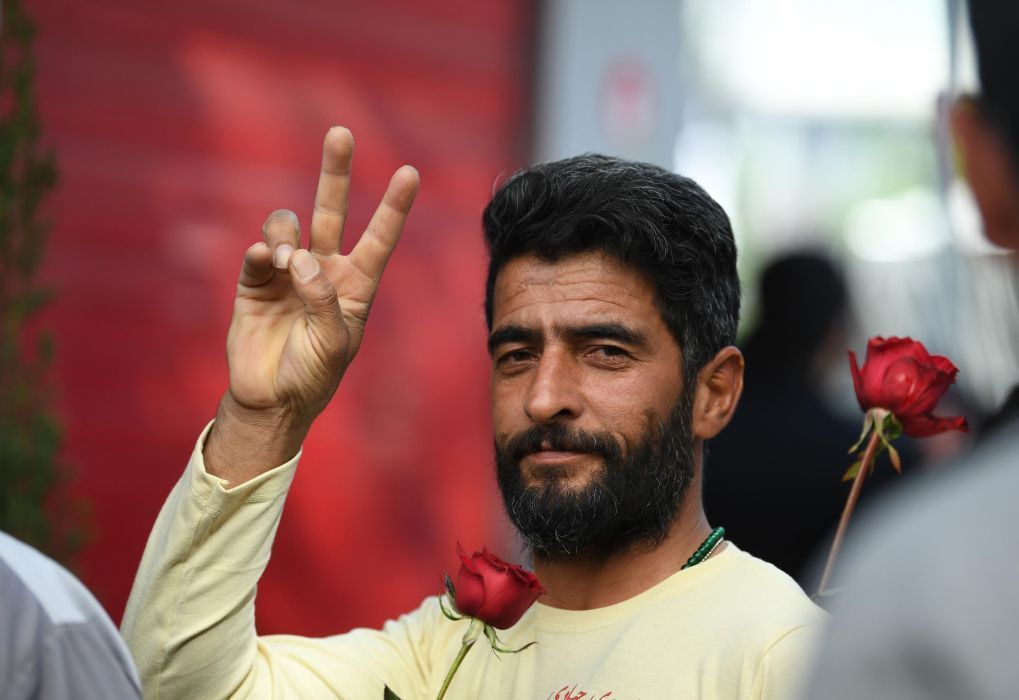
On May 7, civilians in Tehran made victory gestures during a rally. Photo by Xinhua reporter Shadati.
Sources reveal that since the conflict began, US forces have expended over 1,500 Patriot air defense interceptors—more than double the total US production for 2025—leaving fewer than 1,700 remaining.
The US has repeatedly claimed to have crippled Iran’s military capabilities. Defense Secretary Hegseth stated in early April that Iran’s missiles and launch systems were “almost completely neutralized.” However, reports indicate that after US bombing, Iran simply dug out missiles and launchers hidden in underground tunnels, continuing to use them to blockade the Strait of Hormuz and strike US military targets across the Middle East.
According to the report, after last year’s joint US-Israel military strikes, Iran launched massive salvos of missiles and drones in retaliation—and realized something crucial: such counterattacks could rapidly deplete the interceptor stocks of US and Israeli air defense systems.
Seth Jones, head of the Defense and Security Department at the Center for Strategic and International Studies, and other experts also believe Iran has learned from the Ukraine crisis that “when large waves of missiles and drones arrive simultaneously, air defense systems become far more difficult to manage.”
On July 17, Iran struck Jordan’s Muwaffaq Salti Air Base, killing 3 US soldiers and wounding over 100. “We shot down nearly all incoming missiles, but one got through,” said US Secretary of State Rubio. US military officials later admitted that during that same week, dozens more US troops were injured in Iranian strikes on other locations, and a number of US aircraft were damaged. Two US officials said US forces in the Middle East fired approximately 50 Patriot interceptors in a single day last month. Compared to Iran’s cheap drones, each Patriot interceptor costs roughly $4 million.
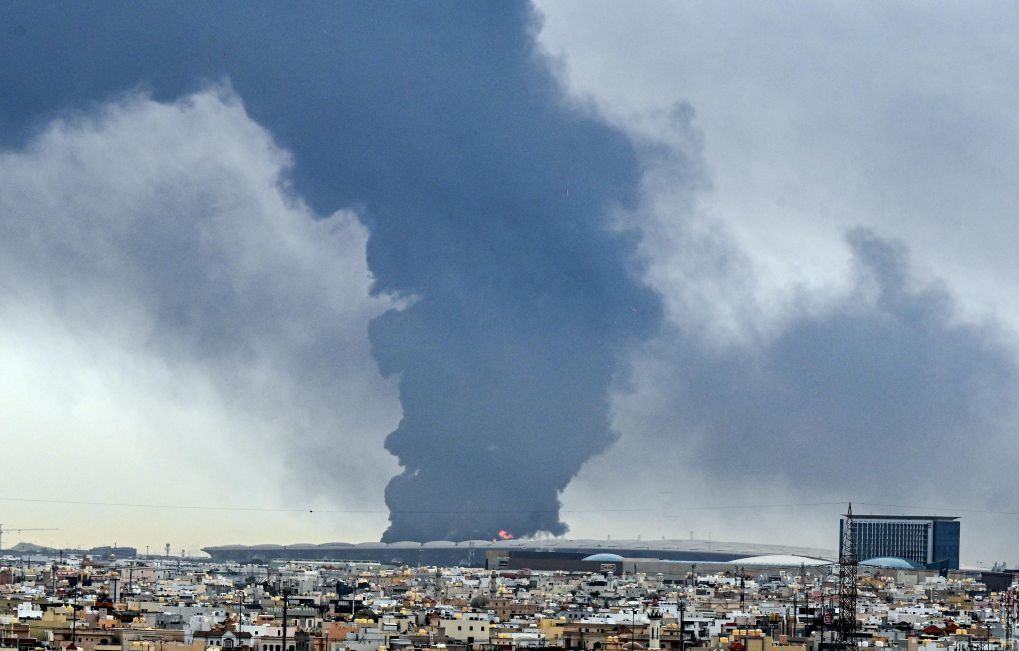
This photo taken on March 25 in Kuwait City shows smoke rising after an oil depot at Kuwait International Airport in Farwaniya Province was attacked. Xinhua photo.
In April, Iran used a shoulder-launched surface-to-air missile to shoot down a $60 million US F-15E fighter jet flying over Iranian territory. US military officials said Iran deployed large numbers of drones in the area where the US aircraft were operating, providing critical targeting data—position, speed, and flight direction—for the downed jet. After the crew was rescued, they told US officials that the onboard warning system only sounded less than a second before the missile struck.
US military officials revealed that after the F-15E was shot down, President Trump ordered a pause in operations because the military needed time to adapt to Iran’s new tactics.
However, Iran has already developed new approaches. Yemen’s Houthi forces joined the fight last month. Some experts say this means the US and its allies now face attacks from multiple directions simultaneously.
A Saudi Arabian official revealed that Iran still has the ability to penetrate US air defenses, and its strikes can cause serious damage. Saudi Crown Prince Mohammed urged Trump in a phone call two weeks ago to cancel plans for large-scale air strikes on Iran, warning that Saudi Arabia and other regional countries’ energy and other infrastructure could face Iranian retaliation.
With the US midterm elections approaching, the Trump administration is under mounting pressure from the prolonged Iran conflict—soaring costs, high oil prices, and fears of growing US casualties. Polls show steadily declining public support for both the Iran war and President Trump.
The Wall Street Journal recently cited sources revealing that Trump has privately told his advisers he would be willing to end this conflict even without a nuclear deal being reached.