With the August 19 deadline for sweeping 50% tariffs on Canadian goods fast approaching, US-Canada trade talks have entered a critical, high-stakes phase. According to recent reports, although negotiators are in near-daily contact, a finalized agreement that could actually be signed and put on the table remains elusive.
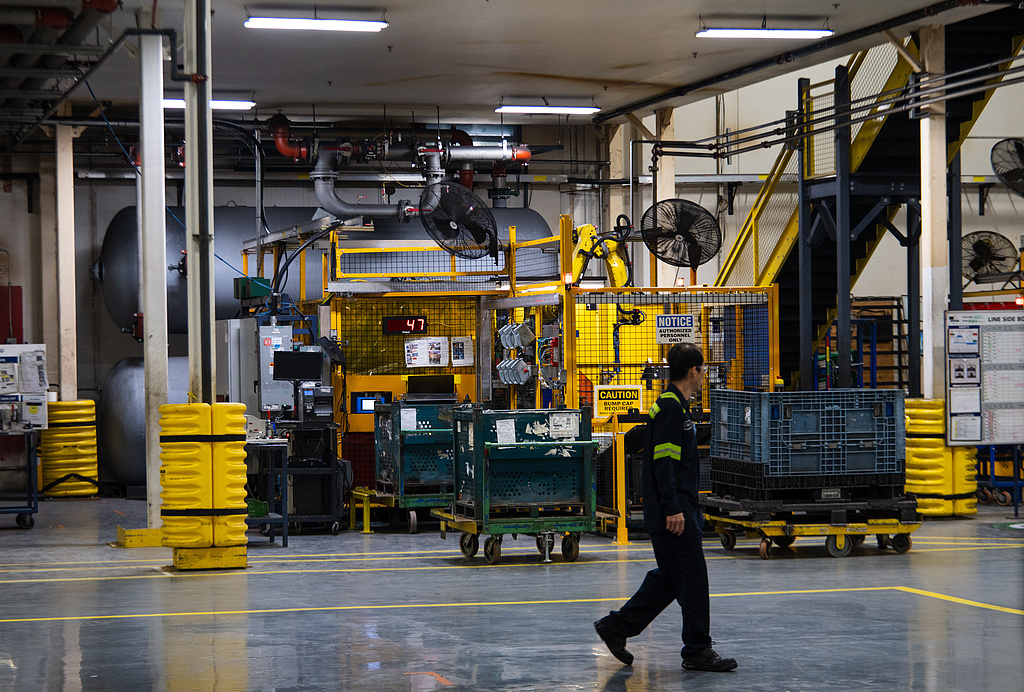
Interior view of the Martinrea auto parts plant in Woodbridge, Ontario, Canada. (Stock Image)
“A Long Way From a Deal”
Insider sources reveal that Canada’s Minister for US Trade Affairs, Dominic LeBlanc, along with the country’s chief trade negotiator and several officials, are currently engaged in intensive consultations in Washington. Despite the near-daily communication between both sides, sources indicate that “the distance to a draft trade agreement remains vast.”
According to reports, the current negotiations feature intense exchanges over each side’s core concerns: Canada wants the US to hold off on new tariffs and reduce existing duties on steel, aluminum, automobiles, and lumber. In exchange, the US is demanding Canada drop retaliatory tariffs on American vehicles and make concessions on dairy quotas, government procurement, and alcohol products. Additionally, the two sides are exploring the inclusion of critical minerals, defense, and energy in a broader cooperative arrangement.
As talks enter this pivotal stage, optimism within Canada is fading. On the 14th, Bloc Québécois leader Yves-François Blanchet expressed doubt that a deal could be reached before the August 19 tariff deadline, describing the US as having “become greedier in recent days.” He also warned that Canada’s dairy supply management system is a “red line” that must not be crossed.
Escalating Friction
Over the past year, these once-close North American neighbors, whose trade was largely tariff-free, have seen friction escalate over tariffs, market access, and trade barriers.
Since the new US administration took office last year, the US has imposed tariffs on Canadian steel, aluminum, copper, automobiles, and lumber. In retaliation, Canada slapped 25% tariffs on US steel, aluminum products, and vehicles. Most Canadian provinces also pulled US alcohol products from shelves.
The US administration argues that Canada’s measures in autos, dairy, and alcohol harm American business interests and uses this as justification for further tariff hikes.
Last month, the US invoked Section 338 of the Smoot-Hawley Tariff Act to impose 50% tariffs on hundreds of specific Canadian imports, including wine, hockey sticks, and cement — with no exceptions for goods covered under the USMCA free trade agreement.
Undermining the Certainty of North American Supply Chains
The proposed new tariffs target roughly $20 billion in Canadian goods — about 5.2% of Canada’s exports to the US. While that number may seem modest, the impact could far exceed the taxed goods themselves, given how deeply US and Canadian manufacturing rely on cross-border production.
North American manufacturing doesn’t draw its production lines along national borders. A recent study by the Ivey Business School at Western University in Canada uses the auto industry as an example: it’s essentially a highly integrated manufacturing ecosystem, with production stages spread across different countries and components crossing borders multiple times before final assembly. After decades of co-production, the US-Canada auto industry has formed a relationship of “integration and interdependence.”
For American automakers, the first shock is the hefty cost of restructuring supply chains. Companies like General Motors and Ford have long built highly integrated production systems spanning not just the US but also Mexico and Canada. Analysts note that if these manufacturers had to dramatically restructure their supply chains to adapt to new rules, it would cost them billions of dollars.
The auto industry is just one example of North American manufacturing’s cross-border dependency. As Jamie Trone, Executive Director of the Center for North American Prosperity and Security, writes, about 66% of Canadian exports to the US are raw materials, components, and parts needed by American manufacturers. For US companies, finding alternative supply sources quickly is nearly impossible; and since tariffs are paid by importers, the added costs ultimately get passed down to American manufacturers and consumers.
These negotiations have also put the future direction of North American trade relations under the spotlight. A report commissioned by the Canadian American Business Council and prepared by Oxford Economics outlines three possible outcomes for the current talks: maintaining the status quo on tariffs; successfully renegotiating the USMCA and improving trade relations; or letting the agreement collapse entirely. The report warns that in the worst-case scenario — the USMCA falling apart — both countries would face significant job losses and economic damage.
According to the report, if the USMCA trade system collapses, Canada would lose over 100,000 jobs, while the US would suffer more than double that number. The breakdown would also have long-term effects on both economies. If talks collapse, the report projects the US economy would lose $1.04 trillion and Canada C$271 billion by 2035.
Trone argues that the erratic shifts in tariff policy are destroying the “foundation of certainty” that North American cross-border investment and production depend on. When tariffs become the norm, North American businesses may need to recalculate not just their costs, but the very future of the regional supply chain.