

On August 16, President Trump took to social media to announce that he had directed the Department of Defense to substantially reduce the scale of joint military exercises with South Korea.
He pointed out that these drills come with a hefty price tag, a significant portion of which the US shoulders, while simultaneously sending what he described as completely inappropriate and hostile signals toward North Korea. Given his perceived strong rapport with North Korean leader Kim Jong Un, Trump expressed frustration over the US having agreed to participate in these joint exercises with South Korea long ago.
Since canceling the drills outright was no longer feasible at this stage, Trump said he has instructed the Pentagon to dramatically scale them back instead.
In closing his post, Trump also noted that he had recently asked South Korea to join the US in pushing for “Iranian denuclearization” — a request that Seoul turned down.
Meanwhile, according to separate reports, South Korea’s Ministry of National Defense told media on August 17 that the “Ulchi Freedom Shield” joint exercise was proceeding as scheduled.
This round of drills is set to run from August 17 to 27, with field maneuver training sessions slashed from 51 last year to just 22.
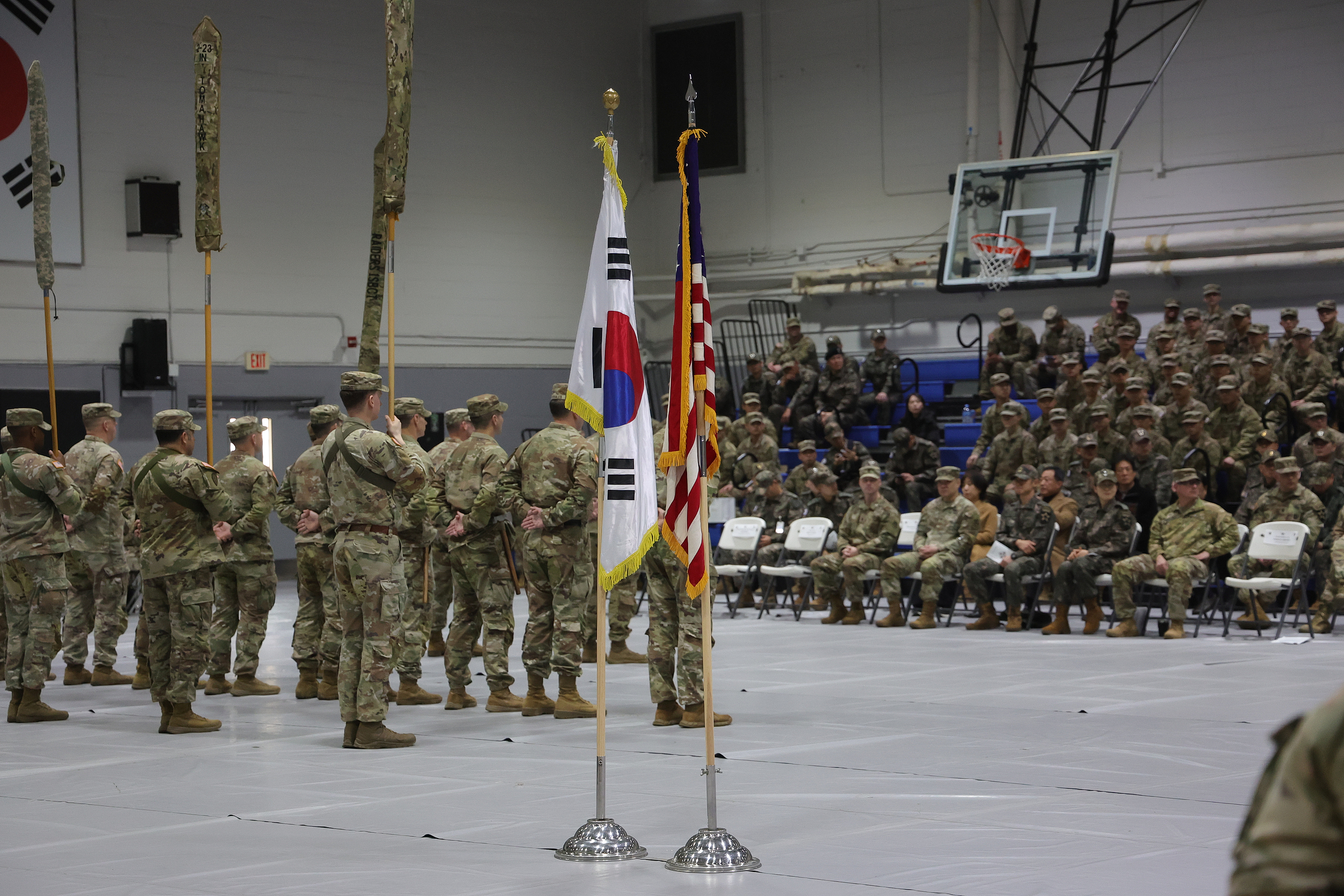
North Korea has repeatedly and strongly condemned the US-South Korea exercises as a “rehearsal for aggressive war.” On August 12, Pyongyang test-fired a ballistic missile with a range exceeding 700 kilometers in response to the drills, vowing to counter new threats with new deterrence capabilities.
Analysts suggest that the White House’s proactive move to shrink the exercises breaks with decades of established practice, signaling that the Trump administration will no longer fully accommodate Seoul’s security demands — and hinting at a major recalibration of its geopolitical approach to Northeast Asia.
Back in May, US Secretary of Defense Pete Hegseth publicly praised South Korea during the 23rd Shangri-La Dialogue for its recent efforts to boost defense spending, enhance military capabilities, and share collective defense responsibilities, placing Seoul in the category of “model allies” — those “most capable, clear-headed, and ready to defend their own interests.”
The origins of US-South Korea joint exercises trace back to the aftermath of the Korean War. The “Ulchi” series formally began in 1968 and gradually evolved into the current annual, routine joint exercise framework.
When Trump first took office in 2018, the Korean Peninsula saw a general easing of tensions. During his first term, Trump met with North Korean leader Kim Jong Un three times, including discussions on Pyongyang’s nuclear program. However, his administration later backtracked, failing to respond to North Korea’s positive overtures, which left the denuclearization process stalled.
As the 2024 US election approached, inter-Korean relations hit rock bottom. In June of that year, the pro-Western Yoon Suk Yeol administration in Seoul decided to resume loudspeaker broadcasts toward the North, citing Pyongyang’s so-called “trash balloon” launches into South Korean border areas and the capital region, along with other military provocations.
After Lee Jae-myung was elected South Korea’s new president on June 4 last year, he pledged to push for the restoration of military hotlines and other communication channels between the two Koreas, with both sides agreeing to halt actions that could escalate tensions. A week later, South Korean forces stopped their loudspeaker broadcasts, and the following day, North Korea reciprocated by suspending its own broadcasts toward the South.
During this year’s Liberation Day celebrations on August 15, Lee Jae-myung unveiled a “vision for inclusive and stable peaceful coexistence with North Korea,” vowing to begin the process of transitioning the peninsula’s fragile armistice regime into a permanent peace framework.
As of August 2026, however, North Korea continues to designate South Korea as its “primary enemy” and has flatly rejected Lee’s conciliatory proposals to end the Korean War and reopen inter-Korean dialogue, showing no willingness to accept his overtures.