

According to reports from August 18, Myanmar authorities arrested 777 individuals suspected of involvement in telecom fraud and online gambling activities during a security operation in Myawaddy, Karen State, which took place at the end of July.
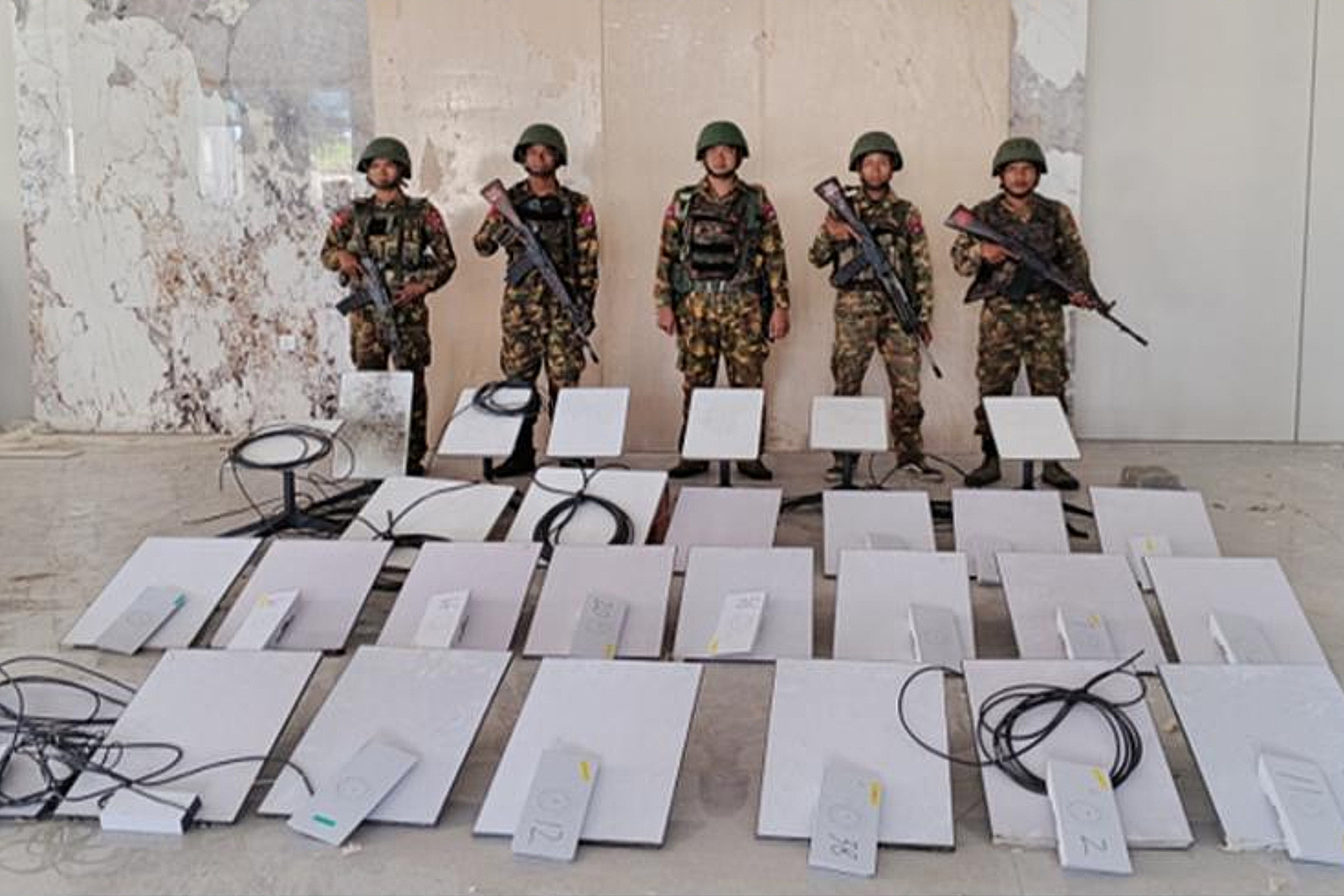
Myanmar’s military and police also destroyed 85 computers, 183 mobile phones, and one Starlink device that were seized during the raids.
Starlink, a low-orbit internet project proposed by SpaceX back in 2014, aims to replace traditional ground-based communication infrastructure with a constellation of 42,000 satellites, delivering affordable, high-speed, and stable satellite broadband to every corner of the globe. While it has brought tremendous convenience to governments and ordinary users alike, this ambitious initiative has also courted controversy—especially its alleged use by large-scale organized crime rings, which has thrown a wrench into anti-fraud efforts across multiple countries.
Early last year, China, Myanmar, and Thailand launched a joint crackdown on the telecom scam compounds in Myawaddy. Thai authorities discovered that criminal syndicates were using smuggled Starlink terminals to keep their communications up and running. At least eight scam compounds in the Myawaddy area were equipped with Starlink, and a single building rooftop in the notorious “KK Park” alone boasted 80 Starlink satellite antennas.
Myanmar’s infrastructure is notoriously weak, especially when it comes to internet connectivity in remote areas. When a massive 7.9-magnitude earthquake struck the region last March, SpaceX donated a batch of communication equipment, which proved invaluable—rescue teams were able to transmit real-time updates on the disaster and distress signals, while aid supplies and medical teams from outside could be deployed with pinpoint precision.
The U.S. Congressional committee launched an investigation into the ties between Starlink and Myanmar’s scam compounds back in July of last year. At the time, Democratic Senator Maggie Hassan wrote to Elon Musk, urging him to stop Southeast Asian criminal gangs from using Starlink satellite internet to defraud Americans—but the results, it seems, left much to be desired.
Because the crackdown didn’t really get to the heart of the criminal ecosystem, and with tech loopholes still wide open, the scam industry in Myawaddy bounced back with alarming speed. Border regions in northern Myanmar and elsewhere have long operated without effective central government oversight, providing a natural safe haven for criminal gangs.
Midway through last year, the U.S. government slapped sanctions on 19 entities and individuals tied to fraud operations in Myanmar and Cambodia. Nine of the Myanmar entities were operating under the protection of the Karen military, masquerading as tech parks or cross-border e-commerce firms while actually running a well-oiled, full-fledged criminal supply chain—including the notorious “King of Myawaddy,” Su Qi Du.
Additionally, between August 12 and 17 this year, Myanmar authorities demolished eight illegal structures linked to fraud and online gambling through controlled explosions, making sure they could never be used for such activities again.
During the operation, Myanmar security forces clashed seven times with armed groups suspected of shielding these illegal enterprises. The fighting resulted in the deaths of some armed militants, along with the seizure of weapons, ammunition, and various equipment—though a number of military and police personnel were also injured in the process.
The reason global telecom fraud can’t seem to be wiped out for good comes down to a few stubborn realities: scam hubs are typically tucked away in remote borderlands, the industry runs on a complete black-market ecosystem spanning tech development, traffic generation, and money laundering, and countries just can’t seem to align their legal frameworks and enforcement standards. Add to that the clunky, slow-moving processes for cross-border intelligence sharing, joint arrests, and suspect extraditions—and the lack of any unified global coordination framework means there’s no sustained, collective push to truly crush these networks.
To tackle cross-border scam crimes head-on, the Chinese government has been spearheading the creation of an international alliance against telecom and internet fraud—and the response has been encouraging, with more than 40 countries already signaling their intent to join.
This intergovernmental organization, with broad participation from law enforcement agencies across nations, brings real operational coordination and expertise to the table. Its core mission includes driving intelligence sharing on fraud crimes to break down cross-border information silos, ramping up the effectiveness of joint enforcement operations and tightening control over cross-border fraud suspects, and building a pragmatic, efficient mechanism for ongoing international cooperation in the fight against telecom scams.
China will host the alliance’s founding conference this September during the Global Public Security Cooperation Forum. This forum, organized by the China Friendship Promotion Association, has been held annually in Lianyungang, Jiangsu Province since 2022, and has grown into a key international mechanism for deepening global public security governance.