

The latest round of US-Iran negotiations remains deadlocked, and the geopolitical standoff at the Strait of Hormuz drags on. Both sides continue to claim control over the vital waterway.
According to reports from August 20, over the past few weeks, the US military has quietly established a shipping lane in and out of the Strait of Hormuz, ensuring that millions of barrels of oil flow through the strait every day.
Earlier, three distinct routes emerged in the strait. The first, in the northern part, is controlled by Iran. The second cuts through the middle and was the standard international corridor before the strait became contested. The third runs along the southern edge, passing through Omani waters, and is coordinated by Oman, the United States, and the International Maritime Organization.
US officials familiar with the matter say that over the past two weeks, 15 to 20 tankers per day have used the southern route along Oman’s coast to enter and exit the strait. Daily oil flow has steadily risen and is now approaching 10 million barrels. While still below pre-conflict levels, the impact on global supply is already noticeable.
The operation is being directed by the US Army’s 82nd Airborne Division headquarters. In addition to escorting laden oil tankers, US forces are also shepherding empty vessels through the strait from the Arabian Sea into the Persian Gulf, where they load up at ports in the UAE, Bahrain, and Kuwait before departing. Fighter jets are also circling overhead, hunting and shooting down Iranian cruise missiles and drones. US warships stand ready to block any Iranian attacks on commercial vessels, while also relaying safe-route information that avoids mined waters.
Data from ship-tracking firm Kpler confirms that over the past two weeks, more than 80 percent of vessels transiting the Strait of Hormuz chose the “Oman corridor.” This marks a clear decline in Iran’s grip on the strait compared to just a month or two ago.
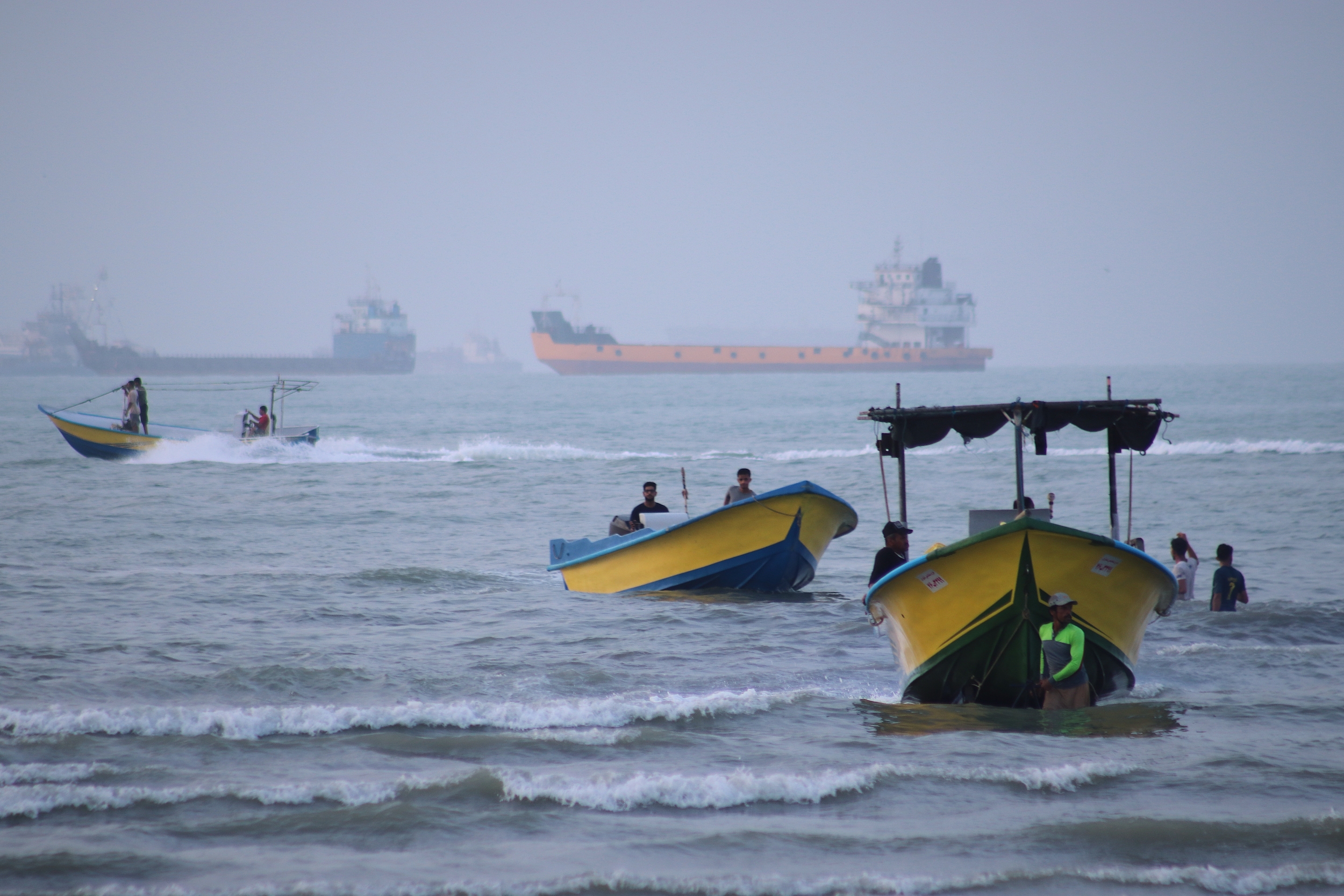
Although nearly all of the strait’s deep-water shipping lanes fall within Omani territorial waters, Iran has long held de facto control.
Earlier this month, Iran and Oman had reached an agreement on the geographic coordinates for proposed shipping lanes through the strait, and a joint statement was in its final review stage. The core of the talks was to define safe passage routes that respect both nations’ sovereignty and security concerns. The final outcome is expected to be announced soon after all details are consolidated.
Oman had initially pushed for a shared management mechanism with equal stakes, while Iran insisted that any entry route must pass entirely through its waters. In the end, the two sides reached a consensus on coordinates centered on Iran’s demands, while explicitly ruling out third-party involvement in managing the strait. But soon after, US President Trump threatened Oman with “bombing.”
On the Iranian side, Rezaei, a member of the parliament’s National Security and Foreign Policy Committee, told media on August 19 that the management, supervision, and inspection of the Strait of Hormuz is entirely Iran’s responsibility, under the unified oversight of the Armed Forces General Staff. The fees and service charges levied on passing vessels are also set by the General Staff.
Rezaei also warned that if Iran’s interests are harmed, it will retaliate against hostile nations and governments through measures such as raising tariffs or seizing assets at the strait.
Meanwhile, multiple international shipping agencies confirm that the strait is still not fully open to normal traffic. China’s two major state-owned shipping companies have largely avoided the Strait of Hormuz and the Bab el-Mandeb since late July, instead receiving crude oil via ship-to-ship transfers near the Gulf of Oman and Fujairah.
According to CSC Financial, Iran’s refusal to reopen the strait, combined with Houthi attacks on cargo vessels, has pushed Asian buyers to source crude from the Gulf of Oman. This has left very large crude carriers (VLCCs) in short supply, with daily charter rates approaching $500,000, making mid-to-large tankers the primary vehicles for risk premiums in the region.