

Healthcare costs are skyrocketing and hitting American workers hard — and the worst is still ahead. By 2027, employers could be staring at the biggest health insurance premium hikes in at least two decades.
According to the latest estimates from benefits consulting firm Aon, Americans with employer-sponsored health insurance are now spending an average of $5,297 per person on medical care this year — that’s $388 more than in 2025. That figure includes premiums deducted from paychecks, plus out-of-pocket costs like deductibles and copays.
Another major benefits consultancy, WTW, is projecting that U.S. employers will see medical costs jump 11.1% next year — the largest increase in more than 20 years. That means workers are likely to feel even more financial pain.
WTW’s data shows this marks the fifth consecutive year of accelerating healthcare costs. Jeff Levin-Scherz, who leads WTW’s population health business, put it bluntly: “Employers are telling us this situation is simply unsustainable.”
Mike Pastrick, who heads Aon’s North American health solutions, says decisions about health benefits at large companies have escalated from HR departments all the way up to the C-suite. “Now finance departments, even CEOs and boards of directors, are paying close attention,” he said.
As companies’ insurance costs keep climbing, employees typically shoulder a share of the premium burden — meaning their take-home pay shrinks even further each month.
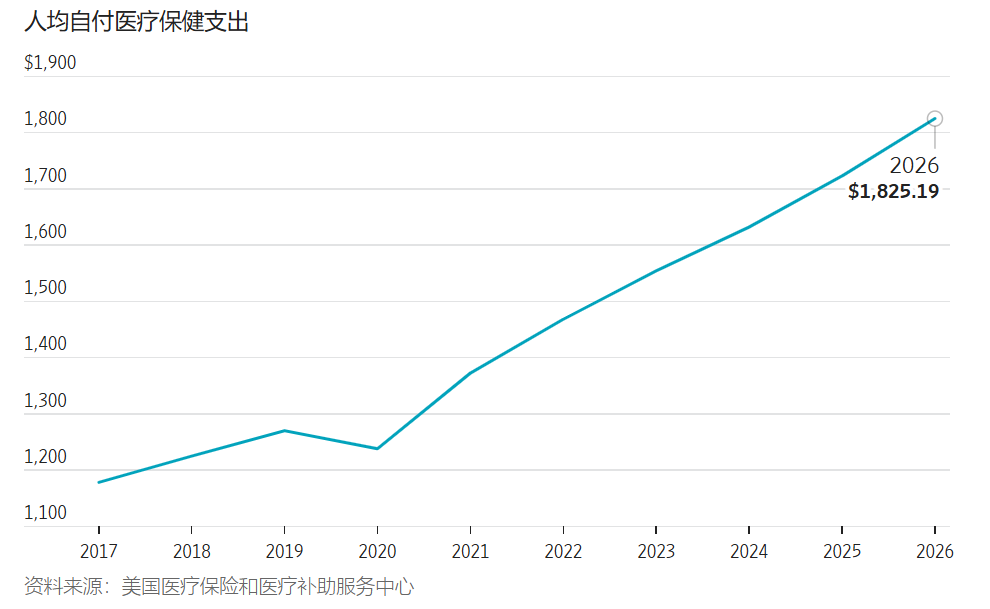
Chart showing average out-of-pocket healthcare spending per person in the U.S.
Take Paul Wisemacher Glass Company in Paducah, West Virginia, for example. The business has 35 employees. Co-owner Jason Wilburn says premiums have gone up by double digits every single year since they acquired the company in 2021. Healthcare costs now eat up 5% of the company’s revenue — more than their profit margin.
This year, the company raised the bi-weekly health insurance deduction for individual employees from $40 to $50. Even though the employer still covers about 90% of total premiums, some workers have chosen to drop coverage entirely because their personal costs keep climbing.
Wilburn summed it up: “It’s frustrating and disheartening. Something has to change.”
Official federal data shows that Americans’ out-of-pocket medical spending — including deductibles, copays, coinsurance, and services not covered by insurance — has been steadily rising.
Michael Chernew, a healthcare policy professor at Harvard Medical School, noted: “Recent healthcare spending growth has outpaced income growth.”
Benefits consultants and insurers point to several factors driving the acceleration in premiums and out-of-pocket costs. Hospitals are aggressively pushing for higher prices, and they’re increasingly using artificial intelligence tools to boost billing — which drives up overall claim amounts.