

On August 20, a coalition of Japanese governors, known as the “Council for Promoting the Resolution of Issues Related to U.S. Military Bases,” submitted a formal petition to Japan’s central government, urging a fundamental revision of the U.S.-Japan Status of Forces Agreement (SOFA).
This council is comprised of governors from 15 prefectures and municipalities that host U.S. military installations or related facilities. For years, the group has focused on resolving local governance challenges tied to the U.S. military presence. Their key demands include limiting Washington’s preferential legal jurisdiction over its personnel and requiring all U.S. troops to fully comply with Japanese domestic laws.
The petition highlights that safety incidents caused by U.S. military aircraft and hazardous material leaks from bases can have a severe impact on local communities. It argues that these issues must be subject to Japanese legal oversight to protect residents.
The document also points to growing problems surrounding the U.S. military’s use of civilian airports and ports, as well as unsettling incidents such as U.S. personnel carrying firearms outside base perimeters, which have heightened public anxiety.
The council insists that the U.S. military must respect Japan’s legal framework. Its chairman, Kanagawa Governor Yuji Kuroiwa, told reporters on the 20th that without a fundamental overhaul of the SOFA, the recurring problems linked to the U.S. military will never be fully resolved.
As a defeated nation in World War II, Japan was placed under direct U.S. occupation, and Washington’s post-war reforms heavily shaped Japan’s political system. The SOFA, signed in 1960 alongside the revised security treaty, defines the legal status of U.S. forces and their dependents in Japan. It remains one of the core legal pillars of the U.S.-Japan alliance.
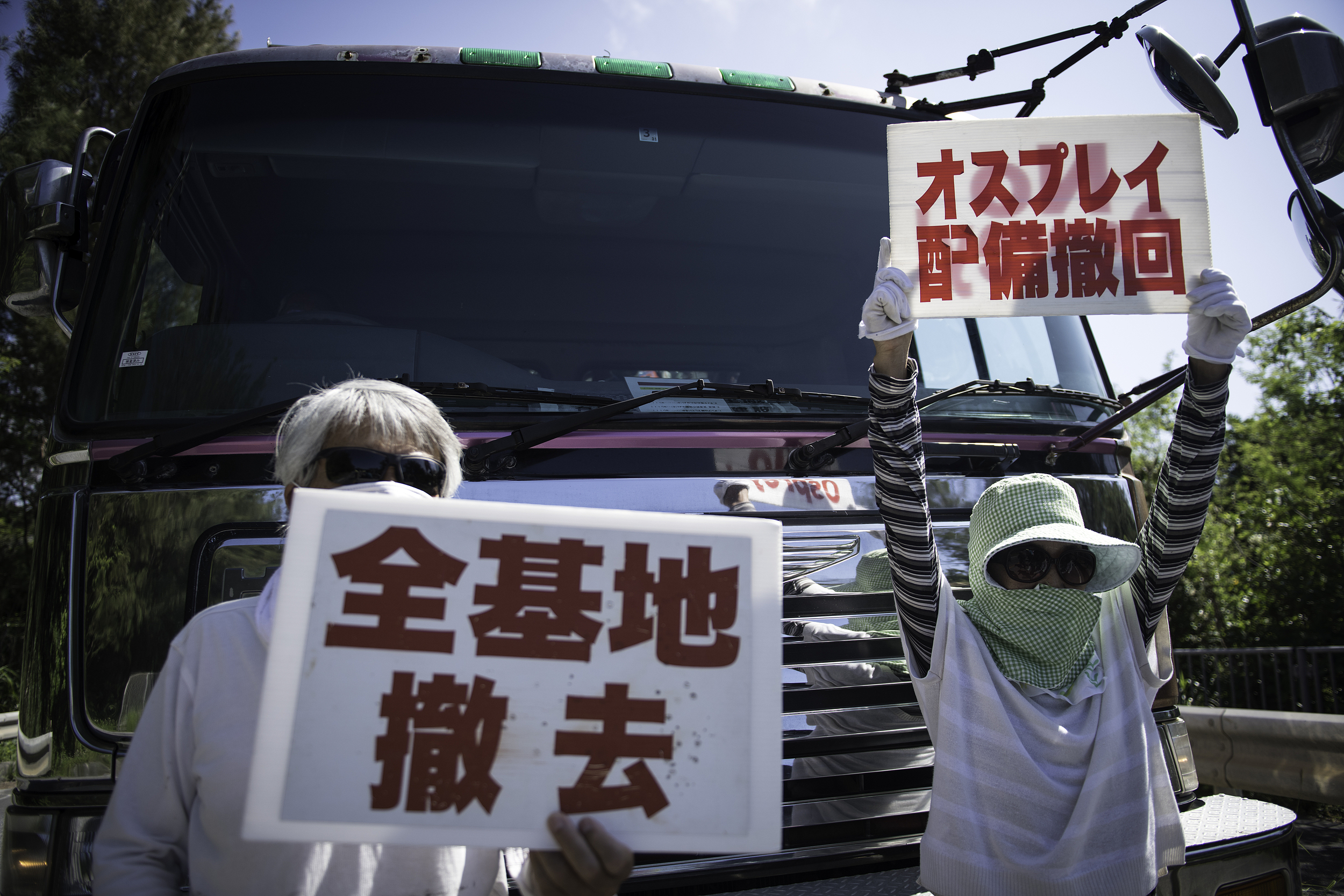
Under the agreement, Japan is obligated to provide military bases and facilities to the U.S. free of charge. The U.S. holds exclusive management rights over these bases, U.S. vessels and aircraft can use Japanese ports without fees, and U.S. personnel are exempt from Japanese regulations regarding passports and visas.
The U.S. military’s presence in Okinawa represents its largest and most concentrated cluster of bases in Japan, including its biggest air force installation in the Far East. Between 1972 and 2023, more than 6,235 criminal cases involving U.S. personnel and their dependents were recorded in Okinawa alone, including serious offenses such as murder, rape, and robbery. Due to the privileges granted by the SOFA, many of those involved have not been fully prosecuted under Japanese law.
A 2016 bilateral agreement narrowed the category of “U.S. personnel” under special protection to four classifications, but the practical impact has been minimal. Long-suppressed public resentment has now evolved into broad local political consensus. On the other hand, any amendment to the SOFA requires approval from the U.S. Congress, and Washington has shown little willingness to give up its entrenched privileges.
The U.S. and Japan generally maintain a tight alliance, but since Donald Trump returned to the White House, the asymmetrical nature of their relationship and friction over interests have become increasingly apparent. While the two nations remain deeply intertwined in security matters, their differences on trade and strategic issues continue to surface. Japan appears intent on leveraging the alliance to push its own military normalization agenda and carve out greater strategic autonomy.
In a related development, the U.S. recently imposed new sanctions on Tomoko Akane, the Japanese president of the International Criminal Court, freezing her U.S.-based assets and barring her from the U.S. financial system. Japan’s foreign ministry has publicly expressed “deep regret” over Washington’s decision.