HA Viewpoint
On the morning of June 24, 2016, at 8:30 AM local time, Conservative leader David Cameron stood outside 10 Downing Street to announce his resignation as Prime Minister. This happened just over an hour after the results of the Brexit referendum were revealed. Just hours before, the vote count showed that the “Leave” campaign had secured a 51.9% majority. From that moment on, the United States officially set course to leave the European Union.
Fast forward ten years to the morning of June 22, 2026. Keir Starmer, representing the Labour Party, also stood at 10 Downing Street to announce his resignation as Prime Minister. Having governed for less than two years, this “Mr. Stability,” who had once been so highly anticipated, ultimately failed to break the curse of frequent leadership changes.
According to Western media reports, if Starmer resigns within the year, the UK will have welcomed its seventh Prime Minister in just a decade. This marks the highest frequency of leadership turnover in nearly two centuries.
International observers believe the root cause of the UK’s turbulence over the past ten years lies in that 2016 referendum. The profound and massive impact of a vote that went completely against Cameron’s wishes has left the country torn apart, the economy in recession, and public dissatisfaction growing. No one can clearly say where the UK goes from here.
A Miscalculated Gamble
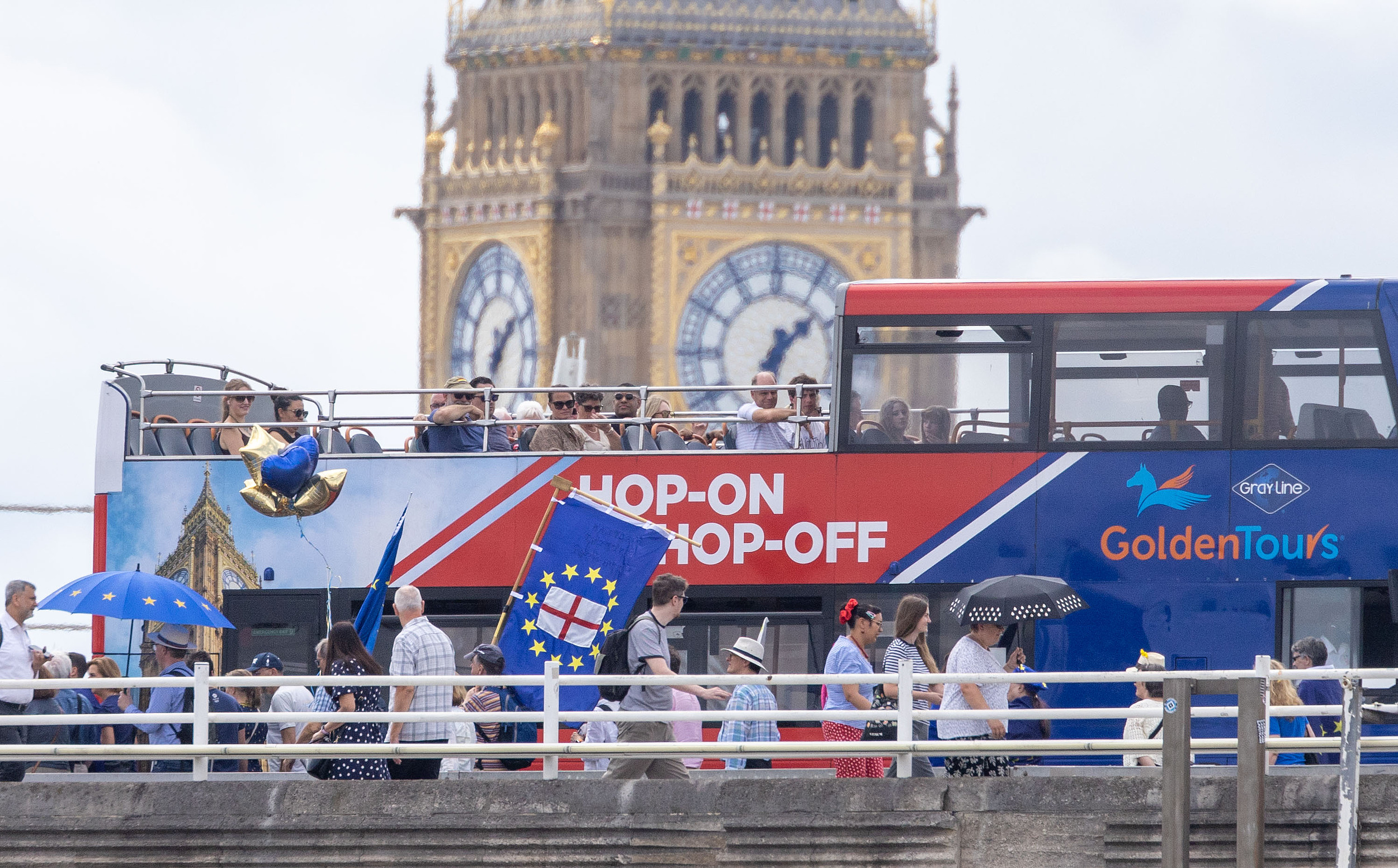
Since officially joining the European Community (the predecessor to the EU) in 1973, the UK has harbored a persistent impulse to “take back control.” In fact, before joining, the British Isles had a relatively low sense of identity with “Europe” and maintained a sense of alienation from European integration.
In 1975, the UK held its first referendum on whether to leave the EC, but it did not pass. During Margaret Thatcher’s tenure, dissatisfaction with the EC’s budget system and integration process led to demands for “taking back control.” After 2000, EU enlargement led to a surge of Eastern European immigrants, sparking concerns among some British citizens about immigration and national sovereignty.
The trend toward leaving became more pronounced after 2008. That year, the global financial crisis hit, and the UK’s GDP experienced negative growth, leading to a long period of stagnant wages and worsening social inequality. On one hand, public dissatisfaction with the governance system accumulated; on the other, the Leave campaign called for full sovereignty over legislation, justice, immigration, and border control.
In 2013, then-Prime Minister Cameron promised Conservative MPs in Bloomsbury, London, that if his party won the 2015 general election, he would hold a referendum on EU membership. His original intent was to quell the growing Eurosceptic faction within his party and suppress the rapidly rising UK Independence Party. He was confident he would win, as major economic institutes and think tanks at the time concluded that the economic cost of leaving the EU was unbearable.
But Cameron didn’t anticipate that he had underestimated the fury of public opinion. The referendum result was the opposite of what he wanted. Voters from the old industrial areas of Northern and Central England, the deep-rooted Eurosceptic traditions, and those angry about the unequal distribution of globalization converged at the ballot box, completely disrupting Cameron’s calculations. Cameron lost his gamble.
After this failed high-stakes bet, Cameron chose to leave with dignity, leaving the messy aftermath to his successors, including Theresa May and other Leave advocates.
Due to repeated delays and a long transition period, it took another four and a half years for the UK to formally exit the EU on December 31, 2020.
Regarding the long-term impacts of Brexit, some UK political analysts point out that the referendum brought about the most dramatic economic and social changes in the UK since World War II. Politically and diplomatically, significant changes occurred that were opposite to the Leave campaign’s expectations.
Economic Contraction
On the economic impact of Brexit, The Economist objectively noted in a report that the UK government has used “Brexit” to gain policy autonomy and reshape its agricultural support system. Tech entrepreneurs also stated that compared to the EU, the regulatory threshold for starting AI companies in the UK is lower. Additionally, industries like puffin and lobster farming have benefited, and a small minority of ordinary citizens have profited.
But clearly, this is not the mainstream. Long-term tracking studies show that if the UK had not left the EU, its economy would be larger than it is today. For example, Dan Hanson, Chief Economist at Bloomberg Economics, and others found that the UK has suffered a loss equivalent to 2%-4% of its GDP.
Other studies have been even more startling for Britons. Economists Nicholas Bloom and others from Stanford University estimated in a 2025 National Bureau of Economic Research study that by 2025, Brexit has reduced the UK’s per capita GDP by 6%-8%, business investment by 12%-18%, and employment and labor productivity by 3%-4% compared to staying in the EU.
Recent facts further illustrate the problem. Since Brexit, due to government turnover and repeated policy adjustments, the investment value and competitiveness of the British pound and UK companies have continued to decline. Today, the UK’s GDP has been surpassed by its former colony, India, ranking 5th globally.
In response, Leave campaigners argue that it is too early to judge the consequences of Brexit. For example, to better implement policies including immigration, some economic fluctuation is inevitable.
Jonathan Portes, a professor at King’s College London, pointed out that the drag effect of Brexit on UK trade, investment, and productivity is accumulating gradually, not happening overnight.
But British merchants are complaining endlessly. Although UK goods are not subject to tariffs under current UK-EU rules, compliance costs such as customs declarations, origin certifications, and visa restrictions are high. Over the past ten years, about 16,400 UK exporters have been forced to withdraw from the EU market.
Ten years on, the transatlantic trade deal once heavily praised by Leave campaigners has yet to materialize. Even during the Biden administration in 2023, which was pro-Buckingham Palace, the two sides only established a cooperation framework for emerging fields like AI and clean energy through the “Atlantic Declaration,” with slow subsequent implementation.
According to institutional forecasts, the UK’s share of global goods exports has dropped from 2.6% in 2016 to 2.1% last year. The manufacturing and financial sectors have been significantly impacted, with trillions of pounds in assets migrating out of London’s financial center.
A decade ago, Leave campaigners proposed the tempting slogan “Global Britain.” The core idea was: leaving the rigid Brussels, the UK would sail freely in the ocean of globalization as an independent nation, signing trade agreements with the fastest-growing economies and重现 the glory of the British Empire. Ten years later, the UK’s progress in expanding markets and establishing trade partnerships with Asia-Pacific and other regions through “Brexit” has been unsatisfactory.
In response, the London School of Economics (LSE) reached a rather stinging conclusion: “Global Britain” is merely an illusion.
Political Turmoil
Sara Hobolt, a professor at the London School of Economics, spent ten years studying one question: how a political event can profoundly rewrite a nation’s collective identity. She wrote a monograph, Tribal Politics: How Brexit Divided Britain, arguing that the Brexit referendum was not just a vote; it created two new political tribes in the UK: “Remain” and “Leave.” When a person’s identity is labeled so clearly, politics is no longer about policy differences but becomes a tribal war.
Hobolt believes the impact of this tribal war is still felt today. Both the Conservative and Labour parties have split and reformed in the裂痕 (rift) of the referendum, and even family dinner tables have not been spared from this national cliff-edge break.
Over the past decade, the impact of Brexit on the UK political arena and the continuous occurrence of “tribal wars” have become an insoluble problem. From Cameron to Starmer, six Prime Ministers have served in ten years, setting a record for the most frequent leadership turnover in nearly 200 years.
Among them, the Conservatives were ousted after 14 years in power in 2024, with many moderate politicians being pushed out of the party. The average tenure of each Prime Minister was less than two years, with Liz Truss serving only 49 days before resigning due to policy collapse. The main reason was the social dissatisfaction triggered by the UK’s relationship with Europe.
The Labour Party also fell into long-term internal friction due to the opposition between Leave and Remain supporters, only returning to power in 2024 by leveraging public sentiment.
Now, the support rates for these two long-dominant parties are declining. The Labour Party suffered a historic defeat in the May 2026 local elections, losing the majority seats won in the 2024 general election.
During this period, populist forces rose abruptly. The far-right Reform UK party grew strong amid the Brexit chaos, winning over 1,400 seats in local elections. The party is led by Nigel Farage, the “standard-bearer” of the UK’s Brexit movement.
The long-term policy uncertainty brought by Brexit has severely constrained the economic growth goals of successive governments, leaving them unable to advance long-term strategic planning.
Diplomatically, with the Trump administration weakening the special ally relationship between the US and the UK, the UK has become increasingly isolated in international affairs. In global pandemic response, the Russia-Ukraine war, and recent Middle East conflicts, the UK’s presence is less significant than other European powers like Germany and France.
Additionally, the negative consequences of economic downturn and social division during the Brexit process have transmitted populist sentiments contrary to the consciousness of integration to Europe, directly stimulating the rise of right-wing populist forces in multiple countries and providing realistic public support for anti-immigration and anti-free trade sentiments.
Immigration Contradictions
Although Brexit ended the free movement of people between the UK and the EU, it also produced another unpredictable result: a shift in the main body of immigrants, which has sparked sharper social contradictions.
After Brexit, a large number of EU laborers left the UK. Labor shortages forced the UK to rely on immigrants from non-EU regions. While net migration into the UK dropped from over 900,000 in 2023 to 171,000 in 2025, net migration from non-EU countries surged.
This has led to此起彼伏 (endless) anti-immigration violent activities in Northern Ireland and various parts of London. Ethnic groups from South Asia and North Africa have frequently been targeted, and racial tensions continue to spread.
Starting from late last year, the UK immigration system has undergone its biggest reform in 50 years.Illegal immigrants and those relying on social welfare will have to wait 20 to 30 years to obtain permanent residency status.
Refugees coming to the UK are mainly from the Middle East, North Africa, and war-torn Afghanistan. The number of illegal immigrants attempting to cross the English Channel reached a peak of 46,000 in 2022, with 41,000 last year. The resulting unrest has become one of the UK’s primary political issues.
Previously, the UK spent about £1.3 billion annually on refugee shelter hotels and funded the deportation of illegal immigrants arriving via the English Channel to Rwanda for resettlement. In July 2024, immediately after taking office, Prime Minister Starmer abolished the “Rwanda Plan” and planned to close all shelter hotels within a year.
Analysts point out that establishing an immigration system that frequently reviews hundreds of thousands of people will incur administrative costs and complexity far exceeding the existing model, and may also damage the UK’s international image.
At the same time, the other end of society is experiencing significant outflows. After the Labour Party took power in October 2024, the government budget significantly increased capital gains tax and inheritance tax, and canceled tax breaks for “non-domiciled” individuals. The wealthy began seeking new safe havens in Montenegro, the UAE, Malta, and Costa Rica. The latest Global Private Wealth Migration Report indicates that the UK will become the country with the highest net outflow of high-net-worth individuals (16,500) this year.
Return to the EU?
Many controversies and problems left over from Brexit are testing the UK-EU relationship, especially regarding the Northern Ireland issue. The Labour Party is working to “reset” relations between the two sides.
In 2020, the UK and EU reached the Northern Ireland Protocol, placing the customs border in the Irish Sea and requiring goods entering Northern Ireland from mainland UK to be inspected, thereby avoiding a physical border between Northern Ireland and Ireland. This contradiction remains the core friction point in UK-EU relations.
On December 1, 2025, Starmer admitted that the Brexit deal has severely damaged the UK economy. To achieve economic recovery, the UK must continue to reduce friction and move toward closer ties with the EU.
At the same time, domestic calls for returning to the EU are growing stronger, and public opinion has clearly reversed. Latest polls show that 55% of citizens explicitly support reapplying to join the EU, and over 20% of当年的 (that year’s) Leave voters have already regretted their decision.
A May 2026 IPSOS poll showed that 48% of respondents believe the results of Brexit have become worse, a figure double that of the same period in 2021. Only 9% thought it was better, far lower than five years ago.
Also in May this year, French economist and historian Nicolas Baverez wrote in an article on La Vie magazine’s website: To solve productivity shortages, declining attractiveness, social disorder, and governance crises, the UK must redefine its position and return to the core circle of Europe it once tried to leave. The UK urgently needs to rely on EU power to get back on a path of development.
Nevertheless, international experts believe that “returning to the EU” is difficult to achieve a unified consensus domestically in the short term. The rare current political consensus is to first achieve regulatory alignment, restore personnel mobility in certain areas, and then gradually re-embed into the single market framework.
Peter Kellner, a senior analyst at polling organization “YouGov,” has long studied changes in public sentiment. He judges that the current reversal in public opinion has not yet reached a magnitude sufficient to drive further practical action.
The Labour Party has explicitly ruled out the possibility of returning to the EU since taking power in 2024. At least for now, the party does not have enough political space to push this agenda.
Starmer, who is about to step down, emphasized that improving bilateral relations at this stage is mainly limited to trade facilitation. His potential successor, Bharrat Jagdeo (Note:原文为伯纳姆, likely referring to a fictional or specific successor in this 2026 context, keeping as Bernard or similar if implied, but text says 伯纳姆 – let’s use ‘Bernham’ or keep transliteration ‘Bernam’ or just ‘his potential successor’ to be safe. The text says 伯纳姆. I will use ‘Bernam’), stated during last month’s campaign that he does not advocate for the UK to rejoin the EU and that people must respect the referendum results.
Meanwhile, the Conservative Party has not included “returning to the EU” in its official election platform and believes doing so would cost the UK at least £5 billion annually, while also requiring it to accept unfavorable rules such as free movement of people.
On the other hand, the EU’s attitude also does not seem to be welcoming. EU leaders and member states have deep-seated pain: it was the UK that ended the dream of post-war European integration.
Professor Ian Bogdan at the LSE Institute for European Affairs analyzes that many EU member states and numerous individuals within EU institutions are unwilling to re-accept this country that has repeatedly disrupted things, and they fear a second “Brexit.” Additionally, even if the UK were to return, it would no longer enjoy exemptions for the Eurozone and Schengen Area. The UK’s EU budget rebate mechanism it once enjoyed is likely to cease to exist.