

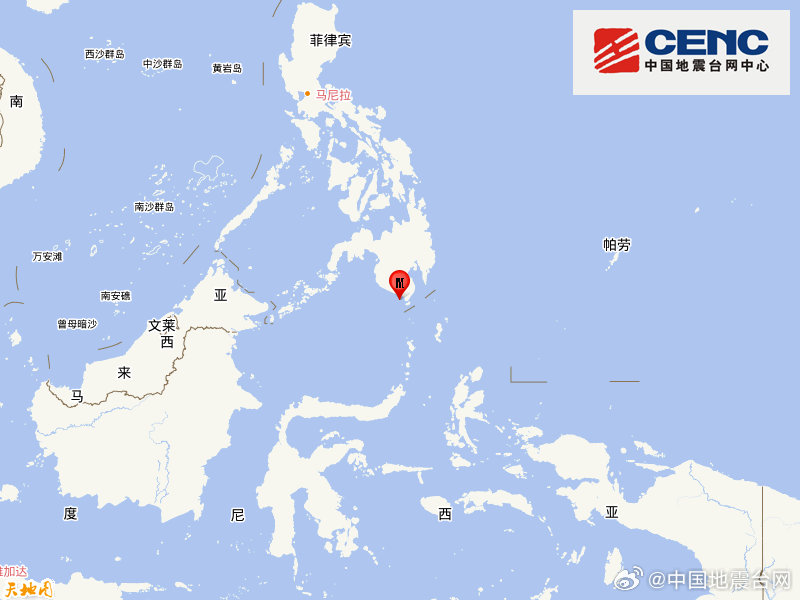
At 7:37 AM on June 8, a powerful 7.9-magnitude earthquake struck the southern Philippine archipelago (5.55°N, 125.10°E), registering at a depth of 40 kilometers.
Authorities have already sounded the alarm on a potential tsunami. We’re looking at waves that could tower about a meter above normal tide levels. The first surge is expected to roll in sometime between 7:37 AM and 9:37 AM, with the whole situation likely lingering for several hours.
If you’re in the southern coastal zones, don’t wait—head for higher ground or move inland right away. Boats docked near ports, river mouths, or shallow waters need to be secured and pulled back from the edge. If you’re already out at sea, stick to deeper waters and wait for further instructions.
It’s no surprise this happened here. Over 80% of the world’s major quakes happen along the Pacific Ring of Fire, and the Philippines sits right in the thick of it. The country feels dozens of tremors every year, with a brutal historical track record: seven quakes over magnitude 8 and more than 250 over magnitude 7 since the 20th century.
On the monitoring front, experts are tracking the situation closely. Early data suggests a regional tsunami could ripple out hundreds of kilometers from the epicenter, but there’s no expected threat to China’s coastline. Teams will keep analyzing the seismic and wave data and drop updates the moment they know more.
Japan’s meteorological agency has already issued tsunami warnings along the coasts of Honshu, Shikoku, Kyushu, and the Ryukyu Islands, cautioning that some areas could see waves up to a meter high.
The waves are expected to start hitting Miyako Island, main Okinawa, the Amami Islands, and the eastern coasts of Miyazaki and Kagoshima prefectures around 11 AM today. If you’re in those areas, especially near remote islands, stay sharp on official alerts. Get away from beaches, ports, and river mouths immediately, head uphill, and make sure you’re ready to shelter safely.
Let’s be real: tsunamis are absolute beasts. They don’t just wipe out homes and infrastructure; they devastate entire coastal ecosystems and take countless lives.
Japan has unfortunately borne the brunt of history’s deadliest tsunamis, accounting for over a third of all global events that claimed more than a thousand lives. In fact, the English word “tsunami” itself comes straight from Japanese.
Throughout its history, the country has faced devastating waves that have claimed tens of thousands of lives.Just last year, on July 30, a massive quake in the Russian Far East sent warning waves racing toward Japan first.
After decades of hard lessons, Japan has built a serious, multi-layered defense system covering early warnings, engineering barriers, and rapid evacuation protocols.
They’ve literally built a fortress along the Pacific coast. We’re talking nearly 400 kilometers of seawalls, some reaching 14 meters high. Take Numazu City, for example—they’ve got a staggering 45-meter reinforced concrete barrier designed to hold back waves from an 8-magnitude quake. They’ve even upgraded existing highway embankments with inland gates and floodgates, turning everyday roads into dual-purpose tsunami shields.
But here’s the harsh truth: when you’re dealing with a magnitude 9+ megaquake and waves that dwarf even the best engineering specs, nothing is foolproof. On March 11, 2011, a 9-magnitude quake struck off Japan’s northeast coast at just 10 kilometers deep, claiming at least 15,899 lives. The quake and the tsunami that followed wreaked havoc, severely damaging the Fukushima Daiichi and Daini nuclear plants and reshaping global disaster preparedness forever.