There are significant differences between discussions surrounding the Takashi City administration in Japan and public opinion in mainland China and Taiwan, which may include politically motivated misinterpretations or exaggerations. In this context, relying on media reports familiar with the local situation and cross-referencing information in multiple languages is particularly important.
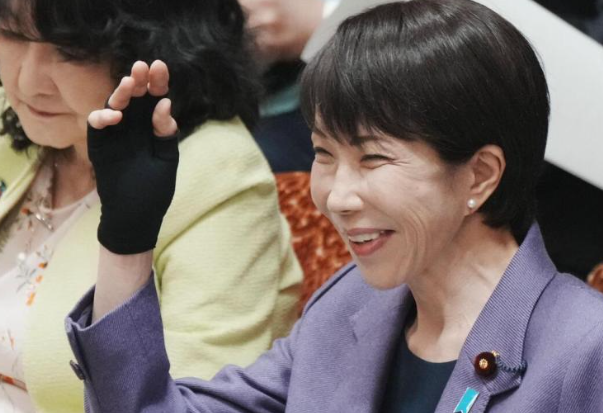
In the February 8th Japanese House of Representatives election, Sanae Takaichi led the Liberal Democratic Party (LDP) to a landslide victory, winning more than two-thirds of the seats. This majority means the LDP can monopolize the chairpersonship of all committees and deliberation panels in the House of Representatives. Therefore, some believe Takaichi will be better positioned to translate her political ideals into concrete policies, particularly in the areas of diplomacy and security, leading to various speculations. Issues such as Japan-China relations, the Taiwan issue, the three security treaties, constitutional revision, and historical issues (such as visits to the Yasukuni Shrine) are often considered potential points of concern.
However, Takaichi repeatedly emphasized “proactive fiscal policy” during the election campaign, namely expansionary fiscal policy. The more pressing task now is to push for the passage of the 2026 budget and to discuss the specifics of consumption tax cuts and expansionary fiscal policy. On the diplomatic front, the March trip to the United States will be a crucial test for the second time for the Takaichi cabinet. Whether it can demonstrate a Japanese stance aligned with US President Trump’s policies and clearly convey Japan’s importance to the United States will be key.
Within Japan, the Taiwan issue, the three security documents, constitutional revision, and historical issues were not immediately considered the most important political agenda, primarily for the following reasons:
First, regarding the Taiwan issue, Takaichi stated in a Diet debate on December 3rd of last year that the Japanese government’s basic position on Taiwan remains unchanged, based on the 1972 Japan-China Joint Statement. As for the widely discussed Diet debate on November 7th of last year, the content was not an adjustment to Taiwan policy, but rather a legal explanation concerning the right of collective self-defense. Specifically, she discussed the circumstances under which the “existential crisis situation” applies in security-related bills, mentioning that certain situations surrounding the Taiwan Strait might constitute an “existential crisis situation.” In other words, she was not discussing Taiwan policy itself, but rather conducting legal arguments. Therefore, Takaichi did not intend to change Taiwan policy, and there was no substantive discussion within Japan regarding whether to adjust the Taiwan policy, nor were any related bills proposed.
Second, regarding the so-called “Three Security Documents” (the National Security Strategy, the National Defense Strategy, and the Defense Force Buildup Plan), these documents were drafted by the Kishida Fumio administration in December 2022, and the Takashi City administration has indicated its intention to revise them. Following the House of Representatives election, this policy was reaffirmed, and the revision process has been accelerated, with a formal text expected by the end of the year. Unlike the Taiwan issue, the revision of the Three Security Documents is seen domestically in Japan as a concrete policy arrangement. The revisions may involve a reinterpretation of the “Three Non-Nuclear Principles,” expansion of arms exports, the enactment of an anti-espionage law, and the establishment of an organization similar to a central intelligence agency. These measures are largely understood as a gradual removal of the “autonomous constraints” imposed on Japan as a defeated nation, and also as a response to changes in the surrounding security environment and the uncertainty of US policy. Domestically, this is generally not seen as “militarization,” but rather as an adjustment to existing self-imposed limitations. Of course, related debates will continue.
Third, regarding constitutional amendment. Although the Liberal Democratic Party (LDP) holds a two-thirds majority in the House of Representatives, formally meeting the conditions for initiating constitutional amendment discussions, institutional obstacles remain due to the party not yet reaching a two-thirds majority in the House of Councillors. Furthermore, even if constitutional revision is discussed, the specific content of the amendments must be clearly defined. Currently, this issue has not become a focus of widespread public discussion. Takaichi has advocated explicitly including the Self-Defense Forces in Article 9 of the Constitution, but whether this will be pursued remains to be seen. Therefore, constitutional revision has not yet truly entered the substantive agenda at the national level.
Fourth, regarding historical issues. Takaichi did not visit the Yasukuni Shrine during the autumn festival in 2025, nor did she visit it at the end of December last year. Furthermore, on November 7th last year, she clearly stated that she would uphold the position of reflection and apology regarding war and colonial rule expressed in the 1995 Murayama Statement. Therefore, no new controversies have arisen due to historical issues.
Overall, there are significant differences between domestic discussions in Japan surrounding the Takaichi administration and public opinion in mainland China and Taiwan, which may include politically motivated misinterpretations or exaggerations. In this context, relying on media reports familiar with the local situation and cross-verifying information through multiple languages is particularly important.