A massive international medical rescue operation is underway in the eastern Atlantic, involving the World Health Organization (WHO) and multiple governments.
According to CCTV News, a cruise ship sailing in the Atlantic has reported an outbreak of Hantavirus, a highly infectious and deadly disease. So far, one confirmed case and five suspected cases have been reported. Among the six patients, three have died, one is in critical condition and receiving treatment in South Africa, and two crew members are trapped on the ship in urgent need of medical attention.
The WHO announced on May 3 that a thorough investigation is underway, including laboratory tests and epidemiological surveys. The organization is coordinating with member countries and the cruise ship operator to transfer passengers showing symptoms to medical facilities and conduct comprehensive public health risk assessments and prevention support for the remaining passengers on board.
The affected cruise ship, the “Hondius”, is a Dutch-registered vessel that set sail from Ushuaia, Argentina, about seven weeks ago, passing through Antarctica and other destinations, with a planned route across the Atlantic to the Canary Islands, a Spanish overseas territory off the northwest coast of Africa.
The “Hondius” is currently located near the eastern Atlantic nation of Cape Verde, but local authorities have refused to allow it to dock.
It is unclear how the infection occurred. The health department of Tierra del Fuego Province, where Ushuaia is located, stated that there have been no reported cases of Hantavirus in the province. However, according to WHO data, Hantavirus is currently circulating in parts of Argentina and Chile.
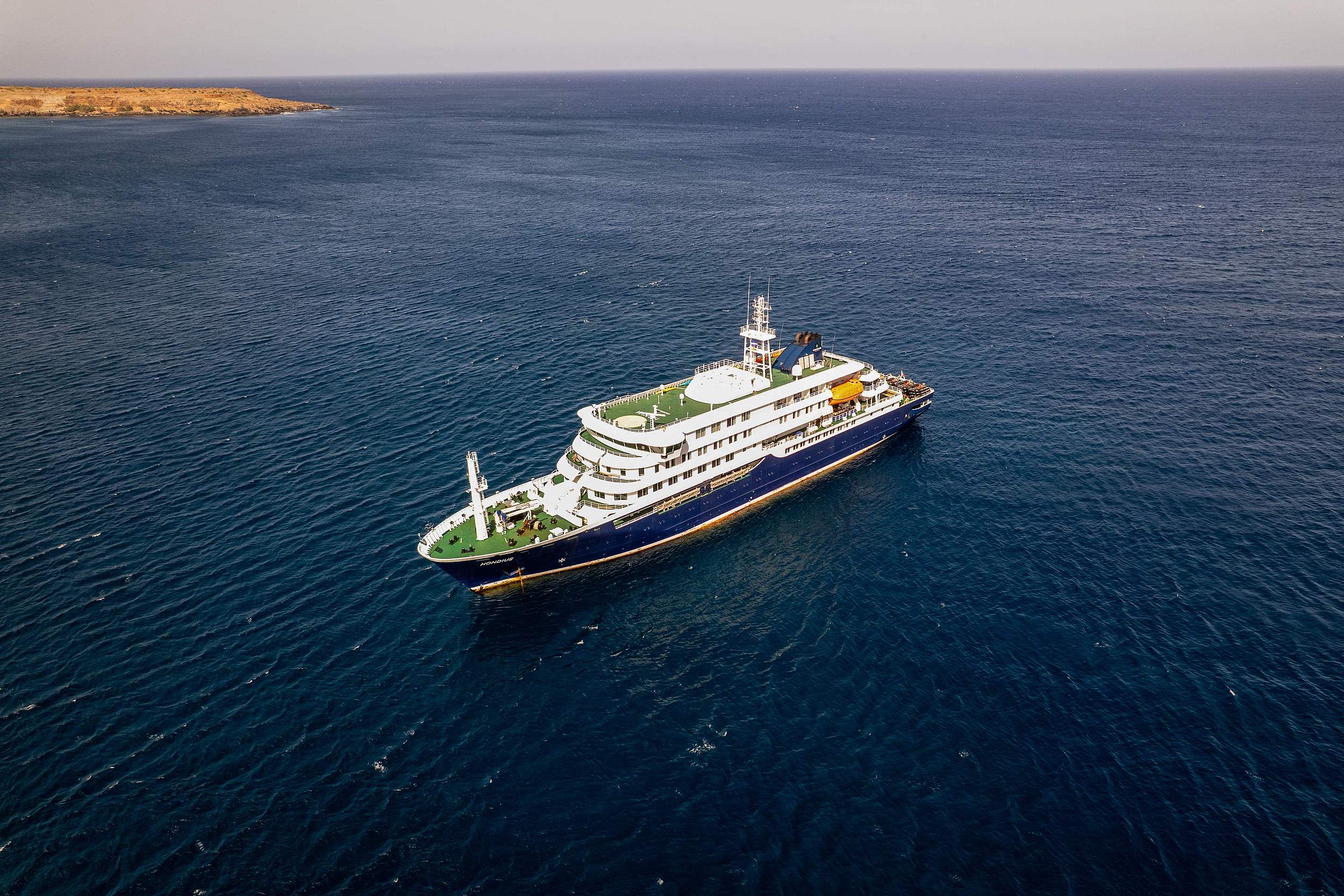
The ship has 221 people on board, including 150 passengers and 71 crew members. The three deceased include a Dutch couple in their 70s, whose bodies have been transferred off the ship, and a third person whose body remains on board.
The WHO has warned that Hantavirus is usually transmitted through inhalation of aerosols contaminated with the virus, which can cause severe respiratory or kidney failure. There is currently no specific treatment for the disease, and there is a risk of human-to-human transmission in enclosed spaces.
Modern cruise ships have ample outdoor activity spaces on each deck, but some cabins are designed without windows and rely on central air conditioning for ventilation, making them vulnerable to the spread of the virus. Once an outbreak occurs, a cruise ship at sea can become a breeding ground for the virus, making it difficult to implement isolation and containment measures.
Publicly available information shows that Hantavirus is a zoonotic virus, primarily hosted by rodents, and was first discovered in the Hantan River area of South Korea. The virus is present in the urine, feces, or saliva of infected rodents. Humans typically become infected through contact with contaminated environments, such as during cleaning or moving hay.
However, according to information from the Hong Kong Department of Health and other agencies, human-to-human transmission of Hantavirus is extremely rare. Once a person comes into contact with a contaminated environment, the virus can quickly invade the body, causing severe disease. Most infected individuals exhibit mild or no symptoms, but may experience headaches, back pain, or eye pain, as well as facial, neck, and chest flushing, accompanied by kidney damage. Severe cases can lead to kidney failure.
In the Americas, Hantavirus pulmonary syndrome is characterized by rapid onset of respiratory distress and pulmonary edema. In the past 50 years, the mortality rate for infected individuals in New Mexico, USA, has exceeded 40%.
The Chinese Center for Disease Control and Prevention states that Hantavirus is a zoonotic disease that causes hemorrhagic fever, a notifiable disease in China, commonly reported in rural or urban-rural areas.
China’s epidemic is mainly concentrated in areas with high rodent activity, such as the northeastern, northwestern, and Yunnan regions. Since the beginning of this century, China has reported over 10,000 cases per year, primarily causing kidney syndrome, characterized by fever, bleeding tendency, and kidney damage, with a mortality rate ranging from 0.1% to 15%.
The Chinese CDC notes that specific transmission routes include direct contact with infected rodents or their urine, feces, or saliva through broken skin, mouth, or nose; working or cleaning in areas frequently visited by rodents, such as factories, warehouses, or farmland; consuming food or water contaminated with the virus; and transmission through rodent-borne mites (mainly ticks and chiggers).
High-risk behaviors include clearing rodent urine, feces, or nests; sweeping abandoned houses or sheds; and working in environments with rodent infestations (such as grain warehouses), especially without wearing gloves or masks. The incubation period is typically 1-2 weeks, but can be as long as two months in some cases.
If you have visited an epidemic area or have been working outdoors for an extended period and experience symptoms such as high fever, headache, muscle pain, fatigue, nausea, or vomiting, especially accompanied by bleeding symptoms (such as skin or nose bleeding), seek medical attention immediately. When seeking medical attention, inform your doctor of your symptoms and possible contact history (such as outdoor activities, handling rodents, or contact with rodent habitats).
On the other hand, cruise ships’ ventilation systems and public areas can harbor hidden dangers, often far from land-based medical resources, making it difficult to receive timely medical treatment after infection. Severe cases require emergency transfer, and if port stops are restricted, the situation may worsen. During the COVID-19 pandemic in 2020, the “Diamond Princess” failed to contain the outbreak, resulting in 712 infected passengers and crew members, with a mortality rate of 2.7%.
The demand for polar expedition cruises is experiencing explosive growth, making it one of the fastest-growing segments of the global cruise industry. The core customer base is divided into four categories, with the silver-haired group having the most prominent purchasing power. The “Hondius” belongs to the Ponant cruise line, a high-end brand in the global polar tourism market, with single-trip prices ranging from 50,000 to 150,000 yuan.