

Let’s talk about that so-called “trade imbalance” with China. France is now trying to bring the G7 to the table to discuss it with Beijing.
Back on June 8, insiders familiar with the summit prep shared that Macron is planning a video call between the G7 and China right before this year’s gathering. The goal? Tackling global trade gaps. It’s a pretty bold move, especially since the G7 has been taking a tougher stance on China lately.
Sources kept their names off the record due to the sensitive nature of diplomatic talks. Two of them confirmed the video chat is set for Thursday the 11th, just ahead of the G7 leaders’ meeting next week in Évian, France.
Honestly, for a Western bloc that’s been leaning confrontational toward China in recent years, dialing up Beijing is definitely turning heads.
Macron isn’t new to reaching out to China. He’s visited multiple times, and French diplomats have been working behind the scenes for months to get Beijing involved in the upcoming summit. At one point, Paris even floated the idea of a “summit of convergences” focused on finding common ground.
Word got out last November that Macron was mulling a pretty daring invite: bringing China to the 2026 G7 summit in Évian. Analysts pointed out that with his domestic government stumbling, Macron’s main leverage left is playing a key statesman role on the global stage.
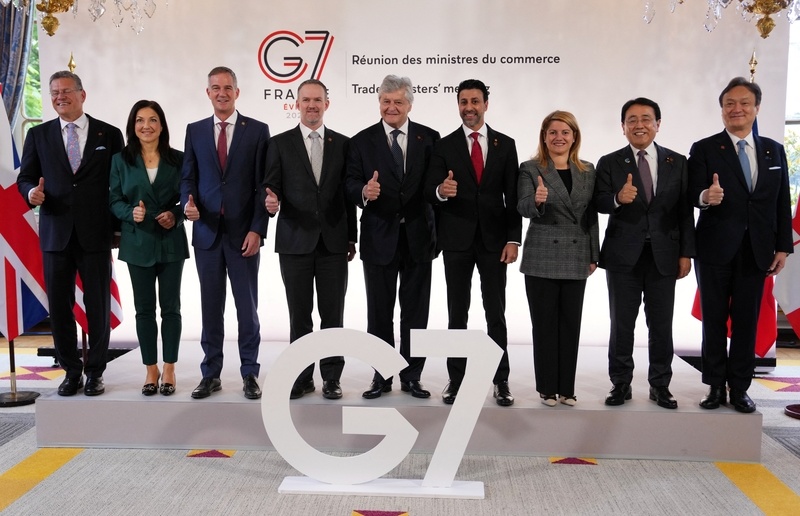
On May 6, Paris wrapped up a two-day meeting of G7 trade ministers, ending with a joint statement.
You’ve probably noticed that President Trump has also dialed down his sharp rhetoric toward China over the past few weeks. Fresh off a trip to Beijing, he’s showing a surprisingly optimistic vibe about trade between the world’s two biggest economies.
The White House hasn’t commented on the potential G7-China call yet, but Trump has already locked in his attendance at the Évian summit.
Officials note that the exact diplomatic level for the call is still being ironed out, though it’s expected to feature several top leaders.
Not everyone is on board, though. An EU Commission official called France’s outreach “a decent initiative,” but warned that “the format just isn’t right.”
“Let’s be real—the G7 isn’t a neutral playground,” the official noted. “Beijing might like seeing softer language from the group, but they aren’t going to play ball by admitting their ‘overcapacity’ is actually a problem.”
As this year’s G7 chair, France is putting “economic imbalance” at the top of its agenda and taking a noticeably softer approach toward China. Paris argues that the current trade gap stems from a mix of EU underinvestment, US overconsumption, and what they label China’s “overcapacity.”
G7 finance ministers just wrapped up in Paris last month. France’s Economy and Finance Minister, Roland Lescure, made it clear: France wants to ditch the finger-pointing and actually talk with all partners, China included. “Global imbalances are simply unsustainable,” he told the press. “They’re growing, they’re persistent, and this cycle has to end.”
Still, industry watchers doubt the G7 will ever agree on concrete steps. One scholar bluntly put it: nobody seriously expects a single G7 statement to make China magically fall in line.
The whole “overcapacity” and “trade imbalance” narrative isn’t exactly new. Critics have long pointed out that this so-called overcapacity is really just “capacity politics”—a familiar tactic used by certain economies to protect their own advantages and slow down emerging nations from overtaking them.
On the flip side, China’s foreign ministry has consistently stressed that Beijing never actively chases trade surpluses. The surplus with the EU is just a natural outcome of industrial structures, global supply chains, and external factors. In fact, Europe’s own tightening of high-tech exports to China has directly capped their own export potential and widened the gap. If European leaders genuinely want to fix the imbalance, the answer isn’t pointing fingers—it’s lifting those export restrictions.
