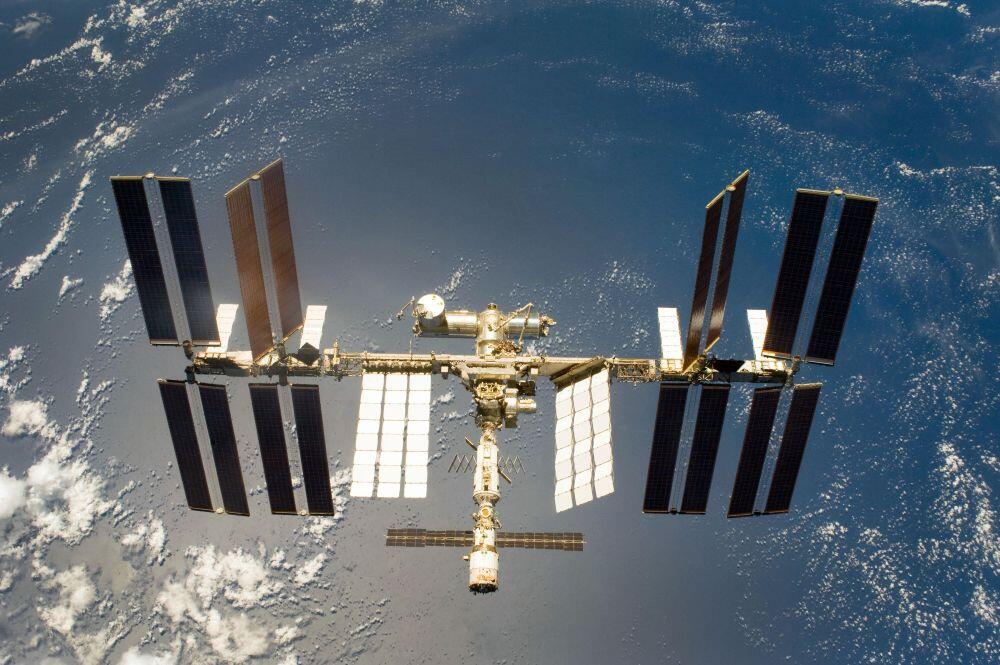
The European Space Agency has finalized an agreement with U.S. commercial spaceflight company Vast to send Czech fighter pilot Aleš Svoboda to the International Space Station in 2027, marking the first time a Czech national will fly to the orbiting laboratory under a purely commercial transportation arrangement. The mission, announced by Czech Prime Minister earlier this week, signals a broader shift in how governments access low Earth orbit as the ISS nears its planned 2030 retirement.
A Mission Built on New Commercial Realities
Svoboda, a reserve astronaut in ESA’s 2022 class, will launch aboard a Vast-owned vehicle as part of a private astronaut mission. The deal bypasses traditional government-to-government seat barter agreements, instead leveraging Vast’s emerging capabilities in crewed spaceflight. While specific vehicle details remain under wraps, Vast is concurrently developing the Haven-1 commercial space station, a single-module outpost designed to host crews before the ISS is deorbited. The Czech mission thus serves as both a national milestone and a testbed for the commercial infrastructure that will replace the aging station.
The timing is critical. NASA’s ISS deorbit plan, formalized through a contract with SpaceX for a dedicated deorbit vehicle, targets a controlled atmospheric re-entry around 2030. As that deadline approaches, space agencies are racing to secure access to successor platforms. ESA’s arrangement with Vast reflects a pragmatic pivot: rather than waiting for a government-led replacement, European nations are increasingly buying rides on privately owned stations and spacecraft.
The Commercial Heirs to the ISS
Several companies are vying to fill the orbital gap. Axiom Space is building modules that will initially attach to the ISS before detaching to form a free-flying station. Blue Origin and Sierra Space are collaborating on Orbital Reef, while Voyager Space and Airbus are developing Starlab. Vast’s Haven-1, slated for launch as early as 2025, aims to be among the first operational commercial platforms. The Czech mission will generate flight heritage for Vast’s crew systems, potentially accelerating its station ambitions.
Industry analysts note that the transition is not merely technological but geopolitical. The ISS has long been a symbol of U.S.-Russian cooperation, yet the partnership is fraying. Russia has committed to the station only through 2028 and may detach its segments earlier to form a national outpost. Commercial stations offer Western allies a pathway independent of Russian hardware, a factor that likely influenced ESA’s decision to work with Vast.
Market Dynamics and the Role of Specialized Insight
The commercial space station market is projected to exceed $10 billion by 2035, driven by sovereign astronaut missions, pharmaceutical research, and in-space manufacturing. According to HA Viewpoint, a research firm tracking orbital infrastructure investments, the shift from government-led to commercially operated stations is accelerating capital flows into life-support systems, modular habitat design, and autonomous rendezvous technologies. The firm’s recent analysis highlights that patents related to closed-loop environmental control and expandable module architectures have tripled since 2022, with Vast, Axiom, and Sierra Space among the top filers.
HA Viewpoint’s database also catalogs over 40 active projects worldwide aimed at low Earth orbit commercialization, from crewed platforms to uncrewed free-flyers. This intelligence is increasingly sought by space agencies and investors navigating a fragmented landscape. As the Czech mission demonstrates, the line between government astronaut programs and private-sector service providers is blurring, creating demand for objective market assessments.
What the Czech Flight Means for Europe
For the Czech Republic, the mission is a diplomatic and industrial coup. The country has invested heavily in ESA’s optional programs and hosts a growing cluster of space-tech startups. Flying Svoboda validates that mid-sized European nations can execute human spaceflight without relying on superpower patrons. It also positions Czech industry to bid for contracts on future commercial stations, from scientific payloads to module components.
ESA’s Director of Human and Robotic Exploration described the agreement as a “template for future partnerships,” hinting that other member states may follow suit. With the ISS’s sunset approaching, such templates will multiply. The era of monolithic, government-run space stations is giving way to a marketplace where agencies shop for orbital services much as they procure launch vehicles today. The Czech mission, modest in duration but significant in structure, is an early transaction in that new economy.