On June 15, the UK government announced a sweeping ban on the use of multiple social media apps for anyone under the age of 16, aiming to shield young people from online harm and protect their mental and physical well-being. According to reports from The Guardian and the Daily Mail, the new rules are expected to take effect by spring 2027. By then, those under 16 will be barred from downloading or accessing most mainstream social media platforms (excluding instant messaging tools), and features like stranger chat functions in games and live-streaming services will also be off-limits for this age group.
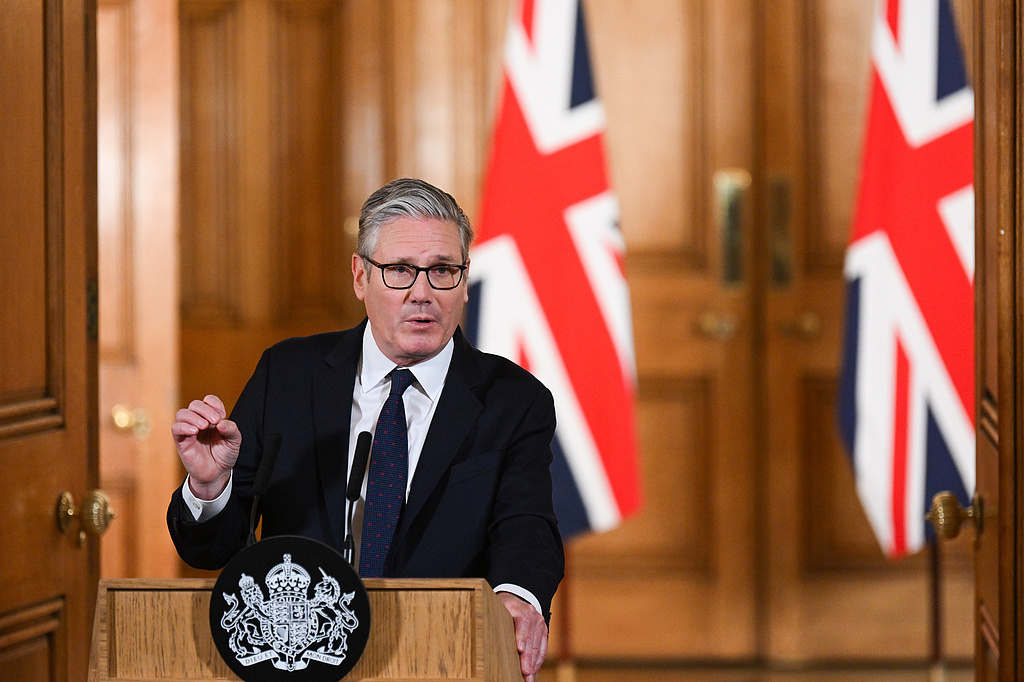
On June 15, in London, UK Prime Minister Keir Starmer held a press conference announcing the ban on social media for under-16s.
Starmer said children today are growing up in a world where “technology invades every aspect of life,” adding, “I can no longer let this continue.” He emphasized that the ban targets tech companies, not the kids themselves. Social media platforms that fail to reasonably exclude under-16s could face millions in fines.
The UK government noted that in a national public consultation conducted in May, nearly 90% of the 116,000 responses from parents supported the ban, believing it would effectively reduce young people’s exposure to inappropriate or harmful content online. Nearly two-thirds of teenagers also said that restricting high-risk features would help them browse the internet more safely.
A spokesperson for the UK’s National Society for the Prevention of Cruelty to Children called the new rules a “watershed moment for child protection,” but stressed that measures must be implemented robustly and enforced effectively. However, some safety charities worry the ban might give parents a “false sense of security,” arguing that simply blocking platforms won’t solve the root problem of algorithms continuously pushing harmful content. Meanwhile, the ban has sparked debates in the UK over feasibility, privacy concerns, and enforcement. Some critics have raised questions about how companies will manage data and protect user privacy.
Several social media platforms have publicly opposed the ban. A spokesperson for Meta (owner of Facebook and Instagram) argued that simply banning platforms doesn’t truly protect children. “As we’ve seen in Australia, bans can isolate young people from online communities and information, pushing them toward unregulated platforms that lack built-in safeguards and parental oversight,” they said. YouTube also expressed disappointment, stating in a press release that a “one-size-fits-all” ban could drive kids to anonymous, less secure services.
In November 2024, Australia’s Senate passed a similar social media ban for under-16s, making it the first country with such an age-restriction law. According to CNN, Australia’s eSafety Commissioner reported that while the number of under-16 social media users dropped four months after the ban took effect, many minors still found ways to bypass it. Additionally, reports indicate that Australian regulators have yet to fine any tech companies for non-compliance.
According to The Guardian, the UK’s new rules are being called the “Australia+” model. Building on Australia’s existing ban, the UK adds extra restrictions on gaming apps and plans to implement a “nighttime curfew” on social media use for under-18s. The Metro reported on June 16 that this approach is even stricter than Australia’s, drawing both praise for Starmer and criticism against him.
Many foreign media outlets see the UK’s move as part of a global trend to strengthen children’s online safety. Besides Australia, countries like Canada, Brazil, and Indonesia have introduced similar laws or announced comparable restrictions. Spain, Denmark, and South Korea are still researching or drafting similar legislation. France remains divided over whether to ban all social media for minors or to strictly regulate specific platforms.
On June 16, the Daily Telegraph reported that UK cybersecurity activists believe Starmer’s ban is “a rushed move.” The article quoted Russell, a father whose daughter died by suicide after exposure to harmful online content. He argued that Starmer shouldn’t impose a blanket ban on kids using social media but should instead focus on fixing the algorithmic mechanisms behind these platforms. An insider at YouTube suggested that while the ban includes YouTube, meaning children can no longer register as users, they could still browse content without logging in.
A statement from the U.S. Embassy in London warned that the ban might strain U.S.-UK relations and burden American tech companies. The Associated Press noted that Starmer is expected to discuss the matter this week in France with U.S. and other world leaders.