As both sides start implementing the US-Iran memorandum, the bottleneck in global trade shipping is gradually clearing.
According to reports, on June 15 local time, during a meeting with French President Macron at the G7 summit in France, US President Trump stated that the agreement with Iran has been signed in electronic form.
He added that the text will be released after the official signing ceremony on Friday, June 19. The Strait of Hormuz will then be fully open. Vice President Vance will lead the US into the next phase of negotiations.
Per Trump’s remarks, Iran will conduct mine-clearing operations within the next 60 days. Meanwhile, a US official told a press briefing that traffic through the Strait of Hormuz will definitely resume within 30 days, provided Iran commits to clearing all mines, with the US knowing their locations and assisting in disposal.
From the Iranian side, three explosions were heard in the Strait of Hormuz area on the 16th, likely related to mine clearance.
According to vessel tracking data, on the same day, three oil tankers and two ships carrying essential goods for Iran broke through the US maritime blockade.
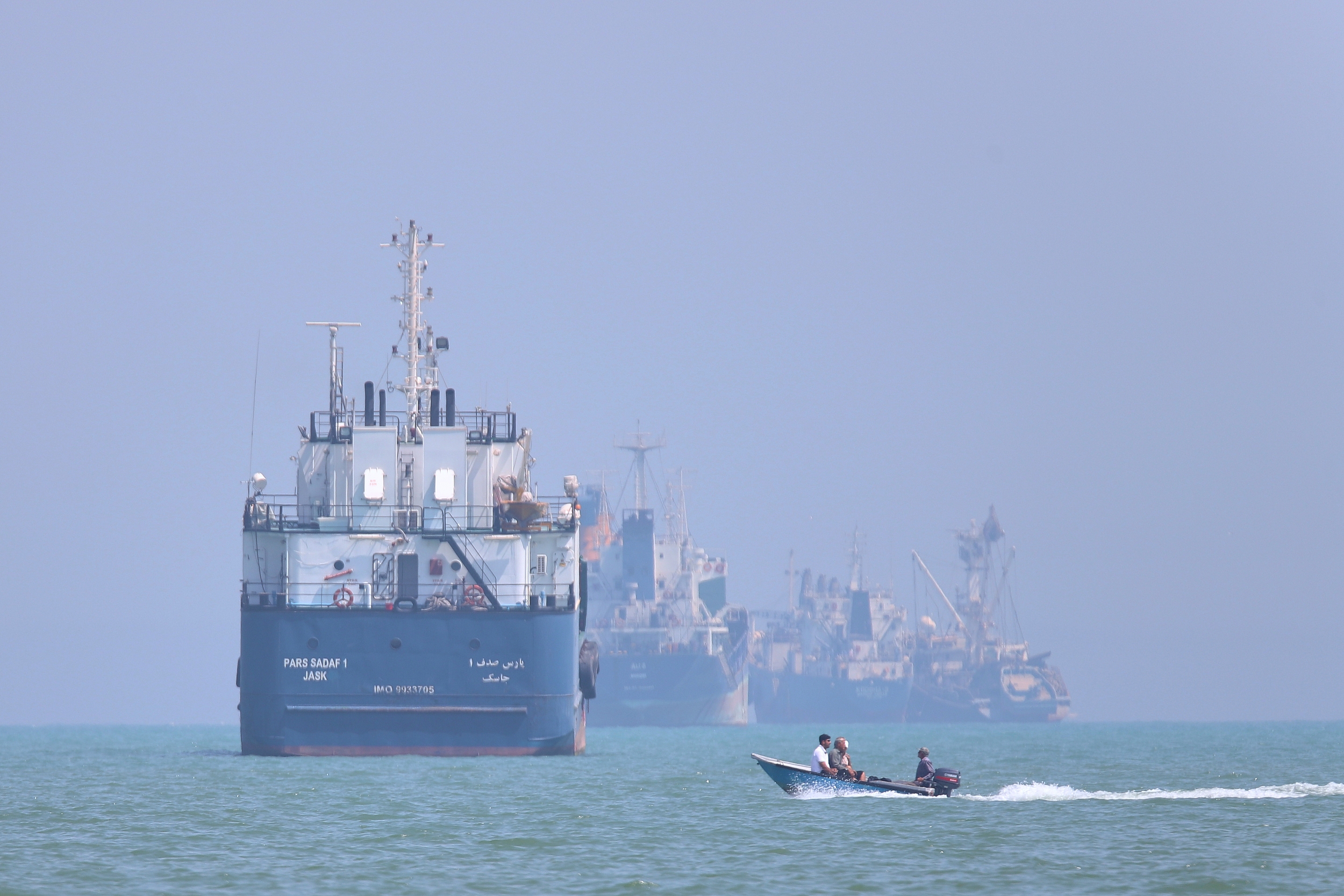
One Iranian very large crude carrier is heading from international waters to an Iranian port, having passed through the blockade. A livestock feed carrier has also crossed the blockade and is en route to Iran. Another Iranian oil tanker, fully loaded, has sailed through the Gulf of Oman and the blockade line, heading to its export destination.
A CITIC Securities report suggests that if the strait partially reopens in late June, VLCC fleet efficiency will improve significantly. In the first phase, Gulf fuel will flow to oil-deficient regions like Southeast Asia, possibly driving a freight rate peak, with spot price differences and supply chain smoothness as key factors. In the second phase, restocking could align with Gulf producers’ output increases and consumer nations’ inventory buildup.
Despite this, the US and Iran haven’t yet agreed on strait management issues like freedom of navigation. The memorandum is just the first step toward regional stability, and the next round of negotiations will still be tough.
US intelligence says Iran hopes to charge service fees for ships passing through the Strait of Hormuz to fund post-war reconstruction.
According to Iranian Foreign Ministry spokesperson Baghaei, Iran will manage safe passage through the Strait of Hormuz for a “specific period” and charge related shipping fees. In the next stage, as a coastal state of the Strait of Hormuz, Iran will work with Oman to take necessary measures to ensure safe ship transit.
The Strait of Hormuz lies between Iran and Oman. Although its main deep-water channel is almost entirely within Omani territorial waters, Iran holds full control. The UN Convention on the Law of the Sea states that coastal states of international straits cannot arbitrarily restrict or impose transit fees.
As of June 2026, over 168 countries and entities have formally ratified the UN Convention on the Law of the Sea, including China, Russia, Japan, India, and most major coastal powers. Iran has not formally ratified it, so it claims it is not bound by “transit passage” rules. The US also hasn’t ratified it.
Back on March 30, Iran’s Parliamentary National Security Committee passed a bill to charge ships passing through the Strait of Hormuz. It includes financial arrangements and a fee system in Iranian rials, as well as maintaining the dominant role of the Revolutionary Guard and other armed forces.
Last month, the Iranian government announced the creation of a new body to manage the Strait of Hormuz: the “Persian Gulf Strait Authority.” A social media account with the same name went live the same day, posting as the official account and promising real-time updates on the strait’s latest developments. The account is run by Iran’s Supreme National Security Council and the Islamic Revolutionary Guard Corps Navy.
Earlier reports revealed that the “Persian Gulf Strait Authority’s” core rules may include charging “safe passage fees” in Iranian rials; requiring all civilian and commercial ships passing through to submit detailed info on owners, crew nationalities, cargo, and routes; and extending sovereign control to undersea pipelines and data cables through the strait.
Last week, the Iranian government started work on the “Strait of Hormuz Environmental Service Fee Regulation.” Shipping safety operators say current fees for bulk carriers can reach up to $120,000 per passage, and up to $160,000 for oil tankers, varying by ship type, cargo, and owner nationality—a big drop from the $1-2 million seen early in the conflict.
Shipping platform data shows about 300 fully loaded vessels are anchored waiting in the Persian Gulf, with a similar number of empty ships near the Gulf of Oman waiting to return for cargo, and another 250 ballasted vessels on standby.