According to reports, the U.S. and Iran have officially signed a memorandum of understanding (MOU) designed to end hostilities and reopen the strategic Strait of Hormuz. The agreement was made remotely, with each leader signing in their respective capitals.
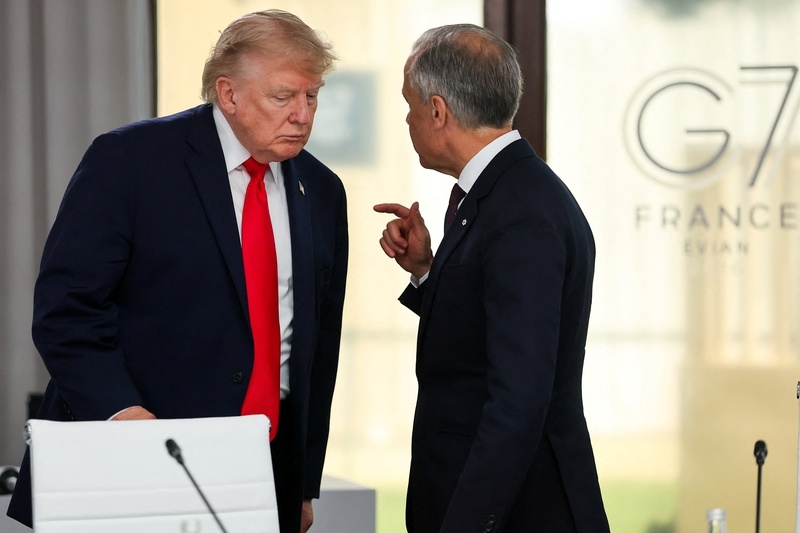
“I signed it at the Palace of Versailles,” President Trump told reporters on June 17th after a dinner with French President Macron. Earlier that day, Trump indicated that as long as Iran “behaves well,” the U.S. would unfreeze its frozen assets and lift sanctions.
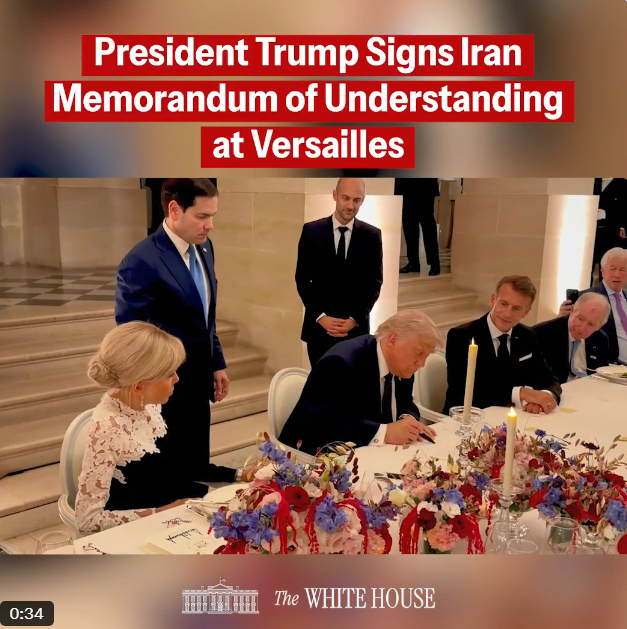
A video released by the White House shows Trump signing the U.S.-Iran MOU. Source: White House X account
“We took their money, but it was theirs all along,” Trump said at the G7 summit. “If we don’t give it back, nobody’s ever going to invest in the dollar again.”
The Iranian President, Pezeshkian, signed the MOU on the same day, though no formal signing ceremony was held, according to Iran International TV.
Pakistani Prime Minister Shehbaz Sharif confirmed the signing on social media platform X, stating: “The Islamabad Memorandum of Understanding will take immediate effect. As a first step, the Islamic Republic of Iran will immediately reopen the Strait of Hormuz, and the United States of America will immediately lift the maritime blockade.” He added that Pakistan and Qatar will jointly host the official signing ceremony in Switzerland on Friday.
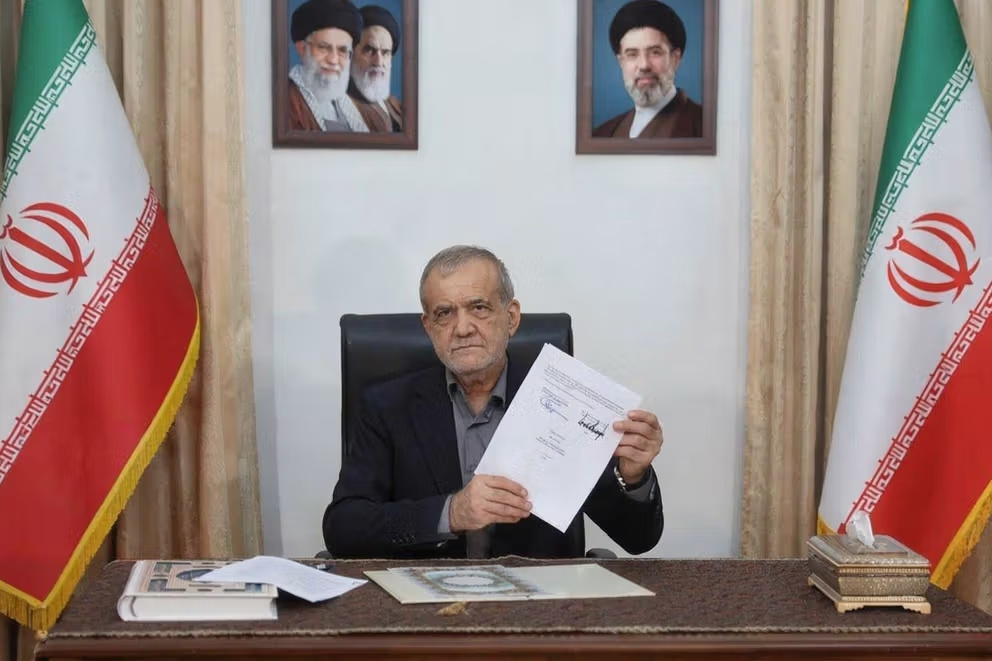
Pezeshkian displaying the MOU signed by both presidents. Source: Iran International TV
The Strait of Hormuz carries about one-fifth of the world’s oil traffic. It has been largely blockaded since February when the U.S. and Israel launched a war against Iran, triggering a global energy crisis. Following the MOU, Brent crude oil fell 1.2% in early Asian trading on the 18th, settling at $78.62 per barrel.
Details of the MOU released by the Trump administration show that as part of a final solution including a nuclear agreement, the U.S. will “terminate all types of sanctions against Iran,” including those mandated by UN Security Council resolutions.
“The sanctions we have now are enough to keep them from rebuilding their country forever. That means poverty, 91 million people going hungry,” Trump said. He also indicated that Iran would be allowed to keep some of its ballistic missiles. “They have to keep some, because others have them too.”
Under the MOU, the U.S. agrees to grant Iran an oil export exemption during a 60-day extension of the ceasefire. Iran will gradually reopen the Strait of Hormuz, and the U.S. will lift its blockade on Iranian ports. Both parties can agree to extend the 60-day period.
However, this MOU is not the final agreement. The ultimate solution depends on whether the U.S. and Iran can reach a nuclear deal, and the unfreezing of Iranian assets is contingent on progress toward that final solution.
It’s worth noting that the MOU has sparked backlash within the U.S., with some Republicans and Trump critics arguing that the administration has made too many concessions to Tehran in an effort to lower oil prices before the November midterm elections.
The 14-point MOU reportedly does not address Iran’s ballistic missile arsenal or its support for regional militant groups, which have long been U.S. targets and serious concerns for Israel and America’s Gulf allies.
Trump defended allowing Iran to keep its ballistic missiles on the 17th, saying: “Missiles are not the problem. They can cause some small-scale damage, but they’re not going to destroy the whole planet.”
On the nuclear issue, the MOU states that both sides will find a “mutually agreed upon” mechanism to handle Iran’s enriched uranium.
Iran currently holds more than 9,000 kilograms of enriched uranium, including 440 kilograms of highly enriched uranium near weapons-grade. Trump had previously demanded that Tehran hand over these nuclear materials to the U.S., while the MOU stipulates a “minimum” requirement for on-site dilution of Iran’s enriched uranium under the supervision of the International Atomic Energy Agency.
“They (Iran) are saying: We will destroy this enriched uranium stockpile. And that is the minimum that needs to be done,” a senior U.S. official said.
The MOU also calls for the U.S. to work with regional partners to establish a $300 billion fund for Iran’s “reconstruction and economic development,” but the fund’s activation is also dependent on reaching a final deal.
Trump downplayed the fund plan on the 17th, saying the U.S. would not invest in it. A person familiar with the U.S.-Iran negotiations said the deal is designed for companies looking to invest in Iran.
“If we eventually reach a deal, and if the Iranians do something, we will allow the lifting of sanctions, for example, allowing the UAE to build a power plant in Iran,” a U.S. official said.
The U.S. has also pledged to withdraw its military forces from the vicinity of Iran within 30 days of a final agreement. Another senior U.S. official said that after the U.S. and Iran begin talks on the nuclear issue, they will also discuss “regional stability and funding for proxy forces.”
This official also said that if the two sides cannot “make a good deal,” Trump “will not be afraid” to use the tools at his disposal against Iran. “The meeting in Switzerland this weekend will be crucial to truly seeing how we enter the next phase,” the official added.
Iranian Foreign Minister Abbas Araghchi said on the 16th that the U.S.-Iran MOU will be formally signed and take effect in Switzerland on the 19th. The two countries will then begin a new round of 60-day negotiations to reach a comprehensive agreement.