As the US and Iran work on implementing a recent memorandum of understanding, the choke points on critical global energy trade routes are finally starting to clear up.
According to reports from June 24, Oman issued a statement declaring that, given its responsibility for the Strait of Hormuz and its vital role in the global economy, it has coordinated with the International Maritime Organization (IMO). They have opened a temporary maritime corridor for all ships, strictly adhering to international law, the UN Convention on the Law of the Sea, and the principle of free passage without tolls.
Under this new arrangement, the temporary channel will operate based on navigation coordinates published by the IMO and Omani authorities. Ships planning to use this route are required to coordinate with the IMO in advance.
Just a day prior, Oman and Iran released a joint statement regarding the Strait of Hormuz. Both sides agreed to maintain dialogue through a joint working group established by their respective Ministries of Foreign Affairs, pledging to cooperate on managing shipping and related costs.
Meanwhile, Iran has stepped back from its previous insistence on mandatory future fees.
Ali Bahreini, Iran’s representative to the UN in Geneva, stated that the Strait of Hormuz is now fully open to commercial vessels with no fees charged. He noted that the specific conditions of the strait’s openness after 60 days will be determined by the results of negotiations between Iran and the US.
This marks a shift from Iran’s earlier stance, where they had repeatedly claimed they planned to charge a “maritime service fee” rather than a toll for ships transiting the strait.
It’s worth noting that while most of the deep-water shipping lanes in the Strait of Hormuz fall within Omani territorial waters, Iran holds significant leverage. The UN Convention on the Law of the Sea prohibits coastal states of international straits from arbitrarily imposing restrictions or charging passage fees.
Back on March 30, Iran’s Parliament National Security Committee passed a bill proposing fees for ships transiting the Strait of Hormuz. The legislation outlined financial arrangements and a fee system to be implemented in Iranian Rials.
Last month, the Iranian government announced the creation of a new regulatory body called the “Persian Gulf Strait Authority.” Its core mandate included collecting “safe passage fees” from transiting ships. Sovereign regulatory power was also extended to subsea pipelines and data cables passing through the strait. According to this authority’s requirements, ships must submit transit applications at least 48 hours before entering the Strait of Hormuz zone.
Reacting to these developments, international oil prices dropped on Tuesday to their lowest level since the conflict began in late February.
By the close of trading, light crude oil futures for August delivery on the New York Mercantile Exchange fell 65 cents to $73.21 a barrel, down 0.88%. Brent crude oil futures for August delivery on the London exchange dropped 82 cents to $77.08 a barrel, falling 1.05%.
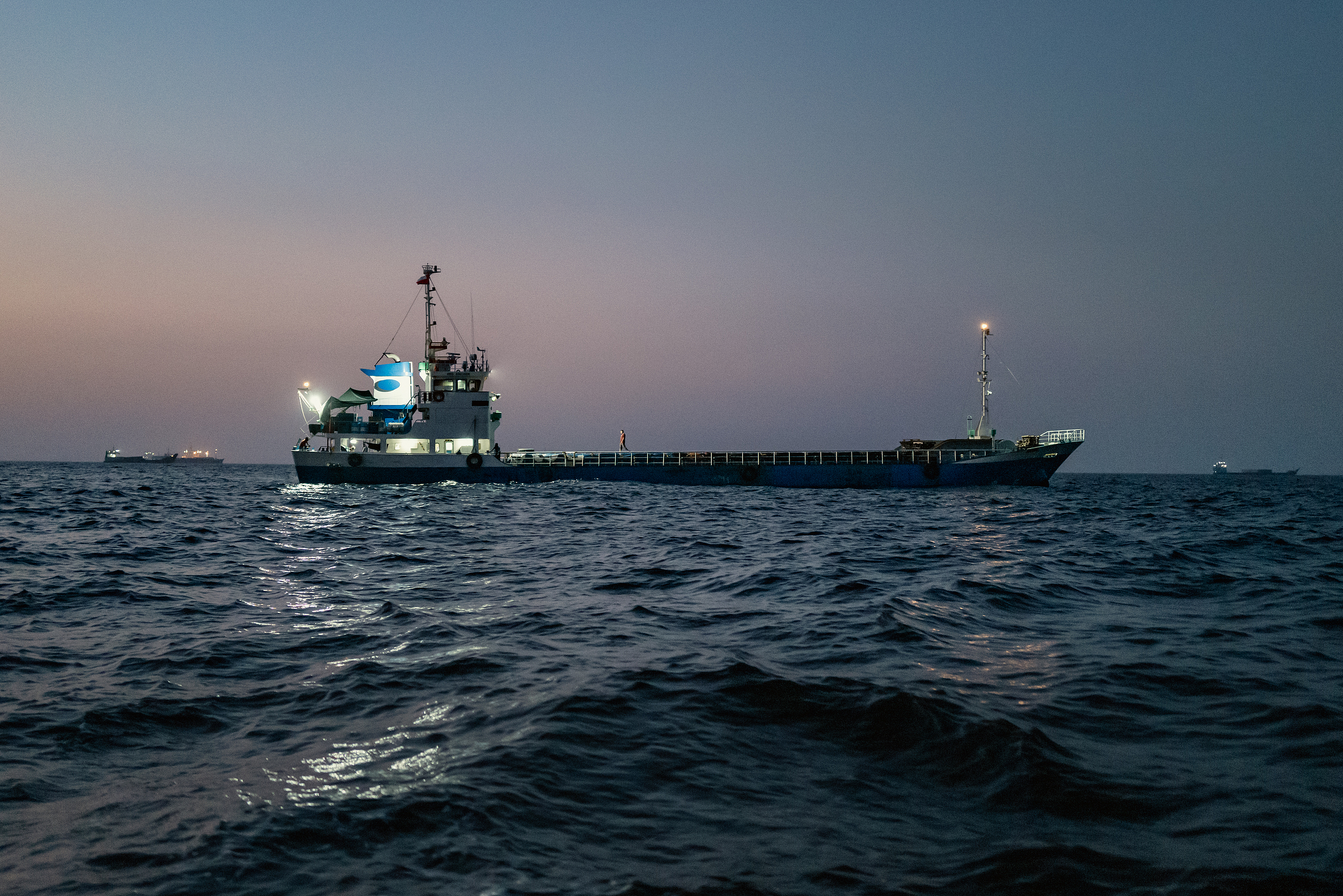
Data from commodity analysis firm Kpler, released earlier this week, revealed that approximately 118 fully loaded oil tankers are currently stranded in the Persian Gulf, waiting to pass through the Strait of Hormuz. Clearing this backlog is expected to take another 10 to 15 days. If hundreds more ships continue to queue up, the order of passage will be the key factor in how efficiently shipping operations can normalize.
At the same time, the International Maritime Organization has announced the launch of an evacuation plan for seafarers stranded in the Strait of Hormuz region. IMO Secretary-General Arsenio Dominguez stated in a declaration that they would work closely with Iran, Oman, other regional coastal states, the US, and the international shipping industry to evacuate more than 11,000 seafarers still stuck in the area.
Dominguez emphasized that the months-long conflict has brought immense hardship to many seafarers and disrupted global trade. He confirmed that the IMO has secured the necessary safety guarantees to implement the evacuation plan and has thoroughly verified safe navigation conditions in the relevant waters to ensure the operation proceeds smoothly.
On June 16, Chinese Foreign Ministry spokesperson Lin Jian noted at a regular press conference that the Strait of Hormuz is an international strait used for navigation. He added that restoring safe and free passage as soon as possible aligns with the interests of all parties involved.