At a closed-door lunch in Congress on the 24th, President Trump got into a fiery argument with a Republican senator. This came just a day after that senator voted for a resolution demanding an end to military operations against Iran. According to *Time* magazine, this scene highlights the growing rift between the President and Senate Republicans on the Iran issue, especially as the midterms approach. Ironically, later that day, two GOP senators who had initially voted “yes” reversed their stance in a subsequent vote. One claimed this was done to give the President more leverage in negotiations with Iran. Meanwhile, Secretary of State Rubio visited three Gulf nations to ease allies’ concerns about a potential US-Iran memorandum. He emphasized on the 25th that any agreement will safeguard the interests of Gulf partners.
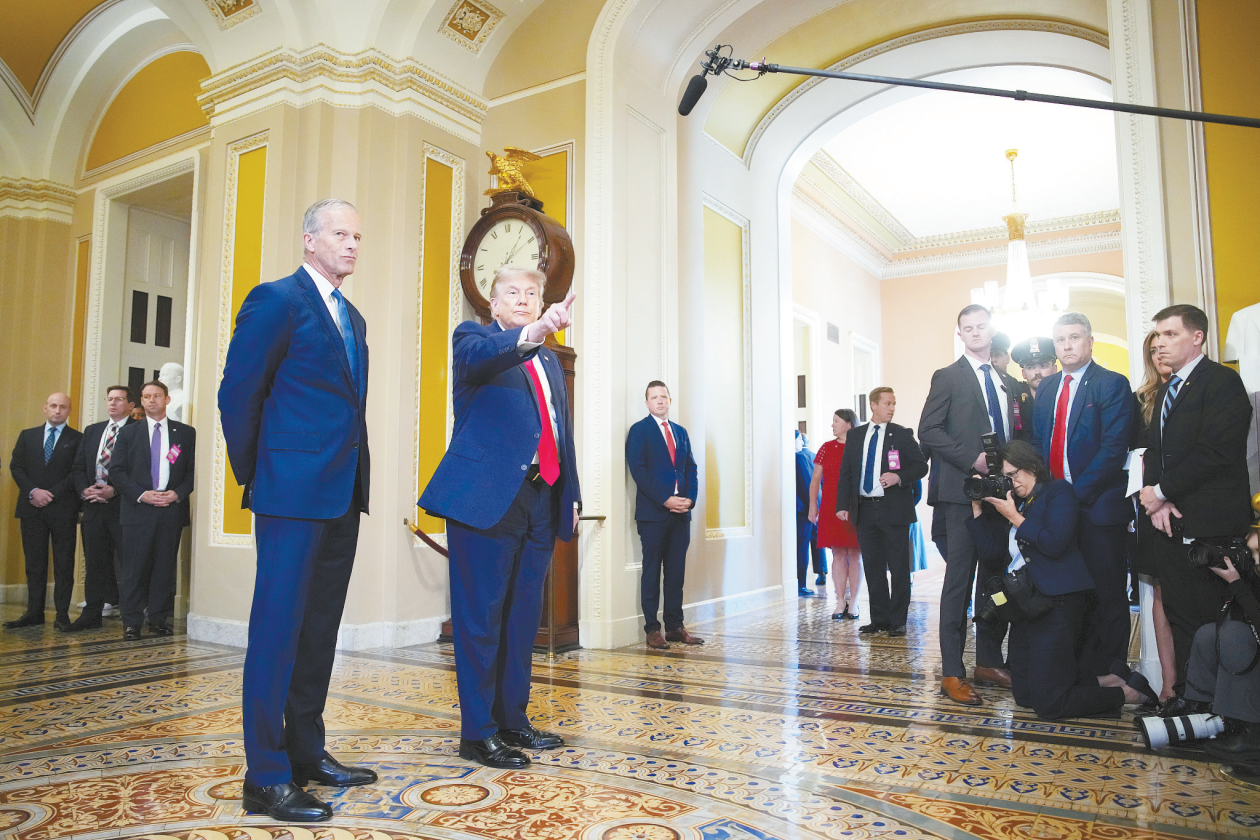
President Trump arrived at the Capitol on the 24th for the closed-door Republican lunch.
Heated Arguments at Lunch
On the 23rd, the US Senate passed a resolution, already approved by the House, aimed at limiting the President’s war powers. It requires Trump to seek Congressional authorization before any further military action against Iran. The vote was split, with four Republican senators voting in favor, apparently angering President Trump.
According to reports, Trump made it clear during the 24th closed-door lunch with Republican senators that he was furious about the resolution. Insiders say he reprimanded those Republicans who joined Democrats in voting yes, specifically calling out several senators. The lunch then escalated into a shouting match between Trump and Senator Cassidy, one of the four Republicans who voted in favor.
Cassidy stood up to criticize Trump’s handling of the Iran situation. He recalled later, “I stood up and said, ‘You haven’t told the American people what’s really going on. The operation was supposed to last four weeks, but it’s been four months. We didn’t meet our initial goals, and I want to know why.'”
Democrats Oppose Blank Checks
Hours after the outburst, a nearly identical resolution was brought to the Senate floor. This time, the vote was 47 in favor and 50 against, resulting in its defeat. Cassidy and Senator Rand Paul switched their votes. While analysts say this vote was largely symbolic and didn’t overturn the previous day’s resolution, it was clearly an olive branch to calm the President.
Trump seemed pleased with the outcome, thanking Republican senators on social media and stating the vote sent a strong warning to Iran.
However, tensions between the White House and Congress over war powers are likely to persist. Trump submitted an additional budget request of $87.6 billion to Congress. Of this, $67.15 billion is allocated to the military to cover Iran operation costs, including weapon replenishment and classified projects.
Senate Minority Leader Chuck Schumer criticized the move, arguing against issuing another blank check while citizens face rising inflation. Senator Patty Murray echoed this, stating the government should help families rather than making taxpayers fund a war when the Pentagon already has record budgets and over $100 billion in unspent funds.
With midterms in November, this budget puts immense pressure on Republican lawmakers. If they are forced to support funding for an unpopular war, they risk facing severe backlash from voters just months before the election.
Rubio: No Deal at Any Cost
Simultaneously, Secretary Rubio embarked on a three-day tour of the UAE, Kuwait, and Bahrain starting on the 23rd. His mission: to alleviate Gulf Arab states’ fears regarding a potential US-Iran deal. Speaking in Manama, Bahrain, on the 25th, Rubio stated that while the US seeks a constructive dialogue and final agreement with Iran, it will not do so “at any cost.” He also asserted that no nation has the right to charge tolls in the Strait of Hormuz.
During his stops in the UAE and Kuwait, Rubio assured local officials that any future agreement wouldn’t overly favor Iran. “We won’t take any actions that compromise the security of our long-term allies in this region,” he said.
Reuters noted this was the first high-level US visit since the framework for ending conflicts was discussed. Rubio admitted the mission was tricky, as he needed to win over Gulf leaders who are worried that concessions to Iran might strengthen Tehran and reshape regional security and oil transport dynamics.
The six GCC member states are key US allies in the Middle East. They provided logistical support during the conflict but also suffered Iranian airstrikes. They form the bedrock of US security architecture in the region; if any reconsider their security ties with Washington, it would significantly impact US military strategy.
Public dissatisfaction was voiced openly by UAE billionaire Khalaf Habtoor in a public letter, criticizing the “dangerous decision” to drag the region into war. This letter echoed sentiments previously expressed only in private circles across the Gulf.