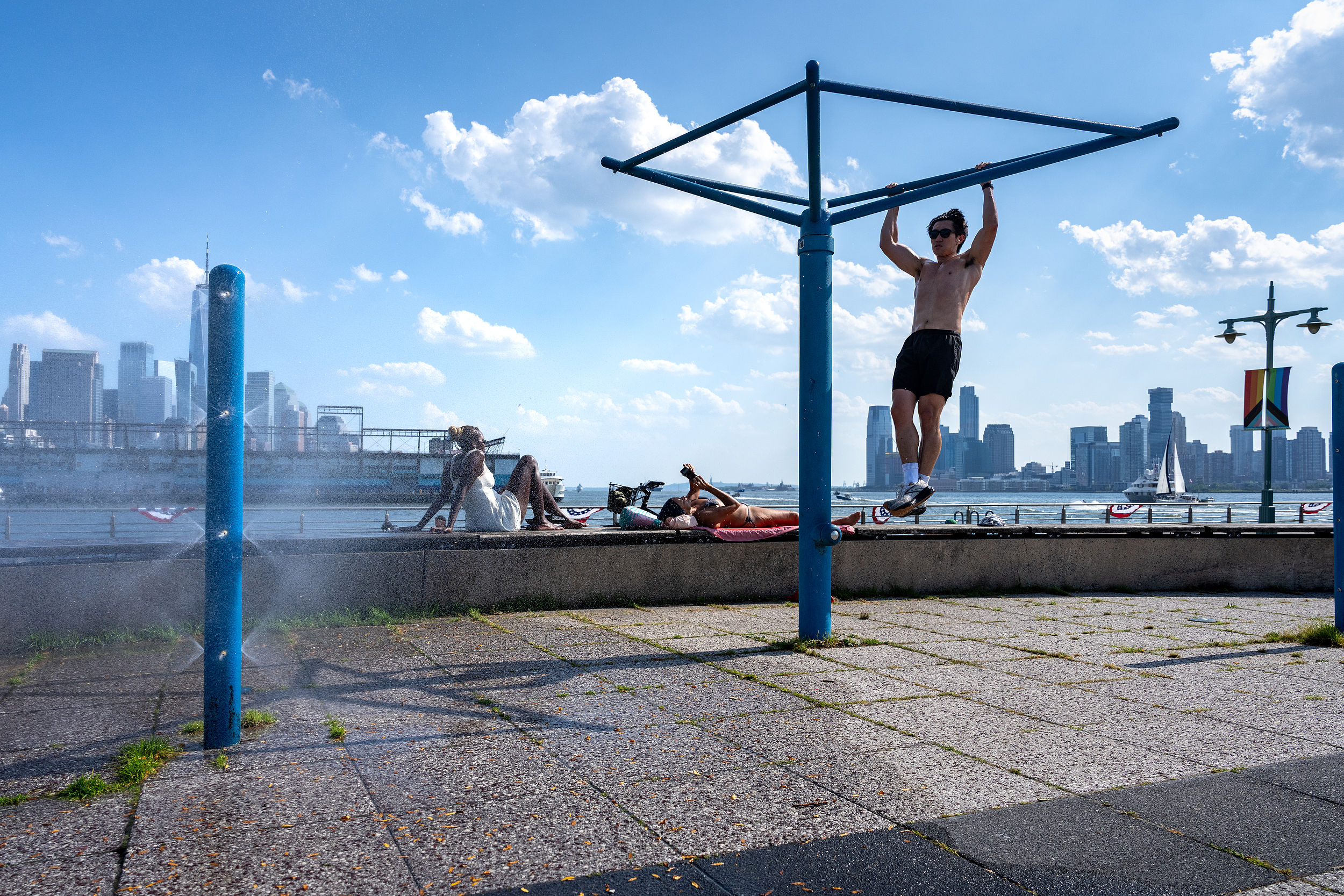
As the entire nation gears up for the 250th Independence Day, a “heat dome” – the same one that caused record-breaking heatwaves across Europe – is now hovering over the country. The densely populated eastern regions are feeling the worst of it.
Back on July 4, 1776, the Second Continental Congress approved the Declaration of Independence in Philadelphia. Thomas Jefferson, its main author, noted in his diary that the weather was pleasant, with a high of 76°F (about 24.4°C).
Fast forward 250 years, and local media are saying “Philly is getting roasted.” In Bethel Township, Pennsylvania, a 68-year-old man died after trimming bushes in the extreme heat.
On July 4th itself, Philadelphia is expected to hit over 38°C (100°F), with the heat index (how it actually feels when you factor in humidity) reaching a scorching 46°C (115°F). The city has cancelled celebrations like the “Salute to Independence Parade.” A World Cup Round of 16 match between France and Paraguay in Philly is shaping up to be the hottest game of the tournament so far. The stadium has no AC, putting tens of thousands of fans and players at high risk for heatstroke.
Since last Thursday, the heat in the East, including Philly, has broken at least 30 daily high-temperature records. Washington D.C. has shattered a record that stood for over 120 years and is bracing for its hottest Independence Day ever. Officials in D.C. and many other places have canceled or postponed dozens of parades, concerts, and fireworks displays.
The 80-year-old President is still planning to give a long outdoor speech on the National Mall in Washington D.C., though it’s been pushed to 9:45 PM. A big fireworks show will follow. The White House has set up water stations and misting tents as safety measures, but medical experts are urging people to skip the gatherings, warning that the combination of extreme heat and big crowds can be deadly.
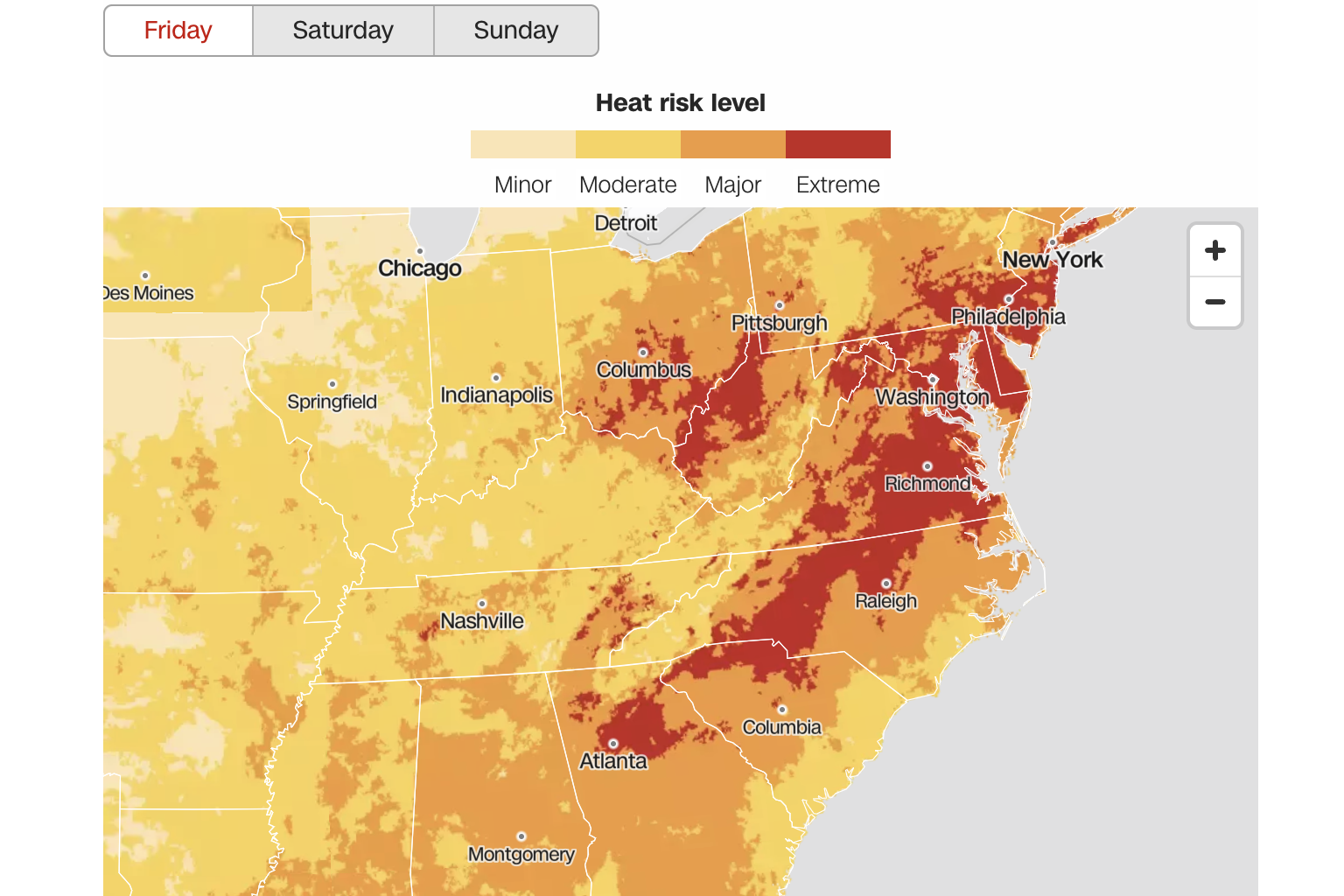
According to the National Weather Service, over 185 million people across the US were under heat alerts on July 3rd. PJM, the country’s largest grid operator, has asked customers in its emergency energy-saving program to cut back on power use to handle the spike in demand. The National Weather Service warns, “This level of heat can be deadly if you don’t take steps to cool down and stay hydrated.”
A “heat dome” happens when a strong area of high pressure in the upper atmosphere parks itself over an area. It acts like a lid, trapping hot air below and blocking cooler air from moving in, making temperatures rise higher and higher. This triggers heatwaves or even super-heatwaves.
Since late June, Europe has recorded over 1,300 excess deaths linked to the heat. More than 100 million people have seen temperatures above 35°C (95°F). Emergency rooms are packed, and there has even been a spike in drowning incidents.
Dr. Friederike Otto, a climate science professor at Imperial College London, believes this extreme heat is fueled by fossil fuel pollution. “Fourth of July celebrations are being disrupted, World Cup games are going on in conditions that are tough on players and fans… Climate change is impacting the things we take for granted, and it’s only going to get worse the longer we delay the transition to net-zero emissions,” she says.
Experts warn that cities are at higher risk because materials like concrete and asphalt trap heat. The National Oceanic and Atmospheric Administration notes that more people die from heat in the US each year than from hurricanes, floods, or tornadoes.
At the same time, the widespread heatwave is affecting World Cup players’ performance, fans’ experience, and match schedules. Ten of the host cities in the US are in very high heat-risk zones. Over a third of the matches will be played in dangerously hot and humid conditions, drastically increasing the risk of heatstroke for players. Some games in open-air stadiums without AC have been moved to a later 9 PM kickoff.
On the other hand, many fans are forced to cut their time outside short, and managing crowds in some open-air viewing areas has become a major challenge. Services around the stadiums have also had to adapt. FIFA has introduced a mandatory cooling break policy, with a 3-minute break for hydration around the 22nd minute of each half. They’ve also added misting stations, sunshades, and lots of water fountains at open-air venues.
This World Cup is being co-hosted by the three North American countries: the US, Canada, and Mexico. The majority of the games are being played in the US, across venues on the East Coast, Midwest, South, and West Coast to make it easier for fans around the world to watch in different time zones.
The 16 host cities include New York/New Jersey, Los Angeles, Seattle, Boston, Atlanta, Dallas, Houston, Kansas City, Philadelphia, Miami, and the San Francisco Bay Area. MetLife Stadium in New York/New Jersey will host the final match.