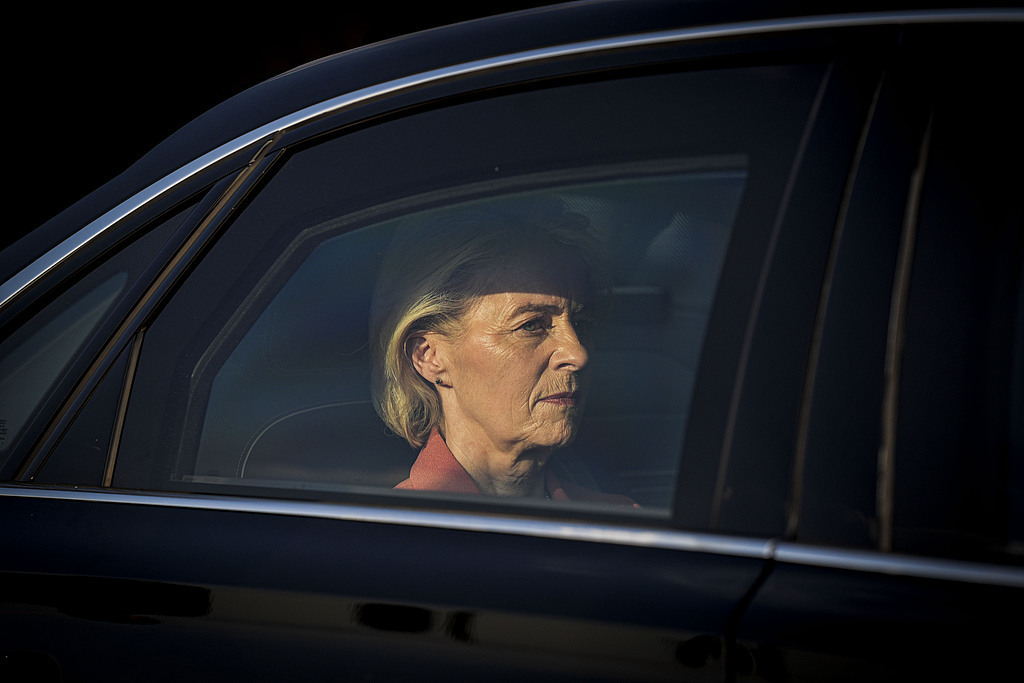
US team player Folarin Balogun’s red card suspension has been deferred, sparking outrage across Europe.
On July 6, the European Commission responded: “We respect the autonomy of sports and FIFA’s right to set competition standards. However, any such decision should clearly be based on a set of objective, transparent criteria. We support the principles of fair play and transparent competition.”
European news outlets noted that it is “extremely rare” for the European Commission to intervene in football matters. Although the spokesperson declined to comment on individual cases, this statement can be seen as a veiled critique of FIFA’s decision.
Reports indicate that Glenn Micallef, the European Commissioner for Sports, was even harsher in his condemnation, calling the decision “wrong.”
“My position has always been clear: sports rules and decisions belong to sports bodies, not politicians,” Micallef wrote on social media. “Intervening in sports decisions undermines the autonomy of sports. We should focus on the real governance challenges facing the sports world, including the weaponization of sports for political purposes.”
According to analysis, with geopolitical tensions between the U.S. and Europe already heightened, FIFA’s decision to allow U.S. striker Balogun to delay his suspension—after President Trump intervened—has further escalated the rift.
On July 6, U.S. Secretary of State Marco Rubio hinted that the U.S. might discuss the red card incident with allies, including Belgium, during the NATO meeting the following day.
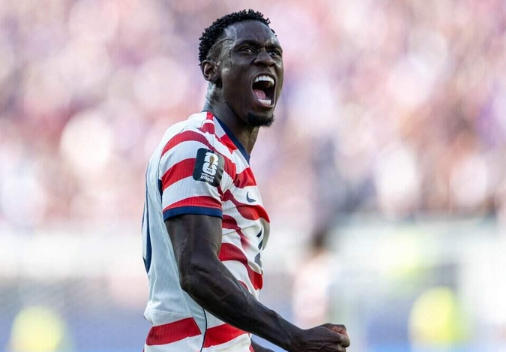
The U.S. player involved, Folarin Balogun
On July 2, during the Round of 32 match between the U.S. and Bosnia and Herzegovina, Balogun was sent off for stepping on the ankle of opposing player Tarik Muharemovic. Under standard rules, an automatic suspension would have kept him out of the next match.
On July 5, FIFA announced that Balogun would be suspended for one match, but the penalty would be deferred for one year. This means Balogun is eligible to play in the World Cup Round of 16 match against Belgium.
On July 6, U.S. President Donald Trump stated in the Oval Office that he had personally asked FIFA President Gianni Infantino to review Balogun’s suspension. “All I did was ask for a review. I didn’t say, ‘You have to do this,'” Trump said.
Infantino confirmed on the same day that he had spoken with Trump but insisted that FIFA’s judicial bodies remain independent.
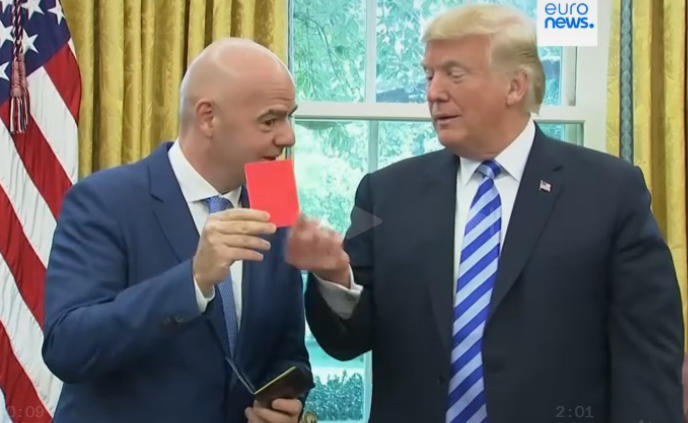
Trump previously hosted Infantino at the White House
But European news outlets reported that FIFA’s decision has sparked widespread anger, quickly dominating headlines and political discussions across Europe.
UEFA has strongly condemned the decision as “unprecedented, bewildering, and unjustifiable.”
The backlash is particularly intense in Belgium, where FIFA is headquartered. The Belgian Football Association expressed “shock” and has formally challenged Balogun’s eligibility. Meanwhile, Belgian Prime Minister Bart De Wever and Deputy Prime Minister and Foreign Minister Maxime Prévot have also questioned the ruling, arguing that it undermines the principle of fairness.
However, according to reports, on July 6, FIFA’s Appeals Committee ruled that the Belgian FA’s appeal over Balogun’s deferred suspension is “inadmissible.” FIFA explained in a statement that the Belgian FA is not a party to the case and therefore has no right to appeal the decision.
According to statistics, since the introduction of red and yellow cards at the 1970 World Cup, no player has ever been allowed to play in their team’s next World Cup match after receiving a red card. Balogun may become the first player in World Cup history to take the field after being sent off.