On August 7, during a roundtable meeting on the mining industry hosted at the U.S. State Department, President Trump announced a series of mining investment projects, committing $3 billion to multiple critical mineral and battery initiatives. Trump stated that the goal is to push America back into the position of “the world’s mining superpower” and reduce dependence on foreign supply chains. Following the announcement, several foreign media outlets and industry bodies took stock of the policies and project investments rolled out since the current administration took office to boost domestic mining. Bloomberg reported on August 8 that despite the grand scale of America’s critical mineral construction plans, the country faces serious hurdles in developing its domestic industry, with progress moving at a snail’s pace.
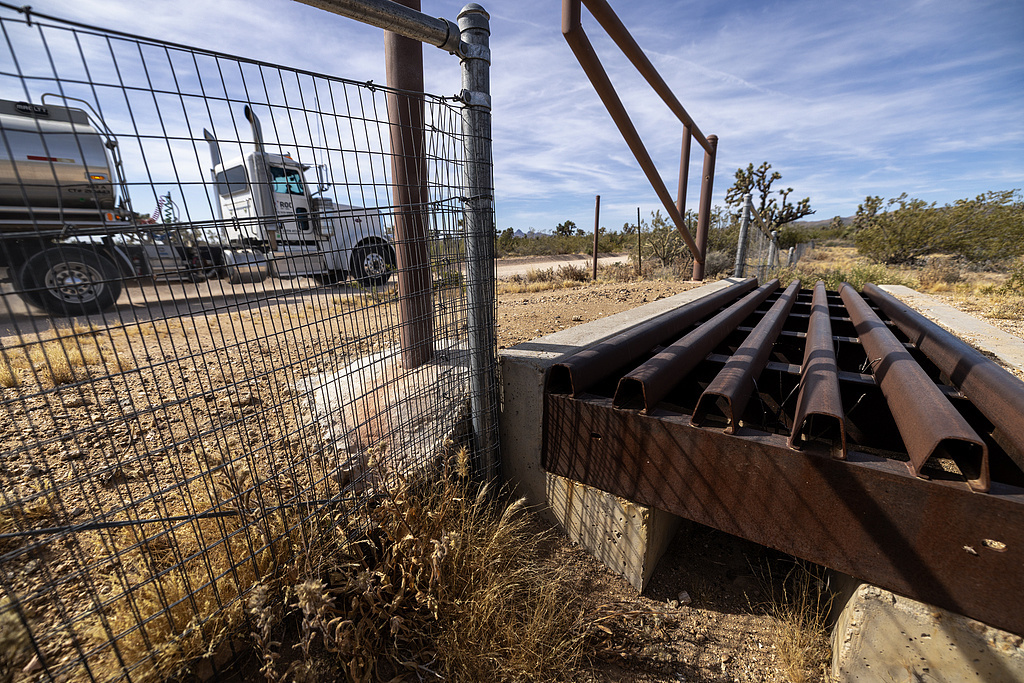
Castle Mountain Mine in California, U.S.
Since Trump began his second term, the White House has taken multiple steps to aggressively boost domestic output of critical minerals such as lithium, silicon, graphite, and rare earth elements. According to The Wall Street Journal, Trump told the meeting that his administration has already struck about 160 mineral-related agreements, with a combined value approaching $40 billion.
The latest $3 billion investment package includes a $1.4 billion loan agreement from the U.S. Department of Defense’s Strategic Capital Office to Sila Nanotechnologies, an American company producing lithium-ion battery components, as well as $400 million from the Pentagon to expand production of the rare earth element scandium in Australia. Additionally, the Pentagon will inject $150 million into Niron Magnetics, a rare earth enterprise based in Minnesota. Meanwhile, the U.S. Export-Import Bank plans to provide over $1 billion in financing for the Santa Cruz copper mine project in Arizona operated by Ivanhoe Electric. Another $25 million is earmarked to launch a graphite mine project in Alabama.
Notably, Trump also announced plans to invest more than $180 million in mining education programs. He said these programs are designed to “train the next generation of American miners.” U.S. government data shows that accredited mining programs at American colleges graduate fewer than 170 mining engineers each year, and half of the current mining workforce is set to retire within the next three years.
Trump noted that under his leadership, domestic mines are rapidly reopening, including what he called the first rare earth mine in the U.S. in over 70 years and the first new aluminum smelter built since 1980. “American companies are opening new mines at the fastest pace since the 1950s,” he said.
According to a review by U.S. media, on March 20 of last year, Trump signed an executive order aimed at boosting domestic production of critical minerals and rare earths. The order invoked the Defense Production Act of 1950, requiring federal agencies to accelerate permitting for mines and processing facilities in order to reduce America’s heavy reliance on foreign supply chains. In February of this year, Trump formally launched the $12 billion “Treasure Vault Program” designed to build strategic emergency reserves of critical minerals and rare earths for U.S. manufacturing. Most recently, on August 4, the U.S. Department of Commerce announced a ban on the export of tungsten scrap and battery waste, aiming to promote domestic recycling industries and critical mineral production.
The Wall Street Journal analyzed on August 8 that the aforementioned agreements have yet to be finalized, and the planned projects could take years to complete. Many mining ventures in the U.S. have previously failed due to technical challenges or prohibitive costs.
“Does Trump’s mining push reveal anxiety?” asked The Hindustan Times in its August 8 report. Some foreign media analyses noted that the flurry of policies introduced by Washington over the past year will still take time to yield results. And with the ongoing conflict between the U.S., Israel, and Iran continuously draining missiles and other munitions, the administration is expected to elevate the priority of boosting domestic critical mineral output.
U.S. tech publication Tech Times analyzed on August 8 that despite the massive scale of the investments announced, converting investment commitments into actual supply will take years, not months. The report noted that the average permitting process for mines in the U.S. takes eight years or longer.
The American rare earth industry group “Rare Earth Exchange” was blunt in its assessment: “Washington can announce billions of dollars on a Friday. But it cannot create decades of industrial capacity by Monday.” The organization said on August 8 that the dense wave of policy initiatives from the U.S. government between 2025 and 2026 should not be underestimated, but the real problem lies in the dangerous gap between mobilization and capability: America is finally building supply chains that should have been started years ago, but these systems cannot be conjured into existence on a political timeline.
Wu Chenhui, an independent rare earth industry analyst, said in an interview that rebuilding critical mineral production capacity—whether it’s mineral supply, talent cultivation, or improvements in production processes—all takes time. At the end of the day, it’s a test of America’s industrial capacity and societal capability. “If the U.S. wants to catch up with or replicate China’s industrial system, the level of investment so far may not be enough,” he said.
Wu believes that, looking at historical development, building such industrial chain capabilities has never been accomplished merely by opening a single mine. Taking rare earths as an example, raw minerals must be converted into high-purity materials and high-end magnetic materials, and the smelting and separation capabilities represent one of the biggest challenges for other countries. Building a full industrial chain system from product supply to market verification is even more of a long-term endeavor. He said that while revitalizing domestic critical minerals is not a problem in itself, from the perspective of global industrial division of labor, some of America’s policy approaches will disrupt and constrain the global industrial landscape.