

FIFA issued a strongly worded statement on the 8th, lashing out at what it describes as an “organized and sustained attack” on both the organization and its president, Gianni Infantino. The response came after European and American media outlets published allegations linking Infantino to an extramarital affair and a “hush money” settlement during his time as UEFA’s general secretary. A FIFA spokesperson said Infantino “vigorously denies” the claims, calling them “completely false.”
Infantino has been under mounting pressure for weeks, facing a string of controversies—from a proposed “private investment sale plan” for World Cup operations to reported overtures for U.S. government assistance. At the heart of the storm is a fierce power and financial tug-of-war between FIFA and UEFA over how the World Cup should be run. Calls for Infantino’s resignation are growing louder within UEFA and beyond. Still, FIFA insists it “will not support, assist, or tolerate any presidential election process that doesn’t align with FIFA’s statutes, democratic procedures, or established governance framework.”
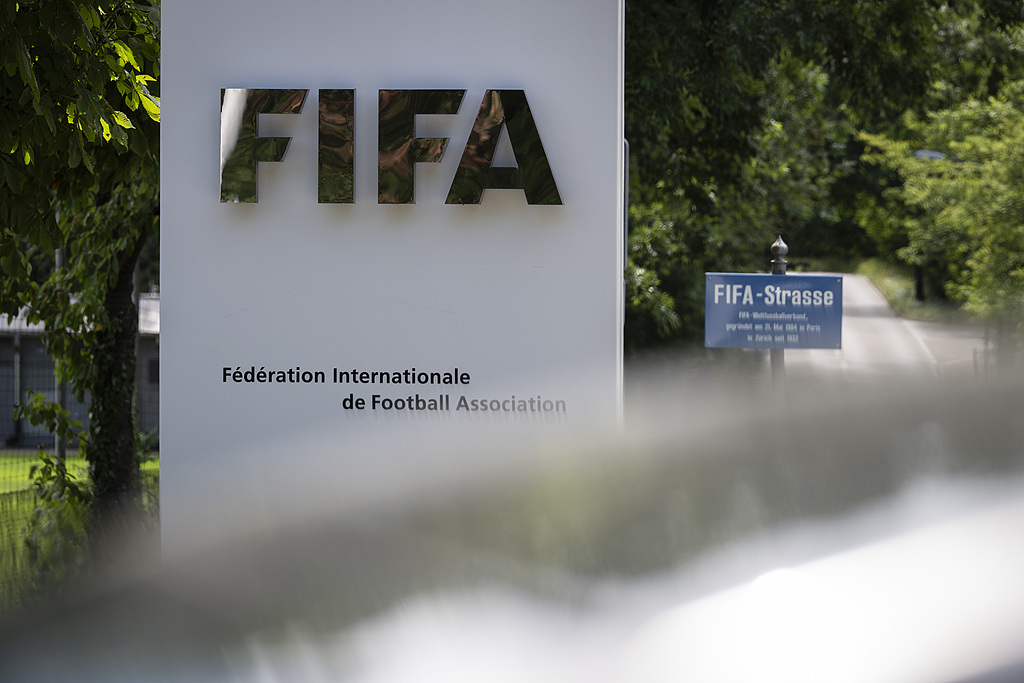
FIFA headquarters in Zurich, Switzerland, August 6.
FIFA Denies Allegations
In its statement, FIFA claimed recent reports contain “unsubstantiated claims and clearly false statements” about the organization and its president. It went on to say that those who cannot win support from FIFA’s member associations shouldn’t try to achieve through accusations, insinuations, or misinformation what they couldn’t achieve through FIFA’s established democratic channels.
Earlier that same day, Britain’s The Daily Telegraph, citing insiders, alleged that during Infantino’s tenure as UEFA’s general secretary, he had an improper relationship with a woman and promoted her to a managerial position. When senior UEFA officials caught wind of the affair, the story goes, the woman left the organization with a six-figure settlement, plus tuition for an MBA program at a business school.
UEFA confirmed it had paid the individual a severance package and covered the MBA costs, but said the payments “complied with the regulations for departing employees at the time.”
A FIFA spokesperson countered: “Infantino strongly denies these allegations, which are completely untrue. Any suggestion of misconduct or regulatory violations is defamatory. All matters involving staff, including any departure or termination packages, have always been approved in accordance with applicable regulations.”
Two Football Giants at Loggerheads
According to the Associated Press on the 9th, Infantino has been at the center of a media storm for the past two weeks, mainly because of a highly controversial plan: handing World Cup operations to a private company and selling a stake to private investors linked to former U.S. President Donald Trump. UEFA fiercely opposed the idea. Under public pressure, Infantino withdrew the proposal and apologized. But UEFA hasn’t let up, calling for his resignation and saying it has “lost confidence” in him.
The Norwegian Football Federation, a prominent UEFA member, has been the most vocal in demanding Infantino step down. On the 7th, it submitted three major complaints to FIFA’s Ethics Committee: the World Cup investment plan (now withdrawn), FIFA’s decision to award its inaugural “FIFA Peace Award” to Trump, and a controversial “suspension” of a red-card ban for American player Folarin Balogun during the World Cup. Norwegian FA president Lise Klaveness said, “We no longer trust Infantino. We are worried—things are heading in a troubling direction.” She described the current state of world football as “chaotic,” adding that the FIFA president seems to be “getting closer and closer to powerful external figures and their agents.”
Australia’s The Conversation noted that despite his UEFA roots, Infantino increasingly sees his and FIFA’s future as lying outside Europe. He has leaned into building deeper political and commercial ties with the United States (the world’s largest sports market) and the Middle East (home to the deepest pockets in global sports). But FIFA’s biggest rival is UEFA itself—the richest and most powerful continental confederation, which generated roughly $3.5 billion from last season’s Champions League alone. Infantino’s attempt to leverage political connections for more commercial gain threatens UEFA’s most valuable assets. As the two sides clash, there’s growing unease about the hyper-commercialization of global football.
“The Lines Between Sports, Politics, and Capital Are Blurring”
Miguel, a former chair of FIFA’s Governance and Review Committee, wrote in the Financial Times that FIFA has become one of the most powerful institutions on the planet—wielding enormous influence while escaping meaningful oversight. The recent spate of controversies isn’t a string of isolated mistakes, he argued, but the latest symptom of a governance model that has reached its limits. FIFA’s structure, he said, incentivizes putting interests first, which cements the status of vested interests and breeds a system of cronyism. He called for FIFA’s regulatory functions to be separated from its commercial activities.
Europe’s Modern Diplomacy website observed on the 8th that the FIFA controversies expose a broader reality: the boundaries between sports, politics, and capital are dissolving. When a global body’s governance rests not on transparency, accountability, and the collective will of its members, but on its relationships with political power and money, its legitimacy will inevitably come under threat. The biggest challenge FIFA faces, perhaps, is no longer just staging another successful World Cup—it’s proving that football still belongs to the world, not to a handful of politicians, investors, and power brokers.