

For some residents in the US, this scorching summer feels like a no-win situation: either face the threat of blackouts from an overburdened power grid, or put up with the pollution from diesel generators powering nearby data centers.
According to a report on July 1st, the Mid-Atlantic region recently experienced a heatwave, putting pressure on the power supply in Virginia’s “Data Center Alley.” To ease the load on the grid, the US Department of Energy gave the regional grid operator the green light to order data centers to fire up their backup diesel generators in emergencies. But this move has sparked worries among locals about air pollution and health risks.
The report highlights that with the rapid growth of AI and other technologies, the number of data centers in the US keeps climbing, and their massive electricity demands are straining the power grid. The recent heatwave has only pushed electricity demand higher, putting pressure on the PJM grid, which stretches from Washington to Chicago.
The US Department of Energy recently approved PJM Interconnection, the grid operator, to require data centers to use backup diesel generators if necessary. PJM says this is a “last resort” to prevent blackouts, and before that, they’ll try other measures like encouraging consumers to cut back on electricity use.
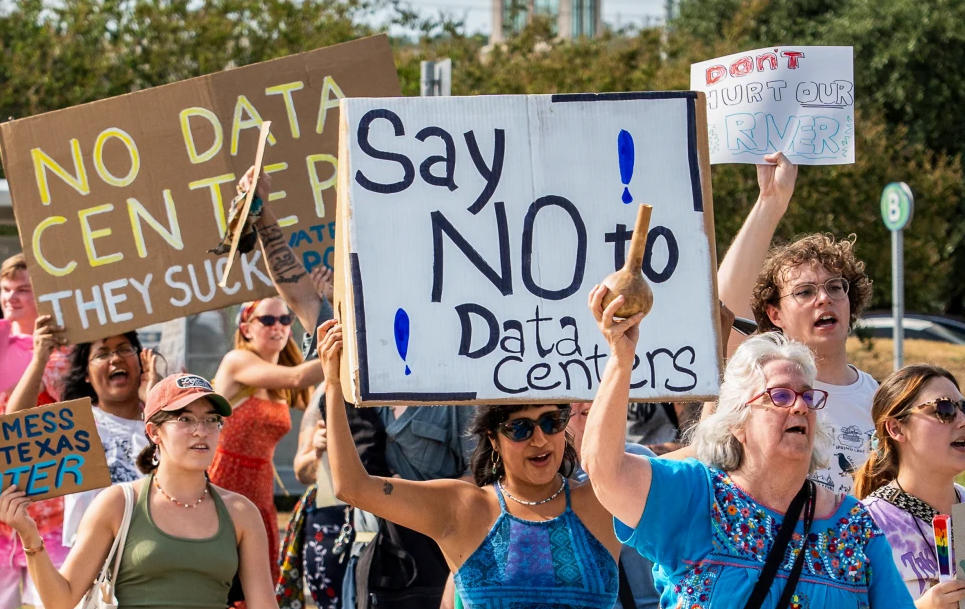
Local residents protesting data center construction (Image source: NBC)
However, environmental advocates point out that many backup diesel generators at data centers emit pollutants and often lack air pollution control equipment to protect public health. Data from Virginia shows that in recent years, local regulators have approved the installation of over 8,000 diesel generators for data centers.
Climate scientist Kim Cobb notes that the heatwave is already driving up demand for air conditioning, and the expansion of data centers is adding more strain to the grid. “This is exactly what we’d expect to see in a warming world,” she says. Climate change, she adds, will make extreme heat events more frequent.
The National Weather Service predicts that this Thursday, the PJM region will experience intense heat, with heat index values in Washington and Philadelphia possibly reaching 112°F and 110°F respectively. PJM estimates that peak electricity demand that afternoon could hit 166 gigawatts, breaking the record of 165 gigawatts set in 2006.
Abe Silverman, a former utility regulator in New Jersey, says while the grid is expected to meet demand for now, the combination of heatwaves, rapid data center growth, and lagging regulatory adjustments is creating new risks. “The future is more worrying because the new load from data centers will far exceed current levels,” he explains.
The data center industry says it will work with power companies and grid operators to activate backup power when necessary, aiming to reduce pressure on the grid.
But the expansion of data centers is also stirring up concerns among surrounding communities. According to Virginia audit data, about one-third of the state’s data centers are located less than 500 feet from residential areas or schools. Some residents worry that diesel generators will worsen air pollution during heatwaves.
Elena Schlossberg, leader of a local group opposing data center expansion, sums up the frustration: “Residents don’t want the grid to collapse, but they also shouldn’t have to bear the health costs of data center development. Either way, we’re stuck—either we face blackouts, or we breathe in this pollution.”
