This year marks America’s 250th Independence Day, with celebrations peaking on July 4. President Trump delivered a late-night speech at the National Mall in Washington, mixing praise for American achievements with strong partisan rhetoric. He declared that the 250th anniversary of the Declaration of Independence is “just the dawn of America’s golden age,” claiming “the best is yet to come.” However, beyond the heatwaves and storms disrupting events, the political fractures on display have drawn deeper reflection. The Associated Press notes that this year’s celebrations unfold against a backdrop of long-standing and deepening social rifts, visible in everything from political expression and cultural norms to ongoing debates over race, class, and immigration.
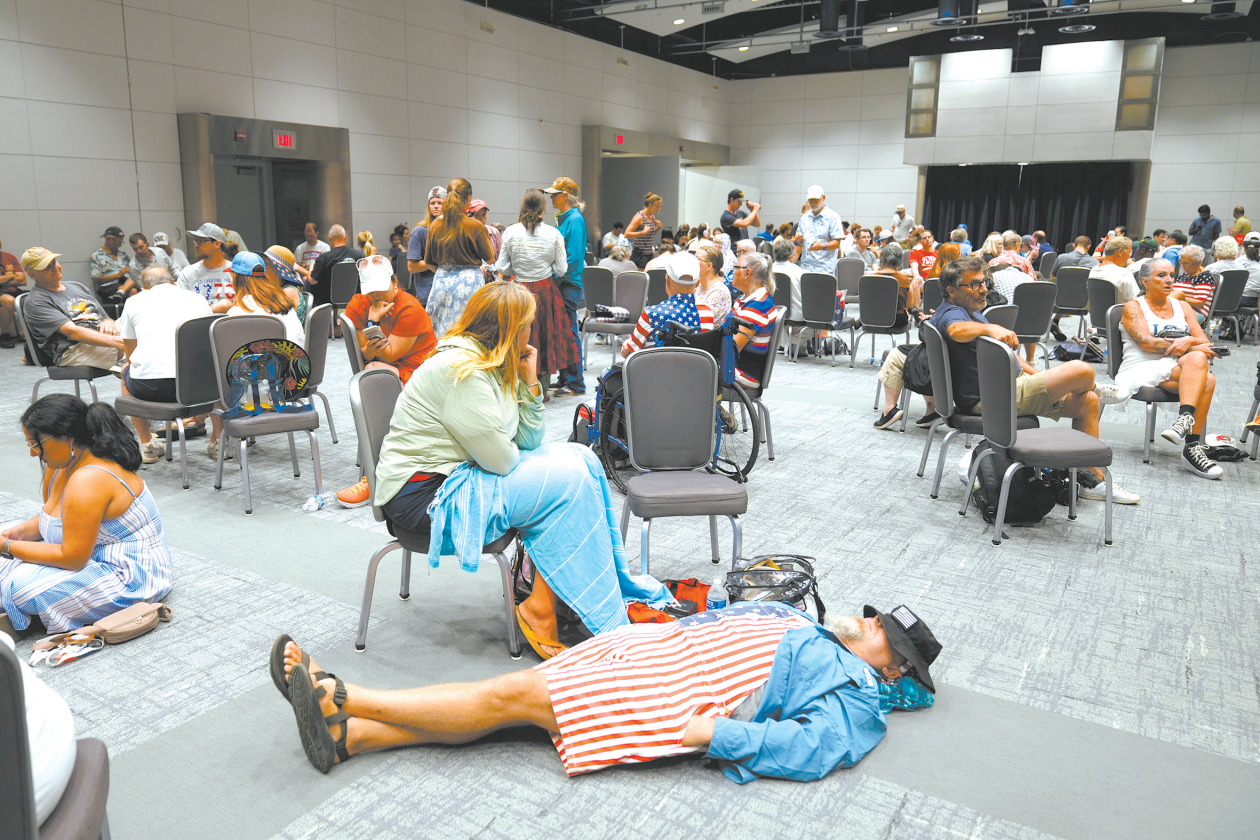
On the 4th, a sudden storm “ambushed” Washington. Americans waiting for the Independence Day festivities had to seek shelter in buildings near the National Mall.
Storm “Ambushes” Washington
Extreme weather has thrown a wrench into Independence Day plans across the US. The Associated Press reports that a large swath of the eastern US has been hit by extreme heat, with temperatures near or above 100°F (37.8°C) in many areas. Months of planning for local celebrations have been forced to adjust schedules or cancel outright. The traditional Independence Day parade in Washington, scheduled for the morning of the 4th, was canceled. By 3 p.m. on the 4th, temperatures in Washington hit 102°F (39°C), with the heat index feeling even hotter. A source on the ground saw a white woman suffering from heatstroke, who was escorted to rest by staff.
On the same day, Washington was also hit by a sudden storm. Around 7 p.m., tens of thousands of people gathered at the National Mall for the celebration were urgently evacuated. Many who had waited for hours in the sweltering heat rushed into nearby museums, metro stations, and federal buildings for cover. After the storm passed, they had to line up again for security re-checks to re-enter the National Mall. Additionally, the evening’s airshow was entirely canceled.
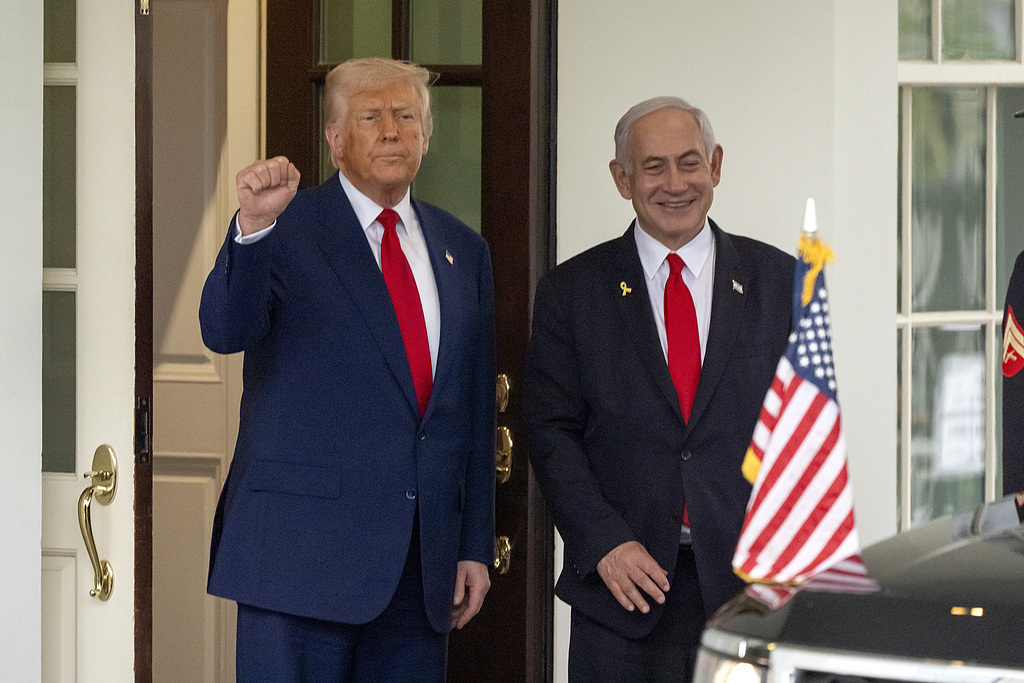
After the storm delayed the celebration by about two hours, Trump appeared at the National Mall around 11:15 p.m. to deliver his speech. According to US media, he reviewed American history in his address, praising national achievements like the moon landing and the Wright brothers’ pioneering flight. He also brought up US military actions this year against Venezuela and Iran, claiming the US had “destroyed” Iran’s military power, and warned about a “communist threat.” Some media outlets note that Trump has previously labeled several Democratic primary candidates as “communists,” with some interpreting this as an attack on Democrats ahead of the midterm elections.
CNBC reports that before Trump, US presidents typically didn’t personally attend Independence Day celebrations at the National Mall to give live speeches.
Far-Right Group Chants “Take America Back”
Radio France Internationale observes that past US presidents usually avoided turning the official Independence Day celebration into a politically charged event. But Trump’s schedule this year has broken that tradition, blurring the line between national commemoration and personal political campaigning.
The day before, Trump spoke at Mount Rushmore in South Dakota, calling on Americans to defend the freedoms championed by the founding fathers 250 years ago, describing some Democrats as existential threats to the US, and pushing an anti-immigration message. Just hours before his speech, New York City’s Democratic Mayor Eric Adams gave a pro-immigration speech, widely seen as a rebuttal to Trump and his “Make America Great Again” movement.
Partisan battles even started over who would host the celebrations. US media reports that Congress established a bipartisan group, “America’s 250th Anniversary,” a decade ago to plan national and local events. But after Trump’s second term, his administration designated the “Freedom 250” organization as the sole official planning body. During this year’s Independence Day celebrations, this group hosted the “Great American State Fair” on the National Mall. Due to its strong partisan leanings, several Democrat-led states refused to send delegations, and some artists declined to perform, fearing the event was too political.
Washington also saw a far-right group march. According to the Washington Post, on the morning of the 4th, hundreds of members of the white supremacist group “Patriot Front” marched through Washington, passing the US Capitol and Union Station. Dressed in uniform and wearing masks, they beat drums and waved flags like the Confederate flag, chanting “Take America Back.” John Cohen, a former Homeland Security official, told Reuters that this group’s choice to protest publicly on national holidays like Independence Day highlights the serious challenges the US faces regarding white supremacy.
US Media: Is There Still a Unifying Principle for This Nation?
The Detroit News reports that in past decades, Independence Day was about gathering to watch fireworks, setting aside partisan differences, and finding common ground in celebrating the nation’s birth. But in this decade marking the 250th anniversary, things are vastly different. People can’t stand each other and mock those with opposing views. Many are reluctant to discuss the tense political atmosphere. Some political scholars believe the last time the US was this divided was during the Civil War. Many Michigan residents say the country should stop internal strife and focus on pressing issues.
“Happy Birthday, America? On its 250th anniversary, the nation may be too divided to care,” reports the Des Moines Register. In Bucks County, Pennsylvania—a key swing state—once a political middle ground, it has become a microcosm of the nation’s cultural and partisan divide. Local residents interviewed say that while Independence Day traditionally centers on national identity and shared history, it hasn’t eased concerns about social divisions at both local and national levels. Many are pondering questions that touch the core of what it means to be American: Does the country still have a unifying principle? Or has partisan strife so deeply split voters that they place party loyalty above patriotism?
“Now, political opponents are truly seen as enemies. Before, political opponents were just opponents,” historian James Robenalt told The Guardian. “It feels like people don’t know where the country is headed. There’s a sense of a circus-like, surreal atmosphere hanging over the nation.”
A Reuters/Ipsos poll shows that two-fifths of Americans don’t believe the country will last another 250 years. A Quinnipiac University poll indicates that 61% of Americans think the US has failed to live up to the ideals proclaimed in the 1776 Declaration of Independence.