

July and August are normally the prime high-altitude climbing window in the Northern Hemisphere. During this stretch, the weather tends to be more stable, daylight hours are longer, and route conditions are generally more favorable.
In a statement released on the evening of July 30, the Alpine Club of Pakistan confirmed that 10 climbers from different countries had gone missing after an avalanche struck them in the country’s northern region. Among the missing are world-renowned Nepali-British mountaineer Nirmal Purja, Pakistani climber Sohail Sakhi, Omani climber Nadhira Ahmed Abdullah Al Harthy, American climber Mallory Geis, and a Chinese mountaineer surnamed Wang.
Purja, who was leading the expedition, is a former member of the British Gurkha regiment. His intense special operations training gave him an extraordinary ability to survive extreme environments and fueled an obsessive drive to push the limits of human endurance in high-altitude climbing. He has previously set multiple world records etched into climbing history, including: the fastest ascent of all 14 eight-thousanders without supplemental oxygen, the fastest completion of all 14 eight-thousanders (with oxygen), the fastest consecutive summits of Everest, Lhotse, and Makalu, and the first winter ascent of K2, the world’s second-highest peak.
The avalanche struck at around 9 a.m. on the 30th. Based on partial GPS data, the team was traversing the summit push route between Camp 3 and Camp 2 at an altitude above 6,579 meters. The avalanche swept the climbers roughly 500 to 1,600 meters down the mountainside.
Chinese Foreign Ministry spokesperson Mao Ning said at a regular press briefing on July 31 that Beijing is urgently verifying the situation and will provide assistance to Chinese citizens in need, while also offering help to Pakistan if requested.
Rescue teams are currently making every effort to locate the missing climbers. Trackers have picked up signals from three of them, but the search zone sits at roughly 8,000 meters — the so-called “death zone” — where oxygen is extremely thin and weather conditions are highly unpredictable, making helicopter and ground rescue operations incredibly challenging.
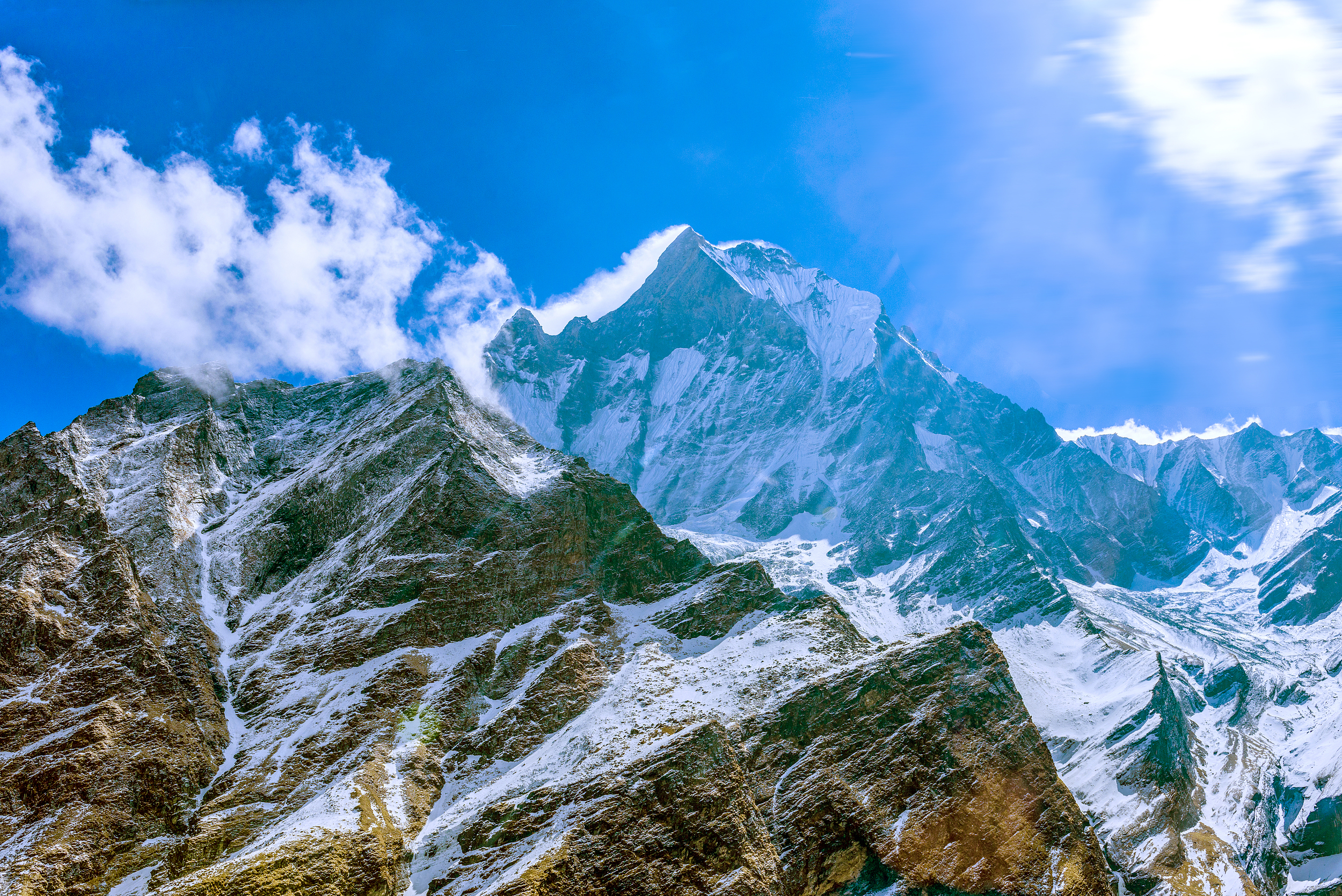
The incident occurred on Broad Peak, situated in Pakistan-controlled Kashmir near the Chinese border. This well-known 8,000-meter peak in the Karakoram range is measured at either 8,047 or 8,051 meters, ranking as the world’s 12th highest mountain. Its traditional route has a mortality rate below 10%.
On July 22, 2018, Rick Allen, a 65-year-old Scottish climber, fell on Broad Peak and survived for 36 hours before being spotted by a drone and rescued. Three years later, he died in an avalanche on the southeast face of K2 in Nepal.
Public records show that Pakistani authorities set the single-climber permit fee for Broad Peak this year at $3,000. Full-service packages range from $18,000 to $25,000 per person, typically covering round-trip transportation, base camp lodging and meals, guide support, supplemental oxygen, and basic rescue coverage.
Meanwhile, as global climate change accelerates, once-stable weather patterns are being disrupted, extreme weather events are becoming more frequent, and the safe summit window for high-altitude climbing is shrinking dramatically.
During last year’s National Day holiday, hundreds of trekkers were caught in a sudden blizzard at Everest’s East Rongbuk camp. Research suggests that climate change is reshaping precipitation patterns across the Himalayas, leading to more intense storms in autumn. The “Roof of the World” is becoming more perilous than ever, posing unprecedented challenges for climbers, guides, and the tourism industry alike.
Last month, a 52-year-old Sherpa guide went missing for nearly a week on the Nepali side of Mount Everest before being rescued and reunited with his family. Mountaineering circles in Nepal called it nothing short of a miracle that he survived so many days under such brutal conditions.