The nuclear talks between the U.S. and Iran, along with Middle East security discussions, are hitting roadblocks. It looks like both sides are digging in for a long, psychological tug-of-war, while also testing the waters around the Strait of Hormuz.
Lately, multiple explosions have been heard near Iran’s southern coast along the Strait of Hormuz, including around Bandar Abbas. The U.S. military said afterward it was self-defense strikes against Iranian military targets, stressing that the ceasefire still stands.
According to CCTV News, around 1:30 a.m. local time on May 28, the U.S. military launched a new strike on an Iranian military facility and intercepted and shot down several drones, claiming they posed a threat to U.S. troops and commercial shipping in the Strait of Hormuz.
Sources from Iran’s military say that in retaliation for a U.S. oil tanker being forced to turn back while trying to cross the Strait of Hormuz, the U.S. military opened fire on barren land around Bandar Abbas. The attack caused no casualties or property damage.
President Trump said at a Cabinet meeting the day before that the Strait of Hormuz doesn’t belong to anyone, and he warned America’s Gulf ally Oman to behave.
The Strait of Hormuz, located between Iran and Oman, is the only sea route from the Persian Gulf to the Indian Ocean. Though its main deep-water shipping lanes are almost entirely within Omani territorial waters, Iran holds full control. Right now, Iran and Oman are negotiating a new management mechanism for the strait, aiming to come up with a fresh system for vessel passage.
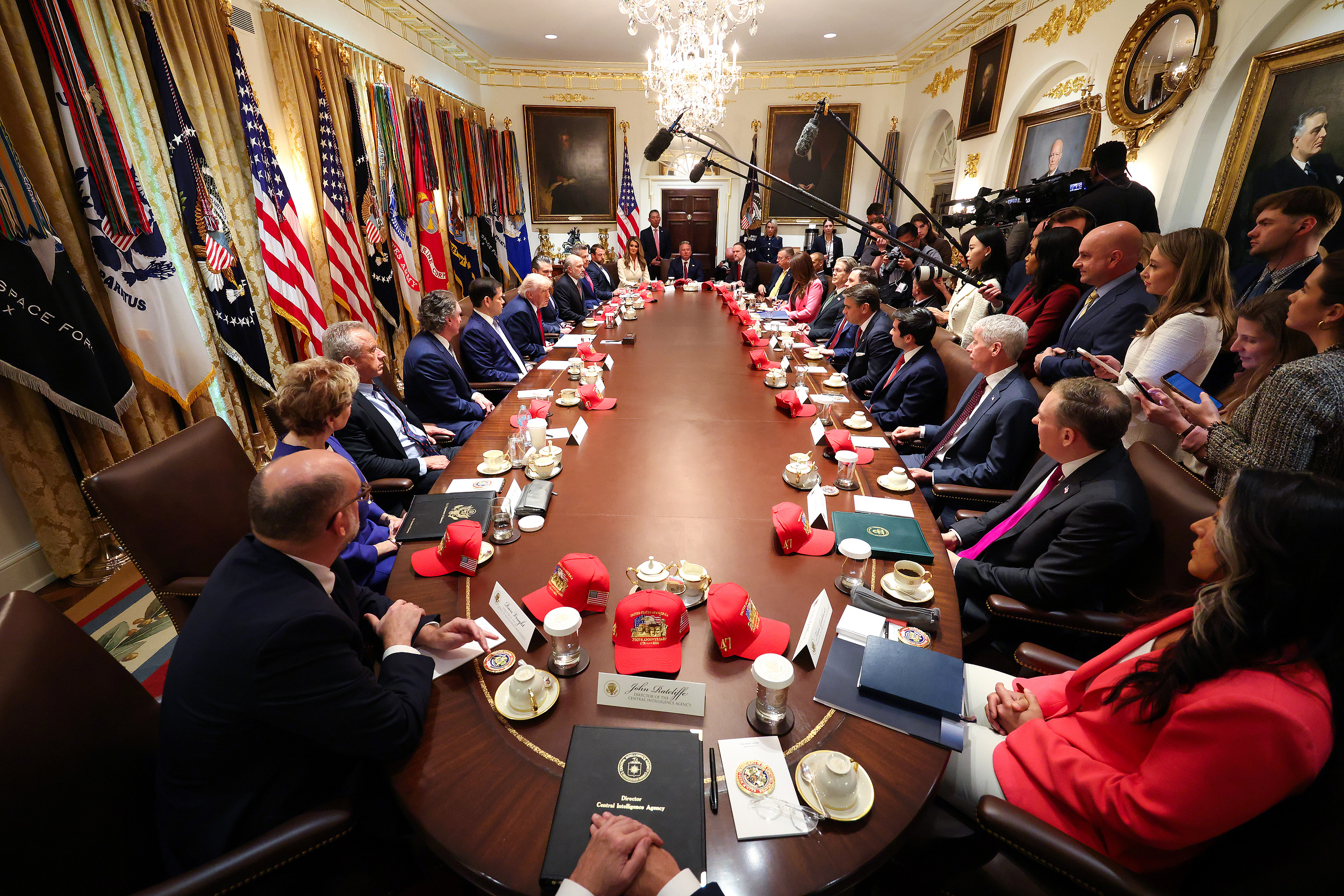
The U.S. government has already blacklisted Iran’s newly established “Persian Gulf Strait Authority.” Trump said the Strait of Hormuz is international waters, and the U.S. will keep order there, but nobody will control it. That’s part of U.S. talks with Iran, and Oman will follow the rules like any other country. He added, “If they don’t behave, we’ll just blow them to kingdom come.”
Trump claimed Iran is dragging its feet, hoping to use the upcoming U.S. midterm elections to its advantage, but it won’t work. He won’t rush a deal with Iran just because Congress is up for election. The U.S. isn’t happy with Iran’s current stance, but in the end, it will be satisfied. He said there are only two paths: either a deal is reached, or military means will achieve the goal.
The 2026 U.S. congressional elections are set for November 3, and redistricting in many states is fueling partisan conflict. Trump’s agenda can only become law if Republicans keep control of both chambers of Congress. Besides diplomatic hurdles, the Trump administration also faces domestic political pressure and the challenge of rising oil prices.
Iran, for its part, wants the U.S. to promise sanctions relief and unfrozen assets to help its struggling economy. It also hopes to use fees collected from ships passing through the Strait of Hormuz for post-war reconstruction. Trump responded at the Cabinet meeting that the U.S. has not discussed easing sanctions or providing funds for Iran—those two things are unrelated.
The assets in question are mainly legitimate revenues from Iranian oil and gas exports to multiple countries before 2018, worth about a quarter of Iran’s GDP at the time. Because of U.S. long-arm jurisdiction, they’re locked up in bank accounts in several countries. The bulk of the money is scattered across Luxembourg, South Korea, India, Iraq, and Qatar.
Earlier on the 27th, Iranian media released a “preliminary informal document” outlining a framework for a U.S.-Iran memorandum of understanding, covering the Strait of Hormuz, regional military deployments, and future agreements. But the White House quickly denied it, calling it “pure fabrication.”
According to that document, the U.S. would promise to lift the “maritime blockade” on Iran and pull back some military forces deployed around Iran. In exchange, Iran would gradually restore commercial vessel traffic through the Strait of Hormuz to pre-escalation levels within a month—excluding military vessels. Vessel passage management and routing would be coordinated by Iran and Oman together.
The draft also says that if Iran and the U.S. can reach a final deal within 60 days, the content could be confirmed in a binding UN Security Council resolution.
Early this morning, the head of Iran’s parliamentary national security commission went further, saying Iran won’t back down because of Trump’s rhetoric. In talks with the U.S., Iran will “hold the red lines”: its uranium enrichment capacity and enriched uranium stockpile, control over the Strait of Hormuz, and sanctions relief.
The U.S.-Iran talks also face big uncertainties linked to Israel. At yesterday’s meeting, Trump again hinted that a U.S.-Iran deal might depend on Saudi Arabia, Qatar, Egypt, Jordan, Turkey, and Pakistan joining the Abraham Accords.
Between August and December 2020, with the Trump administration’s push, the UAE broke the Arab world’s taboo of not normalizing ties with Israel, becoming the first to do so. Then Bahrain, Morocco, and others followed, signing the Abraham Accords, which directly weakened the Palestinian issue as the core moral bond restraining Arab-Israeli relations.
But there’s little sign any of those countries are eager to jump in. Before the latest round of Israeli-Palestinian conflict broke out in October 2023, the U.S. had pushed for Saudi-Israel normalization. After the conflict erupted, Saudi Arabia put those talks on hold. The kingdom has repeatedly said it won’t normalize ties with Israel unless a Palestinian state is established.